Info
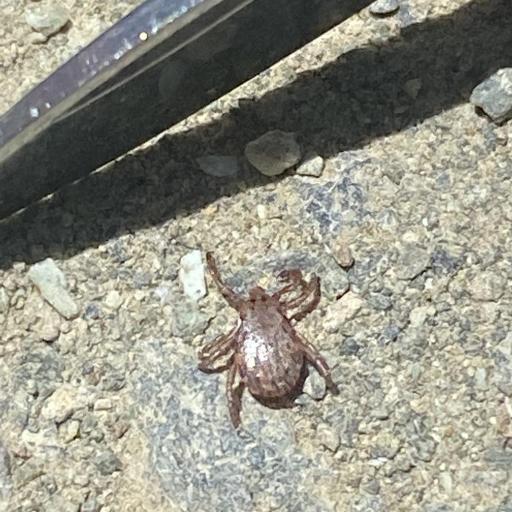
Often called the Pacific Coast Tick, this hardy arachnid is a common sight for hikers and explorers along the western edge of North America. While it is frequently mistaken for its cousin, the American Dog Tick, this species is a specialist of the chaparral and scrublands. It is a master of the "waiting game," perfectly adapted to the rugged, sun-drenched trails of the West Coast.
🔍 How to Identify
- 🛡️ The Ornate Scutum: Adults are characterized by a hard, teardrop-shaped shield (scutum) on their backs that features intricate, mottled patterns of silvery-gray against a dark brown base.
- 🕷️ Eight-Legged Stance: Unlike insects, these are arachnids; adults and nymphs possess eight sturdy legs designed for gripping fur, fabric, and tall blades of grass.
- 🎈 Engorgement: When "unfed," they are flat and thin as a flake of bran, but after a meal, their bodies expand significantly, becoming rounded and often taking on a dull, leaden-gray color.
🌲 Habitat & Ecology
- 🌾 The Questing Method: This tick does not jump or fly. Instead, it climbs to the tips of grasses and shrubs, extending its front legs in a behavior called "questing" to snag onto any mammal that brushes past.
- 🐕 Wildlife Connections: While they are famous for hitching rides on humans and dogs, their primary hosts in the wild are squirrels, deer, and cattle, playing a significant role in the local woodland food web.
⚠️ Safety & Toxicity
- 🚨 Status: Vector of Disease. The Pacific Coast Tick is a known carrier of several pathogens, including Rocky Mountain Spotted Fever, Tularemia, and Pacific Coast Tick Fever (364D rickettsiosis).
- 🧴 Protection & Removal: Always wear long sleeves and use repellent in tall brush. If bitten, use fine-tipped tweezers to grasp the tick as close to your skin as possible and pull upward with steady, even pressure. Do not use heat or oils to remove it, as this can cause the tick to regurgitate fluids into the bite.
✨ Fun Fact
- ⏳ Patience is a Virtue: The Pacific Coast Tick is incredibly resilient; an adult can survive for more than 500 days without a single meal while waiting for a host to walk by!
More Details








