Info
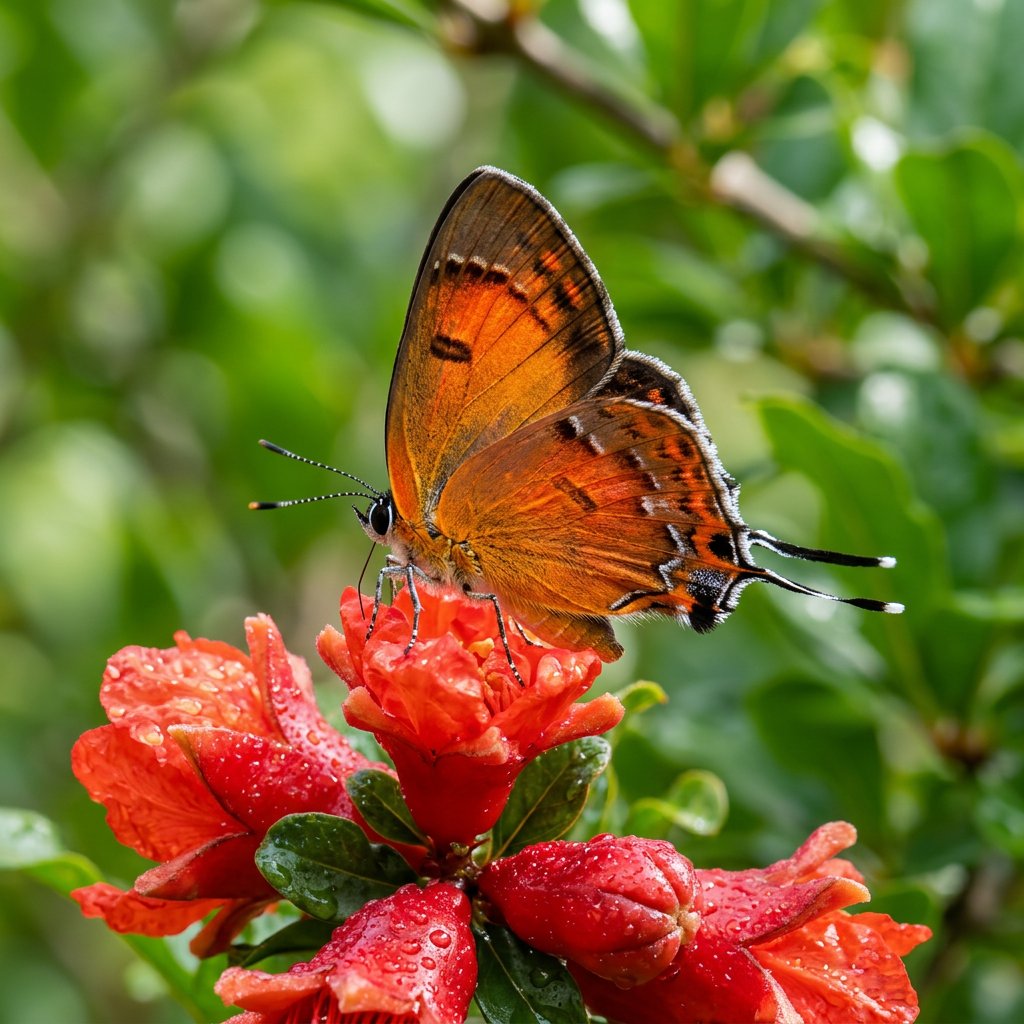
Often called the Cornelian after the fiery, semi-precious gemstone, this butterfly is a small but dazzling jewel of the garden. While the adults flutter gracefully among flowers, their larvae lead a more secretive life, hiding inside fruits where they develop safely tucked away from prying eyes.
🔍 How to Identify
- 🦋 Vibrant Wings: Males display a brilliant, glowing orange-red on the upper side, framed by deep black borders. Females are more modest, sporting a soft grayish-brown hue that helps them blend in while laying eggs.
- 👁️ The "False Head": Look closely at the bottom of the hindwings; there are thin, thread-like "tails" and bright orange eye-spots. This clever mimicry creates a "false head" to trick birds into attacking the wings instead of the butterfly's real body.
- 🌫️ Marbled Underside: When resting with its wings closed, the butterfly shows a complex pattern of white-edged brown bands and silver-grey spots, providing perfect camouflage against tree bark.
🌳 Habitat & Ecology
- 🍎 The Fruit Borer: Unlike most caterpillars that munch on leaves, the Cornelian larva is a specialist. It bores into fruits—most famously pomegranates and lychees—to eat the nutrient-rich seeds inside.
- ☀️ Sun-Seeking Flyers: Adults are incredibly fast and erratic fliers. You will most likely spot them in sunny forest clearings or suburban gardens, basking on the upper surface of leaves to soak up the morning heat.
⚠️ Safety & Toxicity
- 🛡️ Harmless to Humans: This butterfly is completely safe to observe. It does not bite, sting, or possess any chemical toxins that could irritate the skin.
- 🍒 Orchard Pest: While they aren't dangerous to people, they are considered a "foe" by fruit farmers. A single caterpillar can ruin a pomegranate by tunneling deep into the core, often leaving a tell-tale hole on the fruit's skin.
✨ Fun Fact
To keep their "bedroom" clean while living inside a fruit, the caterpillars actually push their waste (frass) out through the entry hole. If you see a pomegranate with a small pile of sawdust-like material near a hole, there is likely a Cornelian larva feasting inside!
More Details








