Info
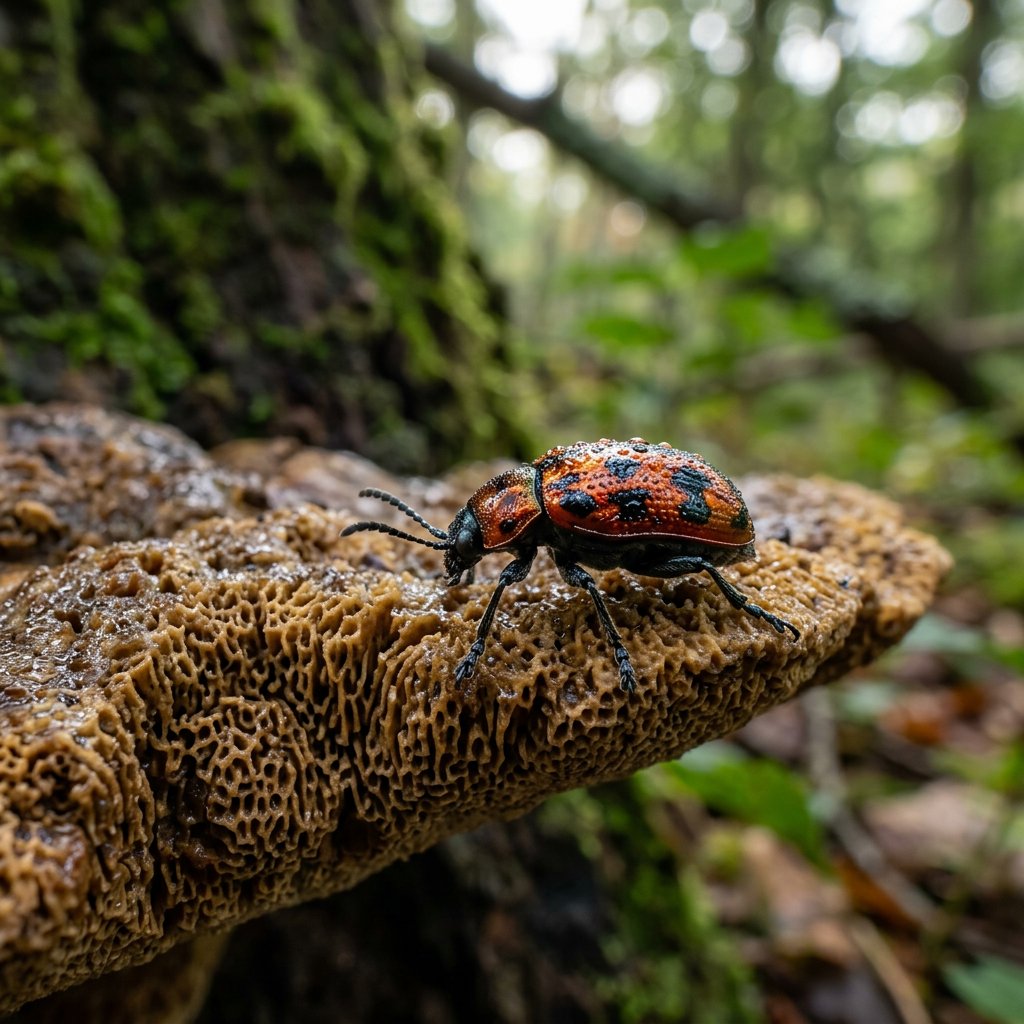
Meet the Black-and-Yellow Fungus Beetle, a tiny, jewel-like specialist that treats tree mushrooms as both a five-star hotel and a buffet. Often found tucked away in the crevices of bracket fungi in old-growth forests, this beetle is a favorite for macro photographers due to its high-contrast, "caution tape" color palette. While many insects visit mushrooms briefly, this beetle spends its entire life cycle dedicated to the world of fungi.
🔍 How to Identify
- 🐞 Body Shape: It has a broadly oval, highly convex (domed) shape, looking somewhat like a flattened ladybug or a tiny, glossy turtle.
- 🎨 Distinctive Pattern: The wing covers (elytra) are a deep, polished black, interrupted by two vivid, jagged orange-to-yellow bands that look like flashes of lightning.
- 🐜 Beaded Antennae: Its antennae are relatively short and "moniliform," meaning they look like a string of tiny beads, which it uses to sniff out the perfect, decaying mushroom.
🌲 Habitat & Ecology
- 🍄 The Mushroom Condo: This beetle is a "mycetophage," meaning it eats fungi. It is most commonly found on the Birch Polypore (Piptoporus betulinus) or "Chicken of the Woods." It doesn't just eat the fungus; it lives inside it, boring tunnels where it hides from predators.
- ♻️ Forest Recycler: By tunneling through tough, woody bracket fungi, both the adults and their C-shaped larvae help break down stubborn organic matter, turning hard shelf mushrooms back into nutrient-rich soil for the forest floor.
⚠️ Safety & Toxicity
- ✅ Status: Completely harmless to humans, pets, and garden plants.
- 🛡️ Chemical Defense: If you pick one up, it might release a tiny amount of pungent fluid. This is a harmless chemical "stink bomb" designed to tell birds that the beetle tastes terrible, but it won't hurt your skin.
- 🏡 Garden Note: They are not household pests; they will only stay where there is wild, decaying tree fungus. They have no interest in your pantry or your furniture!
✨ Fun Fact
Despite its scientific name Diaperis boleti, this beetle rarely actually lives on "bolete" mushrooms (the ones with stalks and caps). It much prefers the hard, leathery "shelf" fungi that grow on the sides of trees, which provide a much sturdier home for their larvae!
More Details








