Info
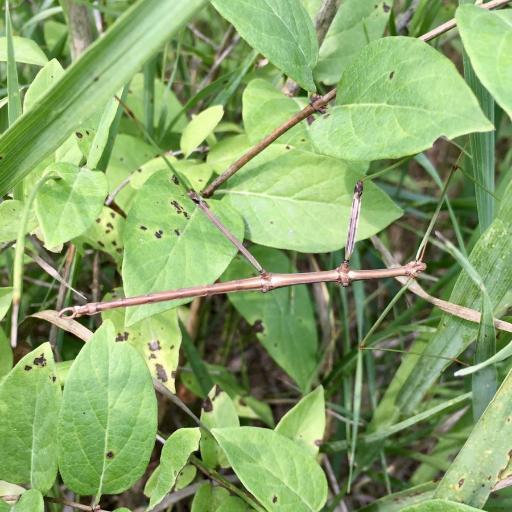
Often called the Northern Walkingstick, Diapheromera femorata is nature’s ultimate master of disguise. These incredible "living twigs" are common across North America, blending so perfectly with deciduous foliage that you could be looking right at one and never know it. While they might look like something out of a prehistoric forest, they are gentle herbivores that spend their lives quietly swaying in the treetops.
🔍 How to Identify
- 🦵 Body Shape: Exceptionally long and slender, perfectly mimicking a thin branch. Unlike many other insects, they remain wingless throughout their entire lives.
- 🎨 Color Transitions: Juveniles are typically a vibrant lime green to match new spring leaves, while adults turn a woody brown or mottled gray as they mature in the autumn.
- 📏 Legs & Antennae: They possess six spindly legs and very long antennae that are often held straight forward to elongate their "stick" silhouette, making them almost invisible to predators.
🌲 Habitat & Ecology
- 🌳 The Leafy Buffet: These insects are specialists of deciduous forests. They have a particular fondness for the foliage of Oak, Hazelnut, and Black Cherry trees.
- 🌙 Night Owls: To avoid being spotted by birds, they remain perfectly motionless during the day. They do the majority of their feeding and moving under the cover of darkness.
- 🍂 Egg Rain: Females don't bother with nests; they simply drop their eggs from the forest canopy. The eggs fall like tiny seeds to the forest floor, where they hide under leaf litter throughout the winter.
⚠️ Safety & Toxicity
- 🛡️ Harmless Friend: The Northern Walkingstick is completely harmless to humans. They do not bite, sting, or possess any venom.
- 🐕 Pet & Child Safe: They are non-toxic to curious cats, dogs, or children. Their primary defense is "playing dead" or simply staying still.
- 🌿 Garden Impact: While they are leaf-eaters, they rarely appear in high enough numbers to cause any real harm to healthy backyard trees.
✨ Fun Fact
The Northern Walkingstick is a master of regeneration! If a predator like a bird grabs them by the leg, they can voluntarily "snap" the limb off to make an escape. If the walkingstick is still a juvenile, it can actually grow a brand-new leg during its next molt.
More Details








