Info
Often called the Cherry Spot Moth or the Lily Borer, this striking African native is a master of visual contrast. While the adult moth looks like a delicate piece of hand-stitched embroidery, its larvae are famous among gardeners for their legendary appetite. It is a classic example of a "beautiful pest"—lovely to look at, but a signal to check on your prized lilies immediately.
🔍 How to Identify
- 🦋 The Wings: The adult features a sophisticated pattern of black and white markings, punctuated by vibrant orange or reddish "cherry" spots along the wing margins.
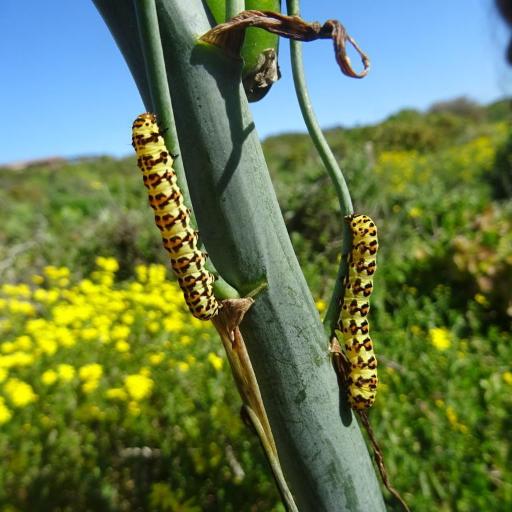
- 🐛 The Caterpillar: The larval stage is even more distinct, sporting bold black and yellow-white rings with bright orange-red accents on the head and tail.
- 📏 Resting Posture: When at rest, they fold their wings in a roof-like shape over their backs, blending into the mottled shadows of garden foliage.
🌲 Habitat & Ecology
- 🍽️ The Lily Specialist: This insect is a specialist feeder, primarily targeting plants in the Amaryllidaceae family (such as Clivia, Crinum, and Amaryllis). The caterpillars are known to tunnel into the fleshy leaves and even bore into the bulb itself.
- 🌙 Night Moves: The adult moths are nocturnal and are frequently drawn to porch lights or garden lanterns during the summer months.
- 🌍 Regional Resident: They are most commonly found throughout Sub-Saharan Africa, thriving in both wild grasslands and well-watered suburban gardens.
⚠️ Safety & Toxicity
- 🟢 Harmless to Humans: The Cherry Spot Moth is completely safe for humans; they do not bite, sting, or possess irritating hairs.
- 🐾 Pet Caution: While not venomous, the caterpillars can sequester certain alkaloids from the toxic lilies they eat. If a pet consumes several caterpillars, they may experience minor digestive upset.
- 🌿 Plant Health: From a gardening perspective, they are a "foe." A heavy infestation can hollow out a bulb and kill a mature plant in a single season.
✨ Fun Fact
The bright orange spots and bold caterpillar stripes are an example of aposematism. This is nature’s way of using high-contrast colors to scream "I taste terrible!" to potential predators like birds and lizards.
More Details








