Info
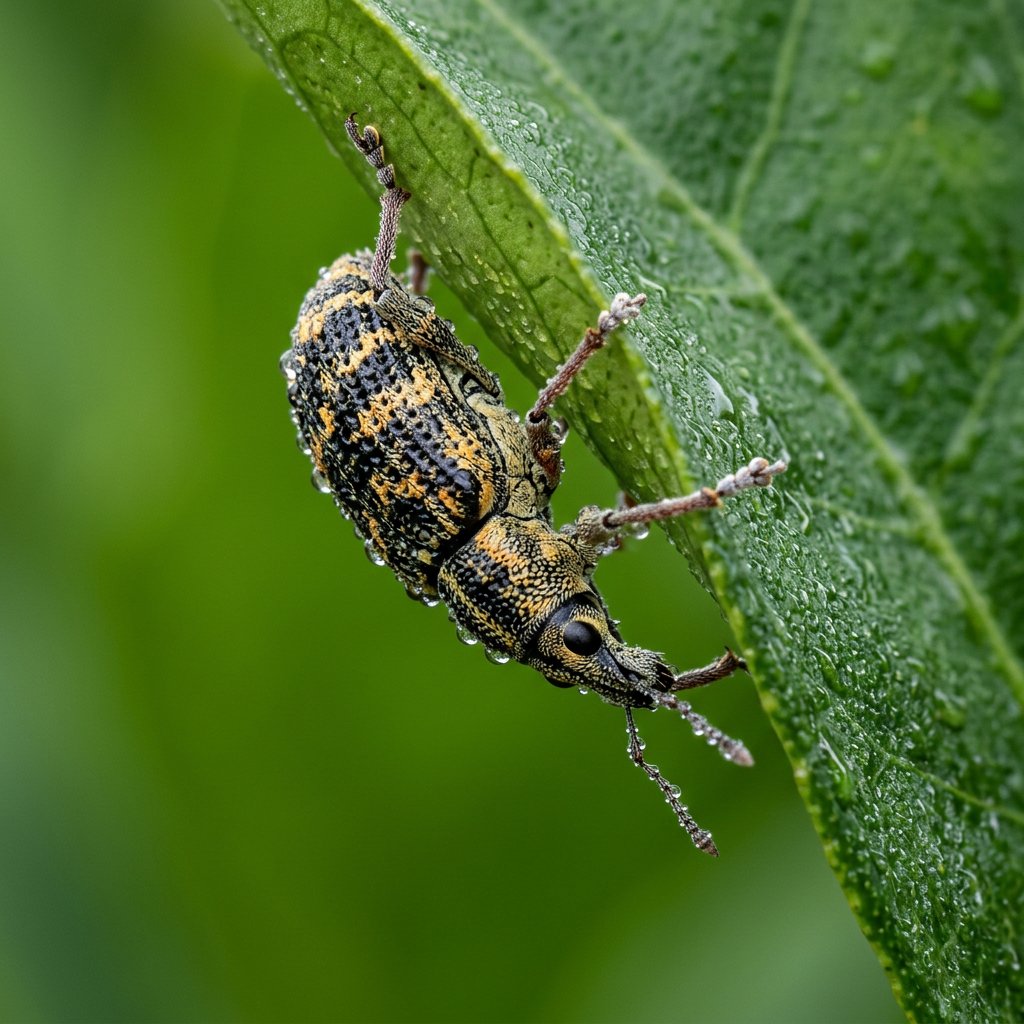
The Diaprepes abbreviatus, widely known as the Citrus Root Weevil or the "Diaprepes," is a flashy but notorious "pretty pest." While its intricate striped patterns make it look like it’s wearing a designer racing suit, it is a formidable foe for citrus growers and ornamental plant lovers alike. Originally hailing from the Caribbean, this beetle has become a world traveler, often appearing in gardens where it leaves its signature "notched" marks on leaves.
🔍 How to Identify
- 👃 The Snout: Like all true weevils, it features a prominent, blunt snout (rostrum) used for feeding and navigating through tough foliage.
- 🏎️ The "Racing Stripes": Its hard wing covers (elytra) are black but decorated with bold, longitudinal stripes that can range from creamy white to vibrant yellow or even deep orange.
- 📏 Sturdy Build: It has a robust, oval-shaped body, typically measuring between 10 to 20 millimeters, making it much larger and more noticeable than your average garden beetle.
🌲 Habitat & Ecology
- 🍽️ A Double-Threat Diet: This insect attacks a garden from two fronts. While the adults chew on the edges of leaves, leaving distinct semi-circular notches, their subterranean larvae (grubs) are the real villains, devouring the roots of over 270 different plant species.
- 🌳 The Citrus Connection: While they have a special affinity for orange and grapefruit trees, they are equal-opportunity eaters. You might find them lurking on your hibiscus, roses, or even tropical palms in warm, humid climates like Florida or the Caribbean.
⚠️ Safety & Toxicity
- 🛡️ Human Safety: The Citrus Root Weevil is a "gentle foe" to people. They do not sting, bite, or carry any diseases that affect humans or household pets.
- 🌿 Garden Risk: While they won't hurt you, they are a high-alert pest for your landscape. If you spot the adults, it’s a sign that larvae may be underground damaging the root systems, which can eventually lead to the "sudden death" of young trees.
✨ Fun Fact
When threatened, the Diaprepes weevil is a master of Thanatosis—the scientific art of playing dead. If you touch the leaf they are sitting on, they will instantly tuck in their legs and drop to the ground like a pebble, disappearing into the soil or mulch before you can catch them!
More Details








