Info
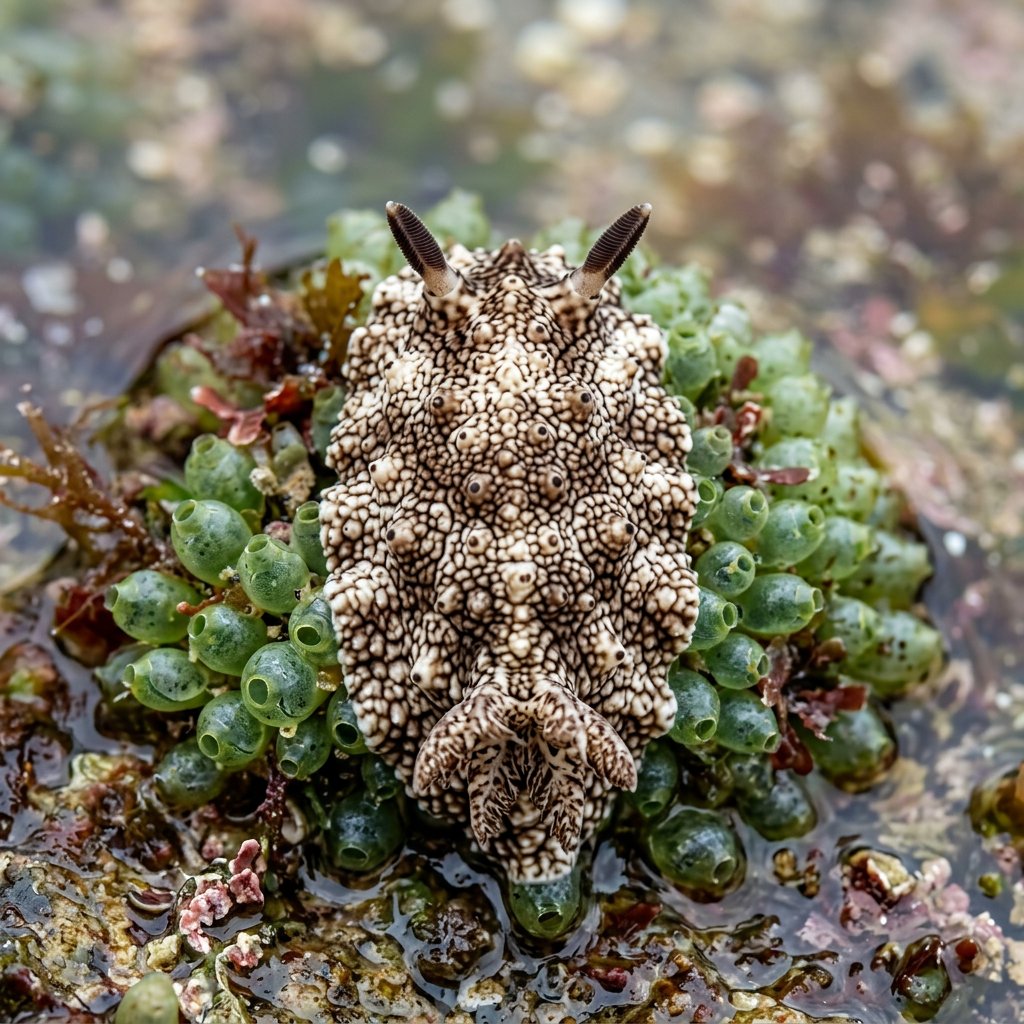
Often called the Leopard Nudibranch or the San Diego Dorid, Diaulula sandiegensis is not actually an insect, but a stunning marine gastropod (sea slug). These "butterflies of the sea" are famous among tide-poolers along the Pacific Coast for their elegant, spotted patterns. While they might look like a stray piece of lemon peel underwater, they are sophisticated predators with a very specific diet.
🔍 How to Identify
- 🐆 The Spots: Its most striking feature is the collection of dark brown or black rings (ocelli) and spots scattered across a creamy-white to pale-yellow mantle.
- 🪶 Branchial Plume: Look for a feathery tuft of gills on the rear of its back; these gills can be retracted instantly if the slug is startled.
- 🍄 Velvety Texture: The body surface is covered in tiny, microscopic bumps (caryophyllidia) that give it a fuzzy or velvety appearance rather than a slimy one.
🌊 Habitat & Ecology
- 🧽 Sponge Specialist: This sea slug is a dedicated carnivore, but it doesn't hunt fast prey. It spends its life crawling over rocky reefs to find and eat specific types of sponges, like the "Breadcrumb Sponge."
- 🪨 Intertidal Explorer: You can find them in the "low tide zone." They prefer to hide under rocky ledges or inside crevices to stay moist and cool when the tide goes out.
⚠️ Safety & Toxicity
- 🛡️ Safe to Touch: They do not have stingers and are generally safe for humans to observe. However, it is always best to look but not touch to avoid damaging their delicate skin.
- 🧪 Chemical Defense: While not venomous to humans, they are "chemically protected." They concentrate toxins from the sponges they eat into their own skin, making them taste bitter and toxic to fish and crabs.
✨ Fun Fact
The San Diego Dorid is a master of recycling! It takes the defensive chemicals (terpenes) from the sponges it eats and repurposes them to create its own chemical "no-trespassing" sign for predators.
More Details








