Info
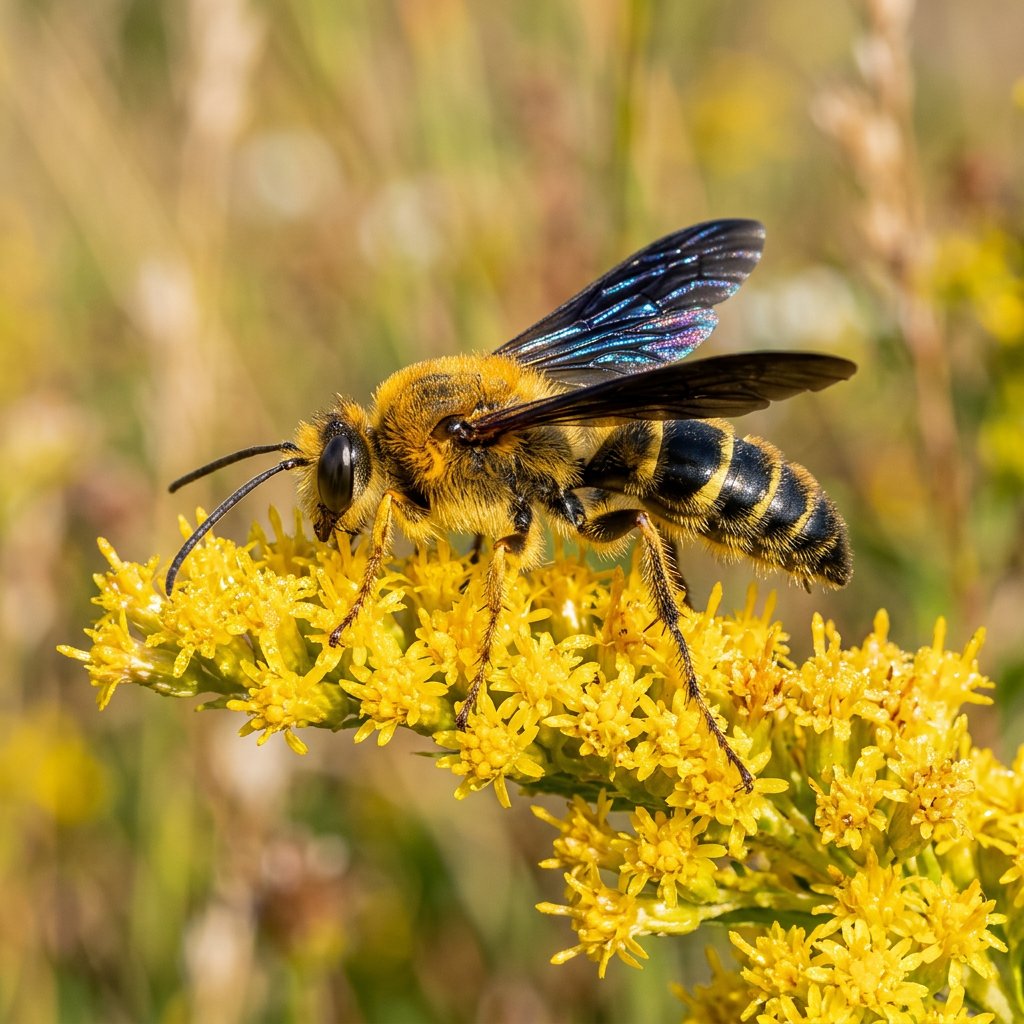
Commonly known as Scoliid Wasps or Digger Wasps, members of the Dielis genus are the unsung heroes of a healthy lawn. Often mistaken for "scary" hornets due to their striking yellow-and-black patterns and large size, these solitary travelers are actually gentle giants. They spend their days as "biological lawn mowers," hunting the underground grubs that ruin your grass.
🔍 How to Identify
- 🐝 Fuzzy Physique: Unlike the smooth, shiny skin of a yellowjacket, Dielis wasps are notably hairy, especially on their thorax and the edges of their abdominal segments.
- 🎨 Abdominal Bands: They feature thick, bright bands of yellow or orange across a dark black or brown body, which serve as a warning to predators (though they are rarely a threat to humans).
- 🪽 Smoky Wings: Their wings are often tinted with a dark, smoky translucence, sometimes shimmering with a metallic blue or purple hue in the direct sunlight.
🌲 Behavior & Ecology
- 🪲 Grub Hunters: The female Dielis is a specialist. She can sense beetle larvae (grubs) living under your soil. She will burrow down, paralyze a grub with a sting, and lay her egg on it, providing a "living pantry" for her offspring.
- 🌸 Peaceful Pollinators: As adults, they are purely nectar-drinkers. You will often see them flying in a "figure-eight" pattern just inches above the grass or visiting wildflowers, accidentally helping to pollinate your garden.
⚠️ Safety & Toxicity
- 🛡️ Low Risk: These are solitary wasps, meaning they have no colony or "queen" to defend. They are not aggressive and will generally only sting if they are squeezed or stepped on with bare feet.
- 🐶 Pet Caution: Because they fly low to the ground searching for grubs, curious dogs or cats might try to pounce on them. A sting can cause temporary swelling, so it’s best to keep pets away from areas where they are actively patrolling the grass.
✨ Fun Fact
The females are such efficient excavators that their legs have evolved special "spines" that act like tiny shovels, allowing them to "swim" through loose soil and sand with incredible speed!
More Details








