Info
Known by the chilling nickname "Killer Shrimp," this aquatic invader is far more aggressive than its tiny size suggests. Originating from the Ponto-Caspian region of Eastern Europe, it has rapidly spread across European and UK waterways, earning a reputation for killing other small creatures even when it isn't hungry. While technically a crustacean (amphipod), it is the ultimate "tough guy" of the underwater bug world.
🔍 How to Identify
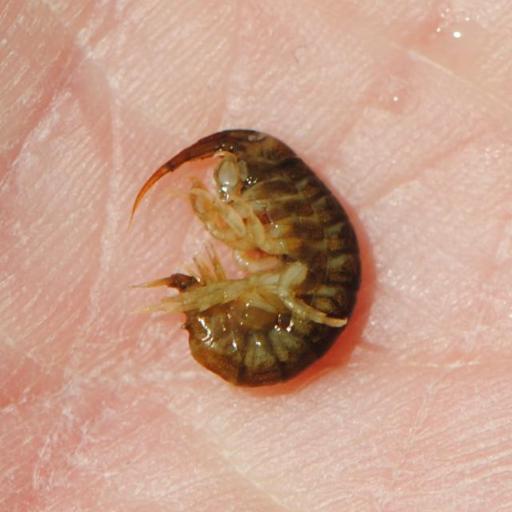
- 🦐 The "Humped" Back: It has a distinctively arched or curved body that is flattened side-to-side, allowing it to dart through tight crevices between rocks.
- 🦓 Tiger Stripes: Most individuals feature a dark, tiger-like striped or mottled pattern on their translucent, grayish-tan body.
- 📏 Extraordinary Size: Unlike common freshwater shrimp, these can grow up to 30mm (over an inch) in length, making them the giants of the amphipod family.
🌊 Habitat & Ecology
- ⚔️ Aggressive Predator: This species is famous for "killing for sport." It often attacks and kills prey—such as dragonfly larvae, native shrimp, and even small fish—without actually consuming them, purely to eliminate competition.
- 🪨 Hardy Colonizer: It thrives in lakes and slow-moving rivers, particularly where there are plenty of rocks, gravel, or man-made structures like canal walls to hide in.
- 📉 Ecosystem Disruptor: Because it outcompetes and eats native species, it can completely change the biodiversity of a pond or river in a very short time, leading to a "dead zone" for native insects.
⚠️ Safety & Toxicity
- 🟢 Human Safety: The Killer Shrimp is completely harmless to humans and domestic pets. It does not bite, sting, or carry diseases that affect land mammals.
- 🛡️ Environmental Risk: The real danger is to the environment. If you are a fisher or boater and find these, you must "Check, Clean, Dry" your gear. Even a tiny amount of dampness can keep them alive long enough to be accidentally transported to a new, uninfected lake.
✨ Fun Fact
Despite its small size, the Killer Shrimp has incredibly powerful mouthparts that can shred the soft bodies of much larger insect larvae in seconds—it is essentially the "Great White Shark" of the pond world!
More Details








