Info
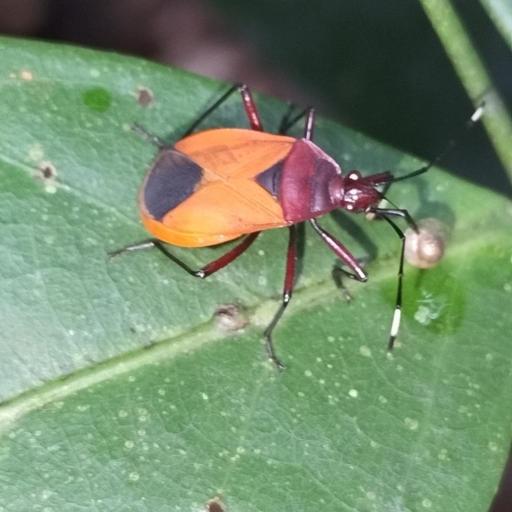
Meet the Dindymus, a genus of striking "True Bugs" often referred to as Harlequin Bugs or Red Bugs. With their high-contrast, "painted" appearance, they look like the jesters of the insect world, but their bright colors actually serve as a bold "keep away" sign to predators. Found predominantly in Asia, Australia, and Africa, these insects are fascinating residents of the undergrowth that bridge the gap between garden pest and helpful predator.
🔍 How to Identify
- 🎨 Aposematic Colors: They are most famous for their brilliant red, orange, or yellow bodies, which are heavily contrasted with deep black patches on their wings and thorax.
- 🛡️ Body Shape: They possess an elongated, shield-like oval body with long, four-segmented antennae and a prominent triangular plate (scutellum) on their back.
- 🎭 Graphic Patterns: Depending on the species, their wing covers often look like a geometric mask or a harlequin’s costume, which helps enthusiasts distinguish them from common firebugs.
🌲 Habitat & Ecology
- 🐜 Surprising Predators: While many bugs in this family eat seeds, several Dindymus species are actually active hunters. They use their needle-like mouthparts to prey on soft-bodied insects, snails, and caterpillars, making them a natural form of pest control.
- 🍂 Litter Dwellers: You will typically find them scurrying through leaf litter, climbing up tree trunks, or sunning themselves on low-lying garden plants during the warmer months.
- 👥 Social Gatherers: It is common to see these bugs congregating in large groups on a single plant or stone, especially during the nymph (juvenile) stage, to maximize the visual impact of their warning colors.
⚠️ Safety & Toxicity
- 👐 Non-Aggressive: Dindymus insects do not have a stinger and are not aggressive toward humans. They will generally try to scuttle away if approached.
- 👃 Chemical Defense: Their primary weapon is smell. If handled roughly, they can emit a pungent, foul-smelling liquid from specialized glands. This liquid can cause mild skin irritation in sensitive individuals, so it is best to observe them without touching.
- 🐶 Pet Safety: While not deadly, they taste extremely bitter. A curious cat or dog that tries to "taste" one will likely experience nausea or drooling due to the bug's chemical defense.
✨ Fun Fact
In some species, such as the Dindymus versicolor, the insects are known to be "cannibalistic" toward other bugs in their same family! They use their vibrant colors to blend into groups of harmless seed-eaters, only to turn around and hunt their unsuspecting relatives.
More Details








