Info
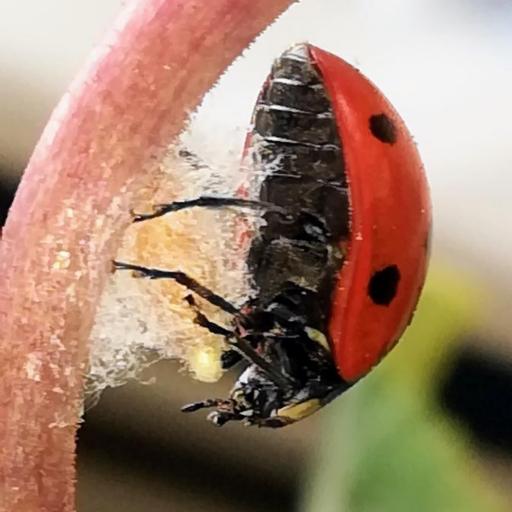
Despite its name sometimes popping up in garden searches, Dinocampus coccinellae is not a plant, but a fascinating and slightly macabre parasitic wasp. Known as the "Ladybird Parasite," this tiny insect is a master of biological manipulation, turning the common ladybug into a "zombie" bodyguard. While it might sound like a sci-fi villain, it plays a complex role in the delicate balance of garden ecosystems.
🔍 How to Identify
- 🐝 Tiny Frame: It is exceptionally small, usually only about 4mm in length, making it easy to miss unless you are looking closely at a ladybug.
- 🎨 Amber Coloring: It sports a slender, reddish-brown or amber-colored body that often blends in with the stems of plants where it hunts.
- 📡 Long Antennae: It possesses long, highly sensitive antennae that it uses to detect the chemical signatures of its specific host: the ladybug.
🌲 Habitat & Ecology
- 🐞 The Ladybug Hunter: You will find this wasp wherever ladybugs are active, particularly in gardens, orchards, and meadows. It doesn't eat the plants themselves; it patrols them looking for a host.
- 🧟 The Zombie Bodyguard: The wasp lays a single egg inside a ladybug. Once the larva matures and crawls out, it spins a cocoon between the ladybug's legs. The wasp actually uses a virus to "mind-control" the ladybug, forcing it to stay alive and twitch its legs to scare away predators from the wasp's cocoon.
- 🌿 Solitary Lifestyle: Unlike honeybees or yellowjackets, these are solitary wasps. They don't live in hives and are often born through parthenogenesis, meaning females can produce more females without needing a mate.
⚠️ Safety & Toxicity
- ✅ Harmless to Humans: This wasp is completely harmless to people and pets. It has no interest in humans and does not have a stinger designed for defense.
- 🛡️ No "Bite": Its ovipositor (the needle-like part at the back) is specialized only for piercing the tough shell of a beetle, not for stinging mammals. It poses no risk of skin irritation or venomous reactions to gardeners.
✨ Fun Fact
The Dinocampus coccinellae is one of the few parasites that allows its host to survive the process! Once the wasp hatches from its cocoon and flies away, about 25% of the "zombie" ladybugs actually recover from the paralysis and go back to their normal lives.
More Details








