Info
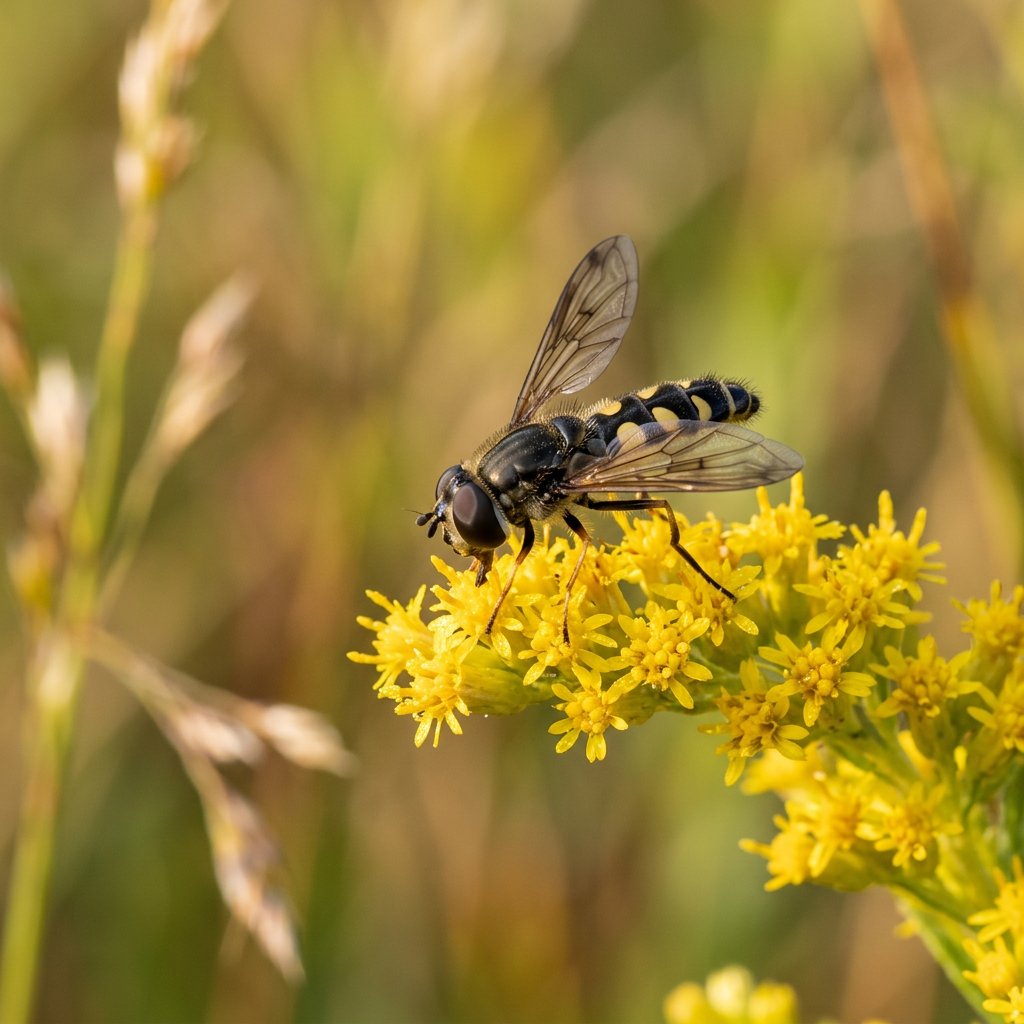
Known as one of the most convincing "imposters" in the insect world, Dioprosopa (commonly a type of Hoverfly or Syrphid Fly) is the garden’s secret security guard. While it wears the yellow and black "uniform" of a wasp to scare off predators, it is actually a harmless, nectar-loving fly. These aerobatic wonders are a gardener's best friend, providing pollination services as adults and acting as fierce pest-control agents in their youth.
🔍 How to Identify
- 👀 The "Two-Face" Eyes: They possess massive, wrap-around compound eyes that take up most of the head, a classic fly trait that distinguishes them from the smaller eyes of bees or wasps.
- ✈️ Stationary Flight: True to their name, they are masters of hovering. You will often see them suspended perfectly still in mid-air before darting rapidly to the next flower.
- 🐝 Wasp Mimicry: Their slender bodies feature bright yellow or orange bands against a dark background, a clever evolutionary trick called Batesian mimicry designed to fool birds into thinking they have a stinger.
🌲 Habitat & Ecology
- ⚔️ Aphid Assassins: While the adults sip nectar, the larvae are legless, slug-like hunters. They crawl over leaves, devouring massive quantities of aphids, making them essential for natural pest management.
- 🌸 Sunny Generalists: You’ll find them in sun-drenched gardens, meadows, and agricultural fields. They aren't picky about their flowers but are especially drawn to flat, open blooms like daisies or herbs where nectar is easy to reach.
⚠️ Safety & Toxicity
- 🛡️ Total Pacifists: Despite their scary wasp-like appearance, Dioprosopa flies have no stinger and cannot bite. They are completely harmless to humans, pets, and livestock.
- 🌿 Gentle Guests: They do not carry diseases and do not damage property. If one lands on you, it is likely just looking for a salt-rich sip of sweat or a place to rest in the sun.
✨ Fun Fact
Unlike bees and wasps which have four wings, Dioprosopa (like all true flies) only has two wings. Their hind wings have evolved into tiny, knob-like structures called "halteres" that act like high-tech gyroscopes, allowing them to perform their incredible hovering maneuvers.
More Details








