Info
Commonly known as the Smooth Pea Gall Wasp, this tiny architect spends most of its life hidden from view. It is famous not for its own appearance, but for the perfectly round, marble-like "homes" it forces wild roses to build. While many people worry when they see the word "wasp," this delicate creature is a master of botanical manipulation rather than a stinging predator.
🔍 How to Identify
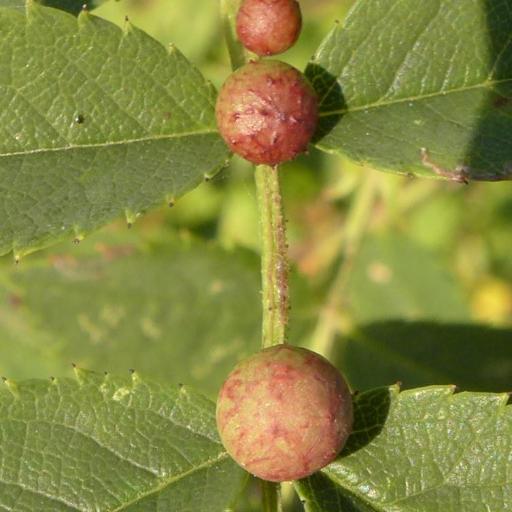
- 🛸 The Gall: Since the adult wasp is rarely seen, identification relies on its nursery. Look for smooth, perfectly spherical growths (pea galls) on the underside of rose leaves, usually 3–5mm in diameter.
- 🎨 Color Palette: These galls typically start as a pale yellowish-green and often develop a beautiful reddish-pink "blush" on the side exposed to the sun.
- 🐜 The Wasp: If you happen to spot the adult, it is a minuscule, dark-bodied insect with delicate, translucent wings—far smaller and less intimidating than a common yellowjacket.
🌲 Habitat & Ecology
- 🌹 Wild Rose Specialist: This wasp is a specialist, found almost exclusively on wild roses like the Dog Rose (Rosa canina). It triggers the plant to grow the gall by injecting specific chemicals during egg-laying.
- 🏠 The Fortress: Inside each smooth pea gall lives a single larva. The gall provides the baby wasp with a climate-controlled home and a constant food source, protecting it from predators until it is ready to emerge as an adult.
⚠️ Safety & Toxicity
- 🛡️ Harmless to Humans: These wasps do not have a functional stinger for defense. They are completely safe to observe and cannot hurt humans or children.
- 🐶 Pet Friendly: There is no known toxicity associated with these galls. If a curious dog nibbles on a leaf containing a gall, it is generally harmless, though the rose's own thorns are a much bigger hazard!
- 🌿 Garden Impact: While the galls might look like a "disease" to some gardeners, they are purely aesthetic and do not cause any significant health issues for the rose bush.
✨ Fun Fact
Many populations of the Smooth Pea Gall Wasp consist entirely of females. They reproduce through a process called "parthenogenesis," meaning the females can lay eggs that hatch into more females without ever needing a male to fertilize them!
More Details








