Info
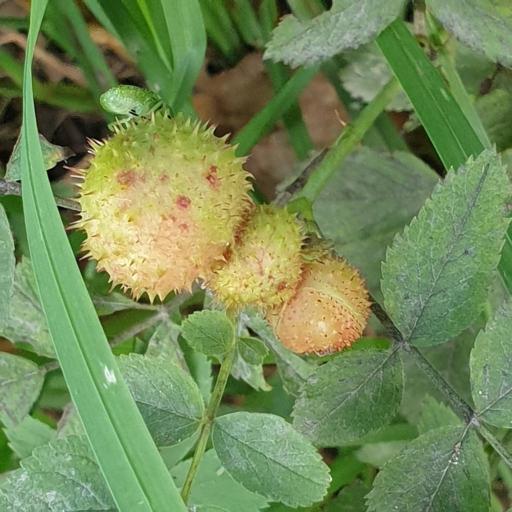
The Spiny Rose Gall Wasp is a tiny, secretive architect often noticed only by the strange, alien-looking "fruit" it forces wild roses to grow. Known as a gall-inducer, this insect doesn't just live on a plant; it chemically hijacks the rose’s DNA to build a fortified nursery for its young. While they might look like tiny, intimidating wasps, they are completely harmless to humans and play a fascinating role in the micro-ecosystem of a garden.
🔍 How to Identify
- 🐝 The Insect: The adult is a minute, dark wasp—barely 3 to 4 millimeters long—with a polished black thorax and a reddish-brown abdomen. You will rarely see the adult, as their lifespan is incredibly short.
- 🔴 The Spiny Gall: The most obvious sign is the gall itself: a round, pea-sized growth on rose stems or leaves, covered in stiff, reddish-green spines or prickles.
- 🍂 Internal Structure: If a gall is sliced open (after the insect has left), you will find a hard, woody core with a single central chamber where a solitary larva once lived.
🌲 Habitat & Ecology
- 🌹 Host Specificity: These wasps are incredibly picky eaters. They almost exclusively target wild roses, such as the Dog Rose (Rosa canina) or Sweet Briar, and are rarely found on heavily cultivated garden hybrid roses.
- 🏠 The Nursery Logic: The female wasp lays an egg in a leaf bud. As the larva hatches, its secretions trick the rose into growing a protective "house" around it. This gall provides the larva with both a constant food source and a fortress against predators.
- 🕸️ A Tiny Universe: These galls are often targeted by "parasitoid" wasps—smaller insects that sneak their own eggs into the gall to eat the Diplolepis larva. A single gall can become a complex battlefield for several different insect species.
⚠️ Safety & Toxicity
- ✅ Status: Completely harmless.
- 🛡️ No Sting: Despite being classified as a wasp, Diplolepis mayri does not have a functional stinger for defense. The "needle" at the back of the female is an ovipositor, used strictly for placing eggs deep inside plant tissue.
- 🌿 Plant Health: While the galls look dramatic and "diseased," they rarely cause significant harm to the rose bush. They are a cosmetic quirk rather than a fatal threat to your garden.
✨ Fun Fact
In medieval times, galls from the Diplolepis family were sometimes ground into powder and used in medicinal ointments or even placed under pillows, as folklore suggested they could cure insomnia and bring "pleasant dreams."
More Details








