Info
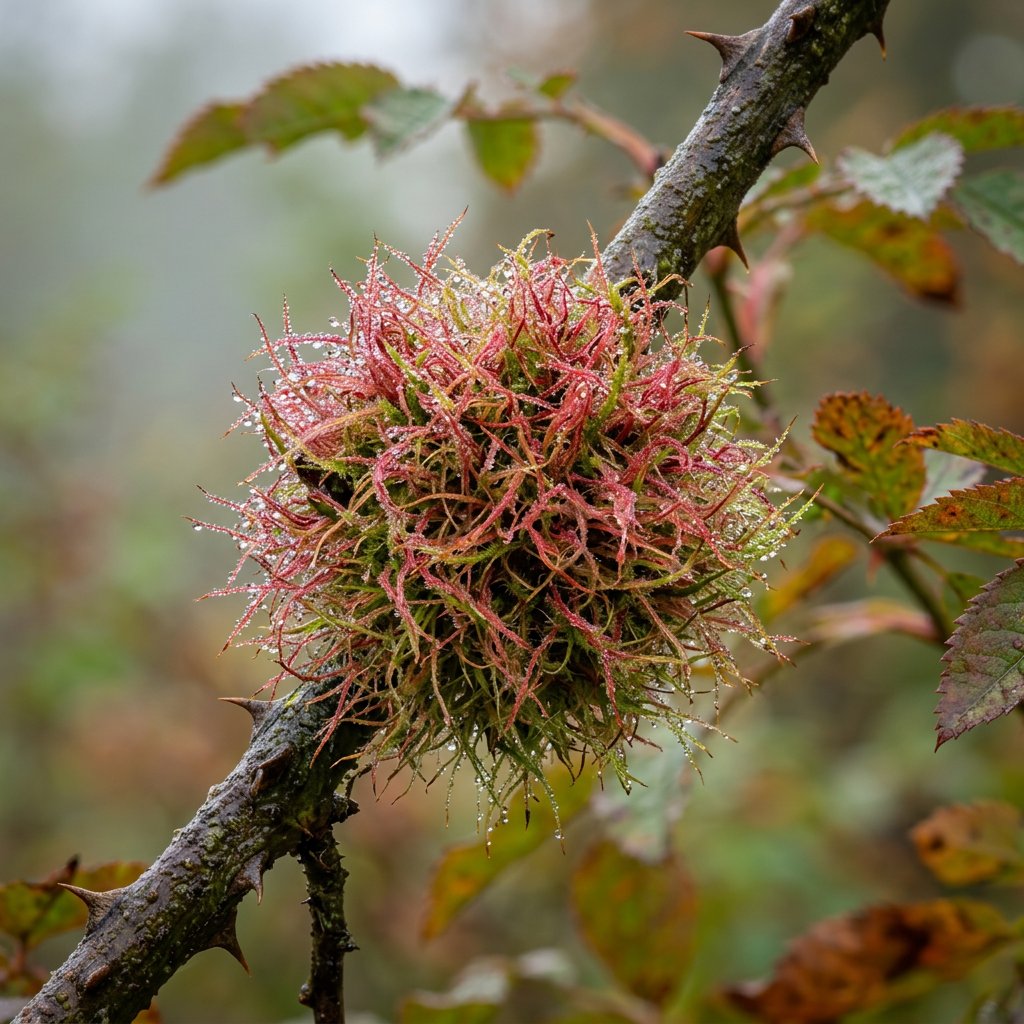
Often called the Robin's Pincushion, this tiny wasp is more famous for its architectural skills than its own appearance. Instead of a paper nest, it "tricks" wild rose bushes into building a fluffy, mossy nursery for its larvae. While the resulting growth looks like a strange fungus or a tangled wig, it is actually a complex, multi-chambered home created by the plant’s own distorted tissue.
🔍 How to Identify
- 🌿 The Gall: A distinctive, mossy mass of branched filaments that can grow up to 10cm in diameter. It looks like a ball of tangled, hairy threads.
- 🎨 Vibrant Colors: These "pincushions" start as a bright lime green in the early summer, transitioning to a deep, striking crimson red by autumn.
- 🐝 The Architect: The actual wasp is very small (about 4mm) and rarely noticed. It has a dark, slender body and spends most of its life inside the gall or searching for a new rose bud.
🌲 Habitat & Ecology
- 🌹 Wild Rose Specialist: This insect is host-specific, meaning it almost exclusively targets wild roses, particularly the Dog Rose (Rosa canina). You are much more likely to find them in wild hedgerows than on pampered garden roses.
- 🐣 A Complex Community: The gall isn't just for the wasp! Other "lodger" insects often sneak their eggs into the gall to steal the food and shelter, while tiny parasitic wasps may drill inside to hunt the Diplolepis larvae.
⚠️ Safety & Toxicity
- ✅ Harmless to Humans: Despite being a "wasp," this species does not have a stinger and is completely incapable of biting or stinging humans or pets.
- 🥀 Plant Health: While the galls look dramatic and "alien," they are generally harmless to the rose bush. They cause minor cosmetic changes but rarely affect the plant's overall survival or growth.
✨ Fun Fact
In old European folklore, these mossy galls were called "Bedeguar" and were believed to have medicinal properties. People would collect them and place them under their pillows, believing the "pincushions" could cure insomnia and ensure a peaceful night's sleep!
More Details








