Info
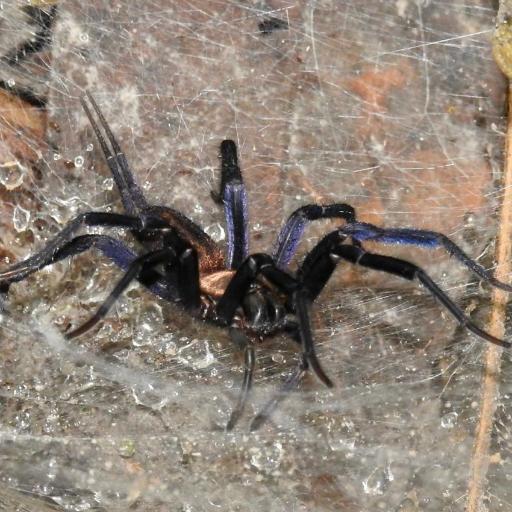
Known as the Long-tailed Funnel-web Spiders, these ancient-looking arachnids are often mistaken for insects or their more dangerous Australian cousins. They are master architects of the forest floor, weaving elaborate silken tunnels that act as high-speed sensory traps for unsuspecting prey. While their impressive fangs might look like something out of a creature feature, they are vital pest controllers that have survived largely unchanged for millions of years.
🔍 How to Identify
- 🕷️ Extravagant Spinnerets: The most defining feature is a pair of exceptionally long, finger-like appendages at the rear of the abdomen used for weaving complex silk structures.
- 🌑 Glossy Armor: They typically have a sleek, robust body that is dark brown, reddish-black, or charcoal, often covered in fine, sensitive hairs.
- 🕸️ The Funnel Web: Unlike the flat, sticky webs of garden spiders, Dipluridae build non-sticky, sheet-like webs that lead into a deep, silken retreat or "funnel" hidden in a crevice.
🌲 Habitat & Ecology
- 🍂 Forest Floor Residents: These spiders are primarily found in tropical and subtropical regions, tucked away in damp, cool spots like the undersides of logs, rocky embankments, or deep leaf litter.
- ⚡ Vibration Hunters: They are "sit-and-wait" predators. They sit at the mouth of their silk tube, feeling for the tiny vibrations of an insect walking across their silk sheet, before launching a lightning-fast ambush.
⚠️ Safety & Toxicity
- 🛡️ Defensive, Not Aggressive: While they may rear up and show their fangs if cornered, they prefer to retreat deep into their tunnels rather than bite.
- 🩹 The Bite: Their bite can be painful due to the size of the fangs, but for most species, the venom is not considered medically significant to humans.
- 🐾 Pet Safety: Keep curious pets away from their burrows; while not usually lethal, a bite can cause localized swelling and significant discomfort for a cat or dog.
✨ Fun Fact
- ⏳ Some members of the Dipluridae family are remarkably long-lived; females have been known to stay in the same silk-lined burrow for several years, "renovating" and expanding their home as they grow!
More Details








