Info
Often called the Introduced Pine Sawfly, this European traveler made its way to North America in the early 1900s. While the adults look like sturdy little wasps, they are actually stingless relatives of bees and ants. To gardeners and foresters, they are most famous for their colorful, "caterpillar-like" larvae that have a voracious appetite for pine needles.
🔍 How to Identify
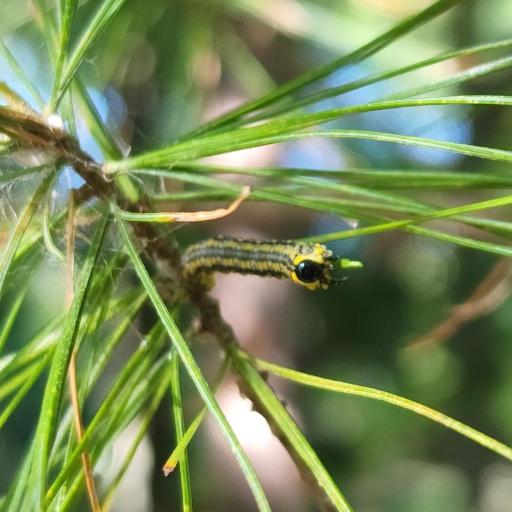
- 🐛 The Larvae: Look for a distinctive "marbled" pattern. They have a shiny black head and a body covered in yellow and black spots set against a greenish-white background.
- 🐝 Adult Silhouette: Unlike common yellowjackets, these have a broad, "thick" waist where the thorax meets the abdomen. They lack the classic thin "wasp-waist" entirely.
- 🧶 The Cocoon: You may find tough, brown, capsule-shaped cocoons (about the size of a large pill) attached to twigs or nestled among the needles.
🌲 Habitat & Ecology
- 🌲 Host Preference: This insect is a specialized feeder. It primarily targets the Eastern White Pine, though it will occasionally snack on Scots or Jack Pine if its favorite tree isn't nearby.
- 🍴 Feeding Habits: The larvae are the real heavy hitters. They feed in groups on the older needles first, sometimes stripping a branch bare. This "defoliation" can stunt the tree's growth and leave it looking thin and skeletal.
- 🔄 Life Cycle: They usually produce two generations per year—one in the spring and another in late summer—meaning your pines might face two waves of "hungry guests."
⚠️ Safety & Toxicity
- 🛡️ Human Safety: These insects are completely harmless to humans and pets. Despite their wasp-like appearance, they do not possess a stinger and are not aggressive.
- 🌳 Plant Risk: While they aren't "toxic," they are a significant garden foe. A heavy infestation can weaken a tree, making it more susceptible to diseases or harsh winters.
✨ Fun Fact
- 🪚 The Living Saw: The "Sawfly" name comes from the female's specialized egg-laying organ (ovipositor), which is shaped like a tiny serrated saw. She uses it to literally "saw" a slit into a pine needle to hide her eggs safely inside the plant tissue!
More Details








