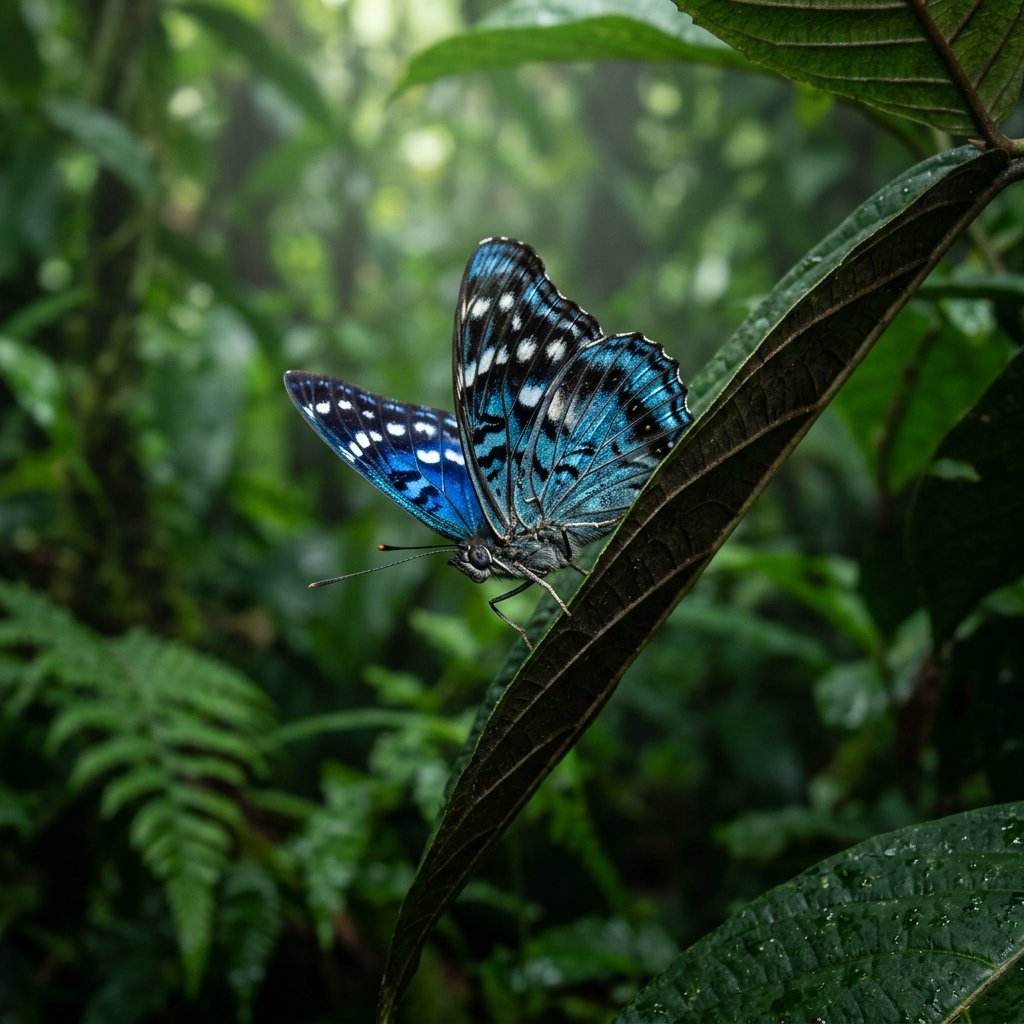
Info
Known affectionately as the Spotted Pierrot, members of the Discolampa genus are tiny, delicate butterflies that dance through the tropical landscapes of Southeast Asia. Their name "Pierrot" comes from their black-and-white spotted patterns, which early naturalists thought resembled the costume of a traditional French pantomime character. These little flyers are common sights in forest clearings and suburban gardens, often seen fluttering low to the ground in a rhythmic, circular fashion.
🔍 How to Identify
- ⚪ The Underside: The most striking feature is the underside of the wings, which are snowy white and decorated with distinct, jet-black spots and streaks that look like hand-painted ink.
- 💎 The Upperside: When they take flight, you’ll catch a glimpse of the top of their wings, which are typically a soft, iridescent pale blue or violet with dark borders.
- 🧵 Tail Filaments: Look closely at the bottom of the hindwings; they possess tiny, hair-like tails that help distract predators by mimicking the appearance of antennae.
🌿 Habitat & Ecology
- 🌳 The Jujube Connection: These butterflies are almost always found near Ziziphus trees (like the Indian Jujube). This is their primary host plant where they lay their eggs and where their caterpillars feed.
- 🦋 Low-Level Flyers: Unlike larger butterflies that soar high, Discolampa prefers to stay near the "understory," hovering just a few feet above the grass or shrubs to stay protected from high winds.
- 🌼 Pollination Partners: They are active pollinators for small, nectar-rich wildflowers, playing a quiet but vital role in maintaining the health of tropical meadows.
⚠️ Safety & Toxicity
- ✅ Harmless: The Spotted Pierrot is a "friend" to the garden. They do not bite, sting, or possess any venom.
- 🐾 Pet & Human Safe: They are completely non-toxic to humans and curious pets. They are very fragile, however, so it is best to observe their beauty without trying to touch their delicate wings.
✨ Fun Fact
The "tails" on their back wings are part of a clever survival strategy known as "false head" mimicry. By twitching these tails, the butterfly tricks birds into attacking the wrong end, allowing the butterfly to escape with only a small piece of wing missing!
More Details








