Info
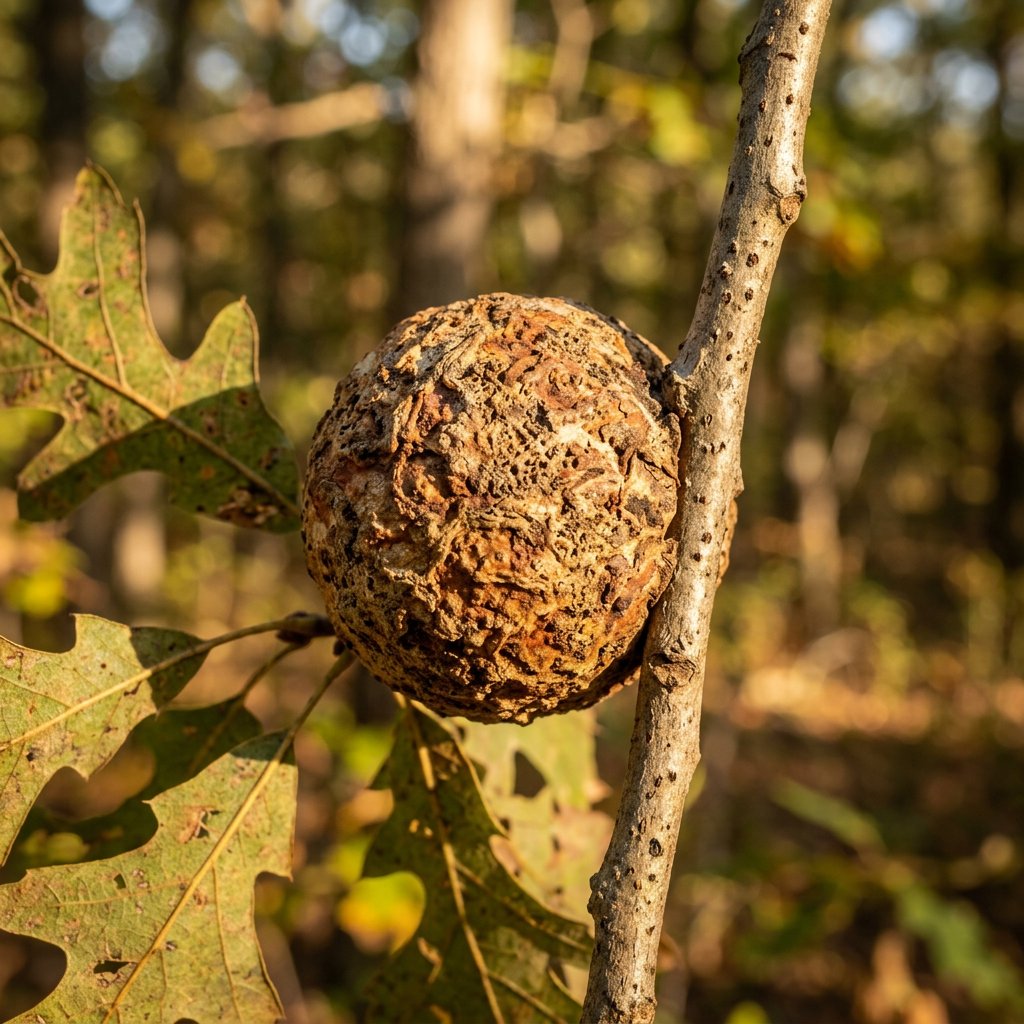
Often called the "Bullet Gall Wasp," members of the Disholcaspis genus are the tiny architects behind the mysterious wooden marbles found on oak branches. Rather than building paper nests, these wasps chemically "persuade" oak trees to grow specialized nurseries for their larvae. While they belong to the wasp family, they are secretive creatures that spend most of their lives tucked away inside these woody spheres.
🔍 How to Identify
- 🟤 The Galls: The most visible sign is the gall—a smooth, spherical, "bullet-shaped" growth on oak twigs. They start out green or pinkish and turn woody, tan, or dark brown as they age.
- 🐝 The Wasp: The adult is a minute, dark-colored wasp, usually less than 4mm long. They lack the bright yellow-and-black patterns of social wasps, appearing more like tiny, dark gnats.
- 🕳️ Exit Holes: Once the wasp matures and leaves its nursery, you will see a single, perfectly circular "escape hole" bored into the side of the wooden gall.
🌲 Habitat & Ecology
- 🌳 Oak Dependency: These insects are highly specialized and are almost exclusively found on Oak trees (Quercus). They are particularly fond of white oaks and scrub oaks.
- 🧪 Chemical Hijacking: The female wasp injects an egg into the tree's stem along with special chemicals. These chemicals trick the tree into diverting its own nutrients to grow the gall, providing the larva with both a fortress and a food source.
- 🐜 Ant Bodyguards: Many Disholcaspis galls secrete a sweet, sugary substance that attracts ants. The ants feed on the sugar and, in exchange, fiercely protect the gall (and the wasp larva inside) from predators.
⚠️ Safety & Toxicity
- 🛡️ Harmless to Humans: Despite being called "wasps," Disholcaspis are completely harmless to humans and pets. They do not have functional stings for defense and will not bite.
- 🍂 Tree Health: While a heavy infestation might look alarming or cause minor twig dieback, these wasps rarely cause significant harm to a healthy, mature oak tree. They are a natural part of the forest ecosystem.
✨ Fun Fact
The galls created by these wasps are incredibly rich in tannins. Historically, similar "oak apples" were crushed and used to create "Iron Gall Ink"—the very same permanent black ink used by Leonardo da Vinci to draw his masterpieces and by the founding fathers to write the U.S. Constitution!
More Details








