Info
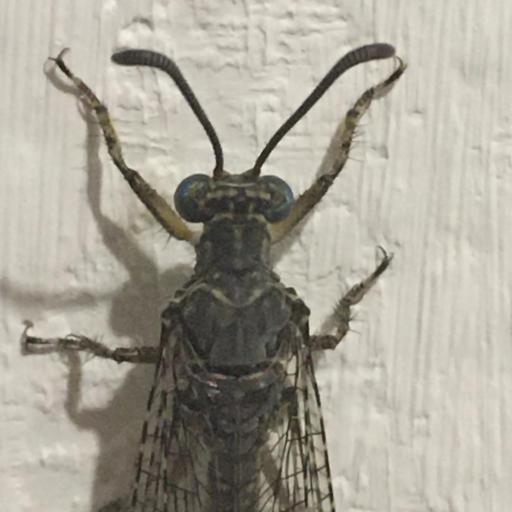
Often mistaken for a frail dragonfly or a skeletal moth, the Four-spotted Antlion is a master of the Mediterranean dusk. Despite its slightly menacing, "prehistoric" appearance, it is a fascinating garden ally that acts as a natural pest controller. While its name sounds ferocious, this delicate flier is one of nature’s most intricate examples of "hidden" beauty.
🔍 How to Identify
- 🪽 The Four Spots: The most defining feature is the set of four dark, brownish-black marks on its translucent wings—two on the forewings and two on the hindwings.
- 🛜 Clubbed Antennae: Unlike dragonflies (which have tiny, hair-like antennae), the Four-spotted Antlion has long, prominent antennae that end in a distinct thickened "club."
- 📏 Resting Pose: When it lands, it folds its long wings flat over its body in a tent-like shape, making it blend in perfectly with dry twigs or bark.
🌲 Habitat & Ecology
- 🏜️ Sandy Sanctuaries: These insects thrive in warm, dry environments. You’ll often find them near pine forests, scrublands, or gardens with loose, sandy soil where their larvae can hide.
- 🌙 Light Seekers: Adults are nocturnal and are frequently seen fluttering clumsily around porch lights or windows during mid-to-late summer.
- 🐜 Predatory Youth: While the adults are gentle fliers, the larvae are famous "doodlebugs." They hide under leaf litter or in the soil, using their massive, sickle-shaped jaws to ambush ants and other crawling insects.
⚠️ Safety & Toxicity
- ✅ Harmless Friend: The Four-spotted Antlion is completely safe for humans and pets. It does not possess a stinger and is not venomous.
- 🤏 The "Bite" Factor: Although its mandibles look intimidating, the adult insect is very docile. It rarely bites, and even if it tries to pinch when handled, it is generally too weak to break human skin.
✨ Fun Fact
- 🧪 The "No-Exit" Life: Antlion larvae are so efficient at processing food that they don't have an anus! They store all their metabolic waste inside their bodies for their entire larval life (which can last years) and finally expel it only after they transform into winged adults.
More Details








