Info
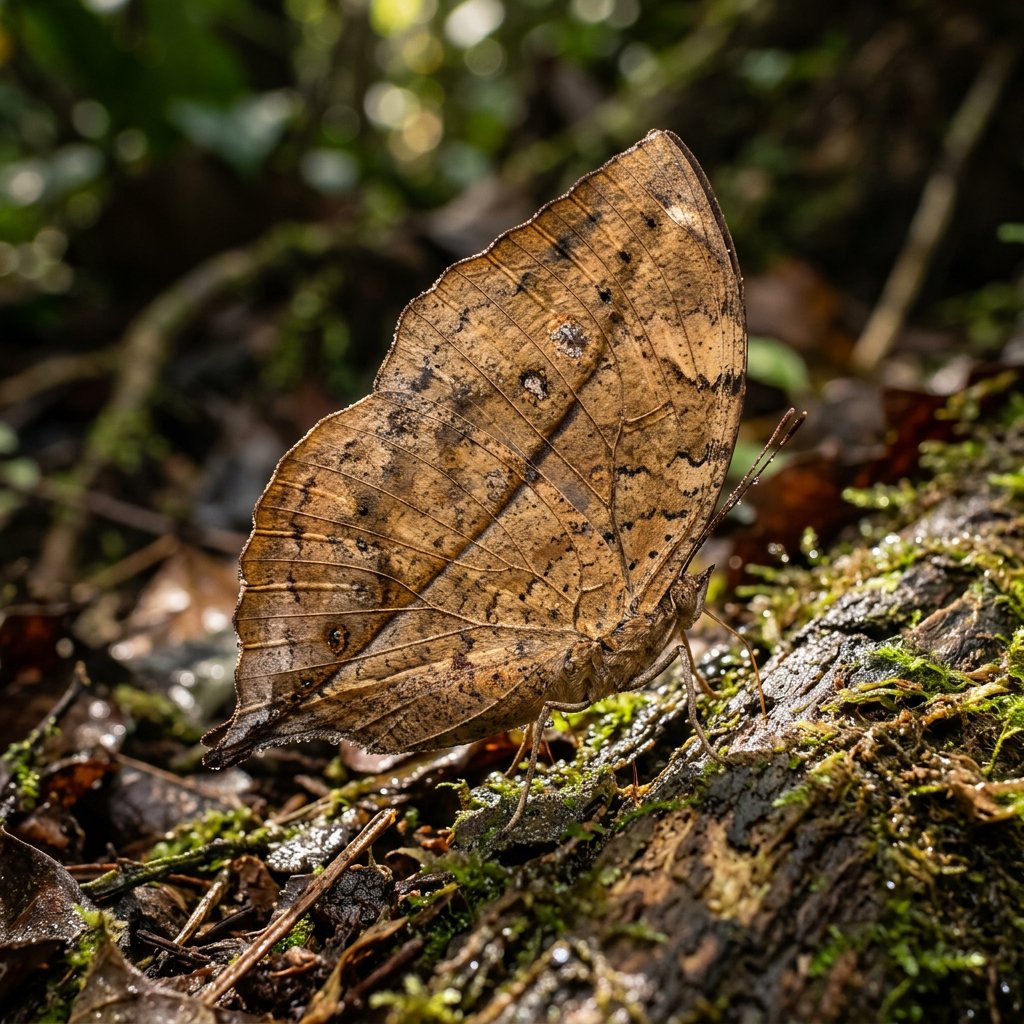
Often called the Autumn Leaf or Leafwing, Doleschallia bisaltide is one of nature’s most convincing illusionists. While it appears to be a dull, withered leaf when resting, it hides a vibrant burst of sunset orange beneath its wings. This butterfly is a master of camouflage, evolving to disappear in plain sight to escape the hungry eyes of birds and lizards.
🔍 How to Identify
- 🍂 The Grand Illusion: When the wings are closed, the underside perfectly mimics a dried brown leaf, complete with a dark "midrib" line and tiny spots that look like decaying fungal patches.
- 🟠 The Secret Color: The upper side of the wings is a striking, rich orange-brown with bold black tips, which is only visible when the butterfly is in flight.
- 🐛 The Caterpillar: The larvae are dark, almost black, covered in rows of intricate, branching spines and decorated with small white or reddish spots along their sides.
🌲 Habitat & Ecology
- 🌿 Plant Partners: You will most likely find this butterfly hovering around its favorite host plants, such as the Asystasia (Chinese Violet) or Graptophyllum (Caricature Plant), where it lays its eggs.
- 🍎 A Sweet Tooth: While they do visit flowers, these butterflies are particularly fond of the juices from overripe, fermenting fruit that has fallen to the forest floor.
- 🍃 The "Drop" Defense: If startled while resting, the Autumn Leaf will often drop straight to the ground like a falling leaf, remaining perfectly still to blend in with the leaf litter.
⚠️ Safety & Toxicity
- ✅ Harmless Beauty: The Autumn Leaf is a "friend" to the garden. It does not bite, sting, or possess any venom.
- 🧤 Caterpillar Caution: While not dangerous, the spines on the caterpillars can be quite prickly. It is best to admire them without touching, as the spines may cause mild skin irritation for those with sensitive skin.
✨ Fun Fact
The "stem" of the leaf you see when the butterfly rests is actually a clever extension of its hind wings! This tiny "tail" touches the branch, completing the optical illusion so perfectly that it can fool even the most experienced naturalists.
More Details








