Info
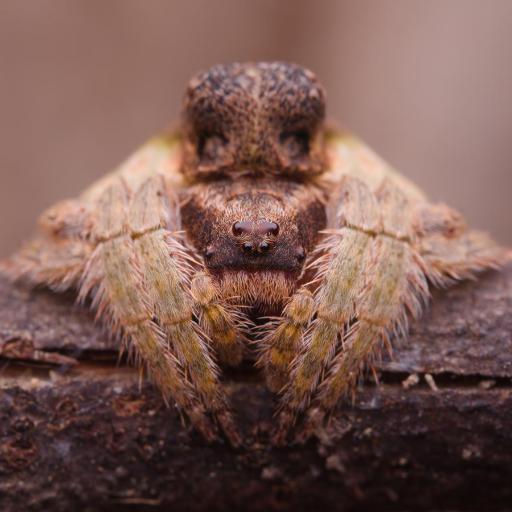
Meet the Wrap-around Spider, one of nature’s most incredible camouflage artists. Found primarily in Australia and Oceania, these arachnids have mastered the art of "vanishing" in plain sight. While they may look like something out of a sci-fi movie, they are actually shy, nocturnal hunters that spend their days pretending to be nothing more than a bump on a branch.
🔍 How to Identify
- 🕸️ The Concave Belly: Unlike most spiders with bulbous bodies, the Dolophones has a concave (hollowed-out) underside, allowing it to fit perfectly against the curve of a twig.
- 🪵 Bark Mimicry: Their abdomen is covered in a series of small, shield-like disks and patterns that perfectly replicate the texture, color, and "cracks" of tree bark.
- 🕷️ The Flat Pose: When resting, they tuck their legs tightly against their body and flatten themselves so completely that they lose their three-dimensional silhouette.
🌲 Habitat & Ecology
- 🌳 Eucalyptus Enthusiasts: They are most commonly found on Acacia and Eucalyptus trees. They choose branches that match their specific color phase, which can range from light grey to dark brown.
- 🌙 Night Shift: They are orb-weavers, meaning they spin traditional circular webs. To stay safe from birds, they build their webs at night and tear them down before dawn, retreating to their "wrap-around" position for the day.
⚠️ Safety & Toxicity
- ✅ Harmless Neighbor: Dolophones are considered non-toxic to humans. They are extremely docile and their first instinct is to freeze and camouflage rather than bite.
- 🐶 Pet Safety: They pose no significant threat to cats or dogs. Even if a curious pet nudges one, the spider is more likely to drop to the ground like a piece of dead wood than to attack.
✨ Fun Fact
The camouflage of the Wrap-around Spider is so effective that even seasoned entomologists often struggle to find them. If you poke what looks like a small knot on a branch and it "unfolds" into a spider, you’ve likely found a Dolophones!
More Details








