Info
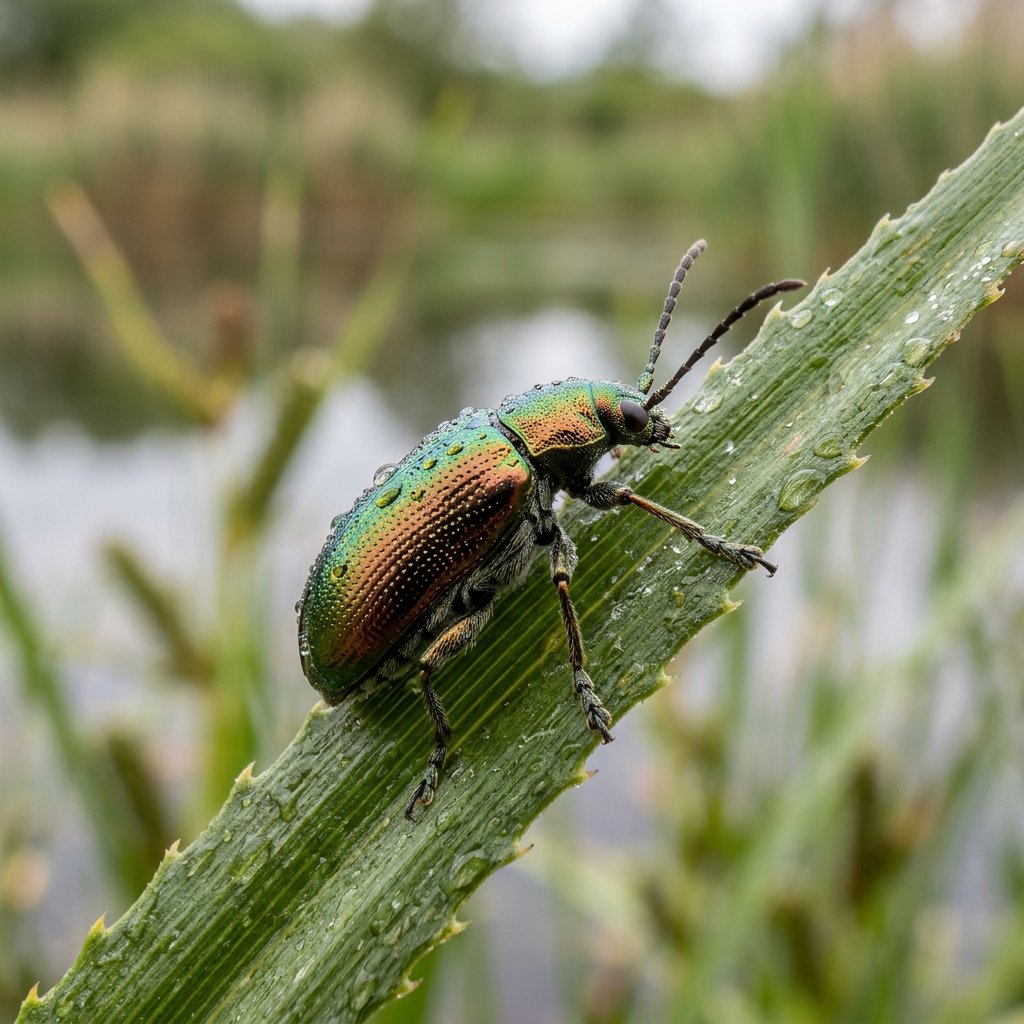
Often referred to as the Common Reed Beetle, Donacia vulgaris is a shimmering "living jewel" of the wetlands. These beetles are famous for their brilliant metallic luster, reflecting shades of bronze, copper, and emerald green as they scurry across reeds. Found predominantly near ponds, marshes, and slow-moving streams, they are a sign of a healthy, vibrant aquatic ecosystem.
🔍 How to Identify
- ✨ Metallic Finish: The elytra (wing covers) have a distinct, polished metallic sheen that shifts between gold, green, and deep bronze depending on the light.
- 📏 Elongated Build: Unlike many rounder beetles, this species has a notably slender and elongated body shape, built for navigating narrow reed blades.
- 📡 Thread-like Antennae: They possess long, elegant antennae that are often more than half the length of their entire body.
🌲 Habitat & Ecology
- 💧 Aquatic Associations: You will almost exclusively find them on emergent water plants like Bur-reeds (Sparganium) and Sedges (Carex).
- 🤿 The "Scuba" Larvae: While the adults enjoy the sunshine, the larvae live entirely underwater. They have a fascinating specialized "spine" on their rear that they use to pierce the roots of aquatic plants to breathe the oxygen trapped inside the plant tissue.
- ☀️ Sun Lovers: Adults are most active on warm, sunny days in late spring and summer, where they can be seen feeding on the pollen and leaves of their host plants.
⚠️ Safety & Toxicity
- ✅ Friendly Neighbor: Donacia vulgaris is completely harmless to humans and pets. They do not sting, bite, or produce any irritating chemicals.
- 🌿 Garden Impact: While they nibble on aquatic foliage, they are rarely considered pests and usually exist in a balanced harmony with their environment without causing significant damage.
✨ Fun Fact
The Donacia genus is a marvel of biological engineering; the larvae are so well-adapted to their underwater lifestyle that they never need to swim to the surface for air, effectively "stealing" their oxygen directly from the lungs of the plants they eat!
More Details








