Info
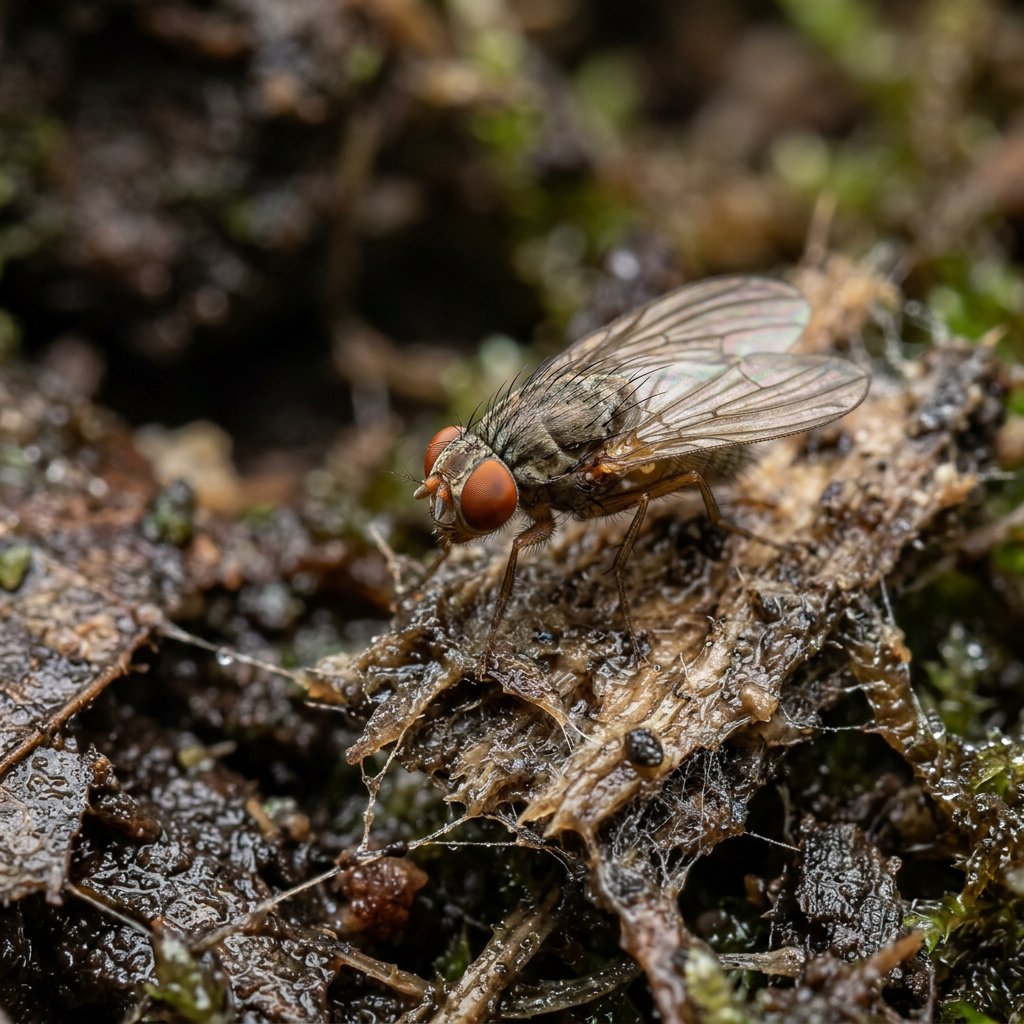
Often called the "Striped Fruit Fly," Drosophila busckii is the elegant, racing-striped cousin of the common vinegar fly. Found in nearly every corner of the globe, this tiny scavenger is a master of the "clean-up crew," specializing in breaking down decaying organic matter. While they might seem like uninvited kitchen guests, they are actually fascinating subjects of biological study with a very specific palate.
🔍 How to Identify
- 🧪 Thoracic Stripes: The most defining feature is the three to four distinct, dark longitudinal stripes running down its yellowish thorax (chest), looking much like tiny racing stripes.
- 👀 Compound Eyes: It possesses large, prominent compound eyes that are typically a deep reddish-brown, providing a wide field of vision to detect movement.
- 🪶 Body Shape: They are petite, usually measuring only 2–3mm in length, with a slightly more slender profile than the common Drosophila melanogaster.
🌲 Habitat & Ecology
- 🥦 The Veggie Specialist: Unlike many fruit flies that crave sugary fruits, D. busckii has a specific affinity for decaying vegetables. They are frequently found near rotting potatoes, onions, and cruciferous plants like cabbage.
- ♻️ Nature’s Recycler: In the wild, they inhabit damp forests and gardens, where they lay eggs in fermenting vegetation. Their larvae help accelerate the composting process, turning waste back into nutrient-rich soil.
⚠️ Safety & Toxicity
- 🛡️ Non-Aggressive: These flies are completely harmless to humans and pets. They do not have a stinger, nor do they have mouthparts capable of biting or piercing skin.
- 🧼 Sanitation Note: Because they frequent decaying matter, they can mechanically transport bacteria onto fresh food. To manage them, simply remove overripe produce and keep compost bins tightly sealed.
✨ Fun Fact
Drosophila busckii is a pioneer of science! It was one of the very first species used in early genetic research in the early 1900s, helping scientists unlock the secrets of how DNA and inheritance work before its more famous relative, the common fruit fly, took the spotlight.
More Details








