Info
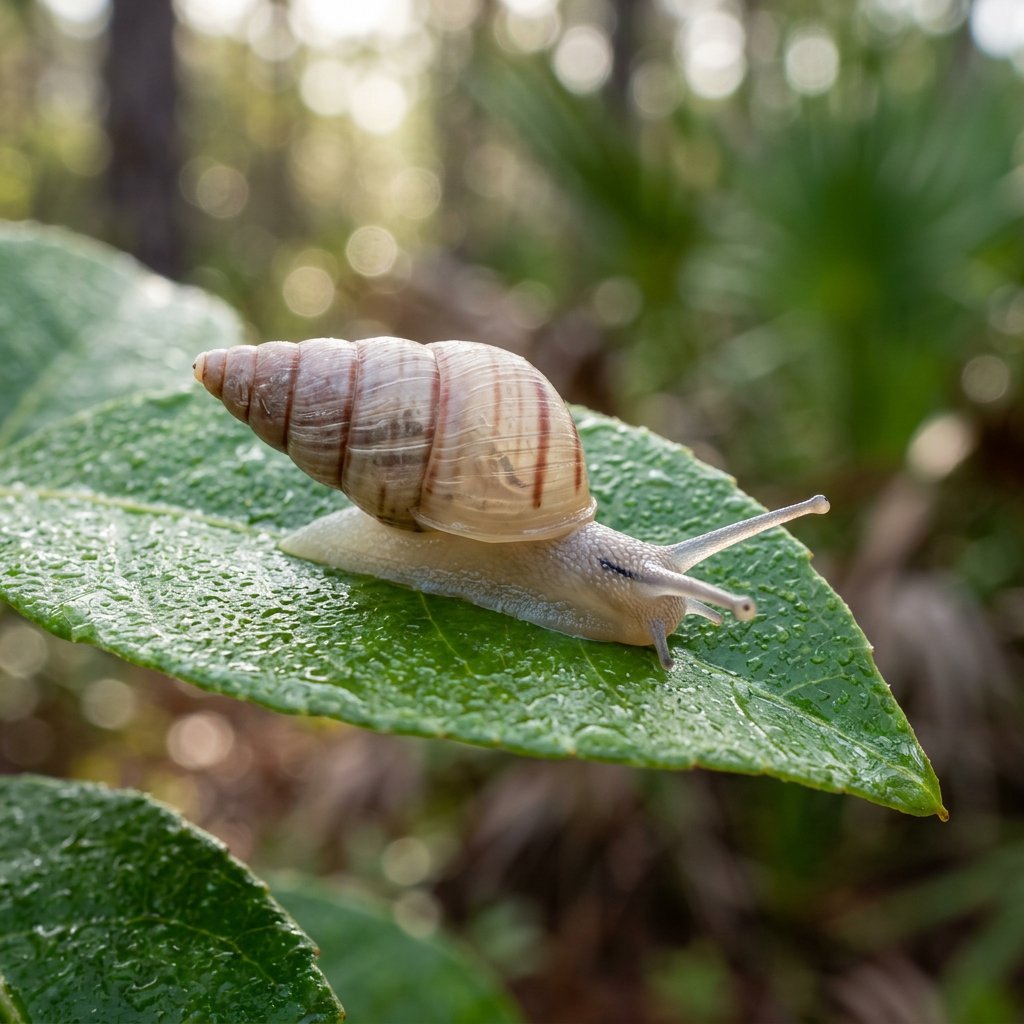
Often referred to as the Manatee Treesnail, Drymaeus dormani is a living jewel of the Florida landscape. While many gardeners panic at the sight of a snail, this elegant climber is actually a "janitor" of the canopy, spending its life patrolling tree trunks to keep them clean. Historically, citrus growers prized these snails so much that they would manually move colonies from grove to grove to help maintain tree health.
🔍 How to Identify
- 🐚 The Shell: Look for a smooth, polished, and translucent white or cream-colored shell. It has a high, pointed spire that gives it an elegant, conical shape.
- 🎨 Distinct Markings: It is famously decorated with four rows of interrupted chocolate-brown spots that follow the spiral of the shell, looking almost like a series of dashes or square-ish "windows."
- 📏 Size & Texture: Adults usually reach about 20 to 30 millimeters in length. Unlike many garden snails, the shell of the Manatee Treesnail is notably shiny and lacks heavy ribbing or rough textures.
🌳 Habitat & Behavior
- 🍽️ The "Janitor" Diet: Unlike the invasive Giant African Land Snail, this species does not eat your prize-winning flowers or citrus leaves. Instead, it grazes on algae, fungi, and "sooty mold" that grows on the bark and leaves of trees.
- 🌧️ Rainy Day Activity: These snails are highly arboreal (tree-dwelling) and are most active during periods of high humidity or immediately after a rainstorm. During dry spells, they "glue" themselves to a branch or leaf and enter a dormant state to stay hydrated.
- 🍊 Preferred Real Estate: While they love citrus trees, they are also frequently found on Live Oaks and Cabbage Palms in native Florida hammocks.
⚠️ Safety & Toxicity
- 🟢 Safe for Plants: These are beneficial "friends" of the garden. They help reduce the need for fungicides by cleaning the surfaces of your plants.
- 🧼 Handling Caution: While not toxic, like all wild snails and slugs, they can potentially carry parasites (such as rat lungworm). If you must move one, it is best to wear gloves or wash your hands thoroughly with soap and water immediately afterward.
✨ Fun Fact
In the early 1900s, Florida citrus farmers considered these snails so valuable for pest control that they were actually sold and shipped across the state. They were nicknamed "The Snail of the Citrus Belt" because of their incredible ability to polish a tree's bark until it looked hand-cleaned.
More Details








