Info
Known as the "Sherbet Moth" or the "Pink Lemonade Moth," the Rosy Maple Moth is one of North America’s most vibrantly colored insects. Looking more like a fuzzy, felted toy than a living creature, this moth is a gentle nocturnal visitor that brings a splash of neon color to the summer nights of the Eastern United States and Canada.
🔍 How to Identify
- 🎨 Color Palette: Its wings are a striking combination of bright bubblegum pink and creamy lemon yellow, usually arranged in distinct bands.
- ☁️ Woolly Texture: The body is exceptionally "fluffy," covered in dense, insulating yellow hairs that give it a soft, cuddly appearance.
- 📏 Feathery Antennae: Males possess prominent, comb-like antennae used to detect female pheromones from great distances, while females have much simpler, thinner antennae.
🌲 Habitat & Ecology
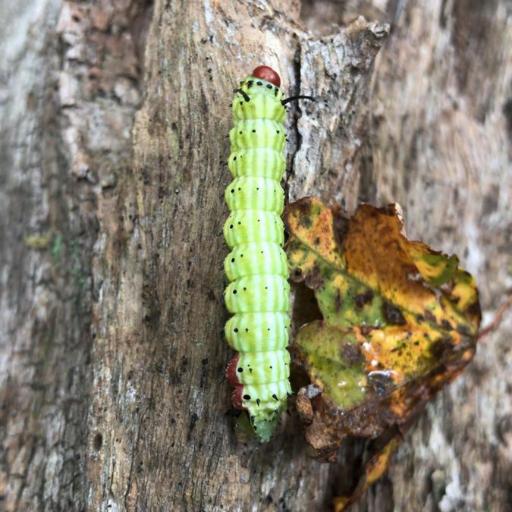
- 🍁 The Maple Connection: As the name suggests, these moths are inextricably linked to Maple trees. While the adults don't eat, their larvae (known as Green-striped Mapleworms) feed on the leaves of Red, Silver, and Sugar Maples.
- 🌙 Nocturnal Lifestyle: They are strictly active at night. During the day, they rest on tree trunks or near porch lights, where their bright colors surprisingly help them blend in with the colorful seed pods (samaras) of maple trees.
- 🍽️ The "No-Food" Rule: Once they reach their moth stage, they stop eating entirely. They lack functional mouthparts and live only for a few days to a week, using stored energy to find a mate and lay eggs.
⚠️ Safety & Toxicity
- ✅ Harmless Beauty: The Rosy Maple Moth is a "friend" in every sense. They do not bite, they do not sting, and they do not possess any irritating hairs like some of their more "stings-on-contact" relatives.
- 🌿 Gardener’s Note: While the adult moths are harmless, large populations of their caterpillars can occasionally defoliate maple trees. However, this is rarely fatal to the tree and is usually considered a natural cycle rather than a pest emergency.
✨ Fun Fact
The Rosy Maple Moth is the smallest of the "Silk Moths" (family Saturniidae). Despite their small size, they belong to the same family as the giant Luna Moth and the Atlas Moth!
More Details








