Info
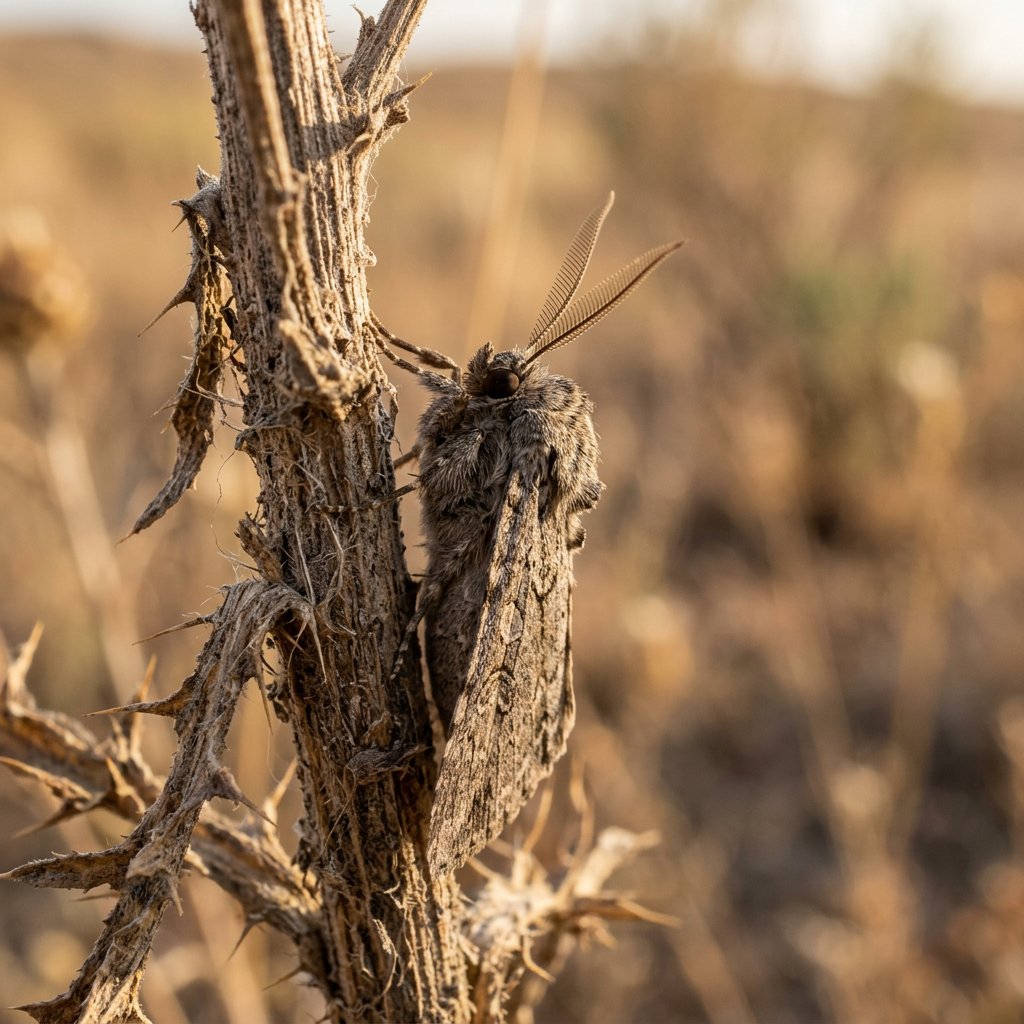
Known as the Garlic Leopard Moth, this subtly beautiful insect is a master of camouflage. While the adult moth looks like a delicate piece of marbled parchment, it is well-known among Mediterranean gardeners as the secret resident of the onion patch. It belongs to the "Carpenter Moth" family, named for the way their larvae "remodel" the interior of plants.
🔍 How to Identify
- 🦋 Wing Pattern: Intricate mottled patterns of creamy white, tan, and chocolate brown that resemble leopard spots or cracked bark.
- 🧶 Fuzzy Thorax: A very stout, hairy body that gives it a "cuddly" or woolly appearance common to the Cossidae family.
- 🐛 The "Red" Larva: If you are weeding the garden and find a bright pinkish-red caterpillar inside a bulb, you have likely found the immature form of this moth.
🌲 Habitat & Ecology
- 🧄 The Allium Specialist: This moth is a dedicated fan of the Allium genus. You will almost exclusively find them near wild garlic, leeks, or onion fields where the larvae can feed safely inside the stems.
- 🌙 Night Owl: The adults are strictly nocturnal. During the day, they press themselves flat against stones or tree bark, becoming nearly invisible to birds and collectors alike.
- 🏜️ Sun Seeker: They thrive in warm, dry environments, particularly across Southern Europe, North Africa, and the Middle East.
⚠️ Safety & Toxicity
- ✅ Harmless to Humans: The Garlic Leopard Moth is a "gentle neighbor." They do not possess a stinger, and they do not bite.
- 🐶 Pet Safe: They are non-toxic to cats and dogs. However, like many fuzzy moths, the tiny hairs on their body can occasionally cause very mild mouth irritation if a pet tries to eat one.
- 👨🌾 Garden Foe: While safe for people, they are a "foe" to the vegetable patch. Their tunneling behavior can weaken garlic bulbs, making them a headache for organic farmers.
✨ Fun Fact
Adult Garlic Leopard Moths are the ultimate "minimalists." They are born without functional mouthparts, meaning they never eat a single meal during their entire adult life! They live only a few days, fueled entirely by the energy they stored as caterpillars.
More Details








