Info
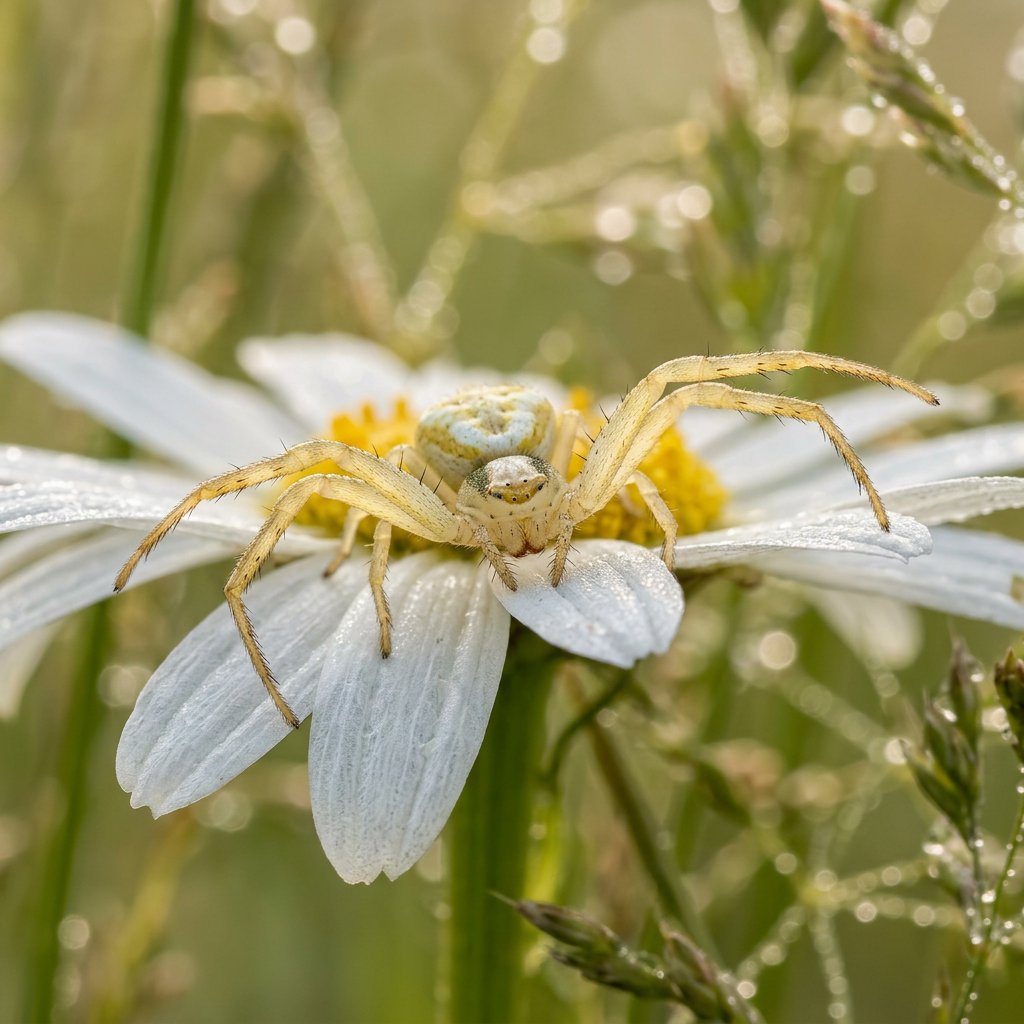
Often called the Three-spined Crab Spider, this vibrant little hunter is the "ninja" of the garden. Unlike many of its cousins that prefer bright flower petals, Ebrechtella tricuspidata is a master of blending into lush green leaves and shrubs. It gets its common name from its unique sideways gait and wide, crab-like posture, making it a fascinating find for any backyard explorer.
🔍 How to Identify
- 🍃 The Color Palette: It typically sports a brilliant, translucent lime-green body, though females may sometimes show a yellowish hue to match their surroundings.
- 🦀 Crab-like Stance: The first two pairs of legs are significantly longer and stronger than the back pairs, held out to the sides in a wide arc, ready to snap shut on prey.
- 📐 Triangular Abdomen: The abdomen is often slightly pointed or heart-shaped, frequently featuring a dark, "U" or "V" shaped marking near the rear that gives it its "three-spined" name.
🌲 Habitat & Ecology
- 🕷️ The Patient Predator: This spider is an ambush hunter that doesn’t use a web to catch food. Instead, it sits perfectly still on the underside or edge of a leaf for hours, waiting for a fly or small moth to wander into its "grasping zone."
- 🌳 Garden Guardian: It is a highly beneficial resident for gardeners. It acts as natural pest control, patrolling shrubs and tall grasses to keep populations of small invasive insects in check.
⚠️ Safety & Toxicity
- 🛡️ Harmless Ally: The Three-spined Crab Spider is considered harmless to humans and larger pets. It is shy and will almost always choose to run or hide rather than confront a human.
- 🤏 Biting Capability: While it does possess venom to paralyze its tiny insect prey, its fangs are generally too small to pierce human skin. In the rare event of a "pinch," the sensation is mild and not medically significant.
✨ Fun Fact
Unlike most spiders that can only move forward or backward, crab spiders can walk sideways with impressive speed, allowing them to shimmy around to the back of a leaf the moment they sense a predator (or a curious human) approaching!
More Details








