Info
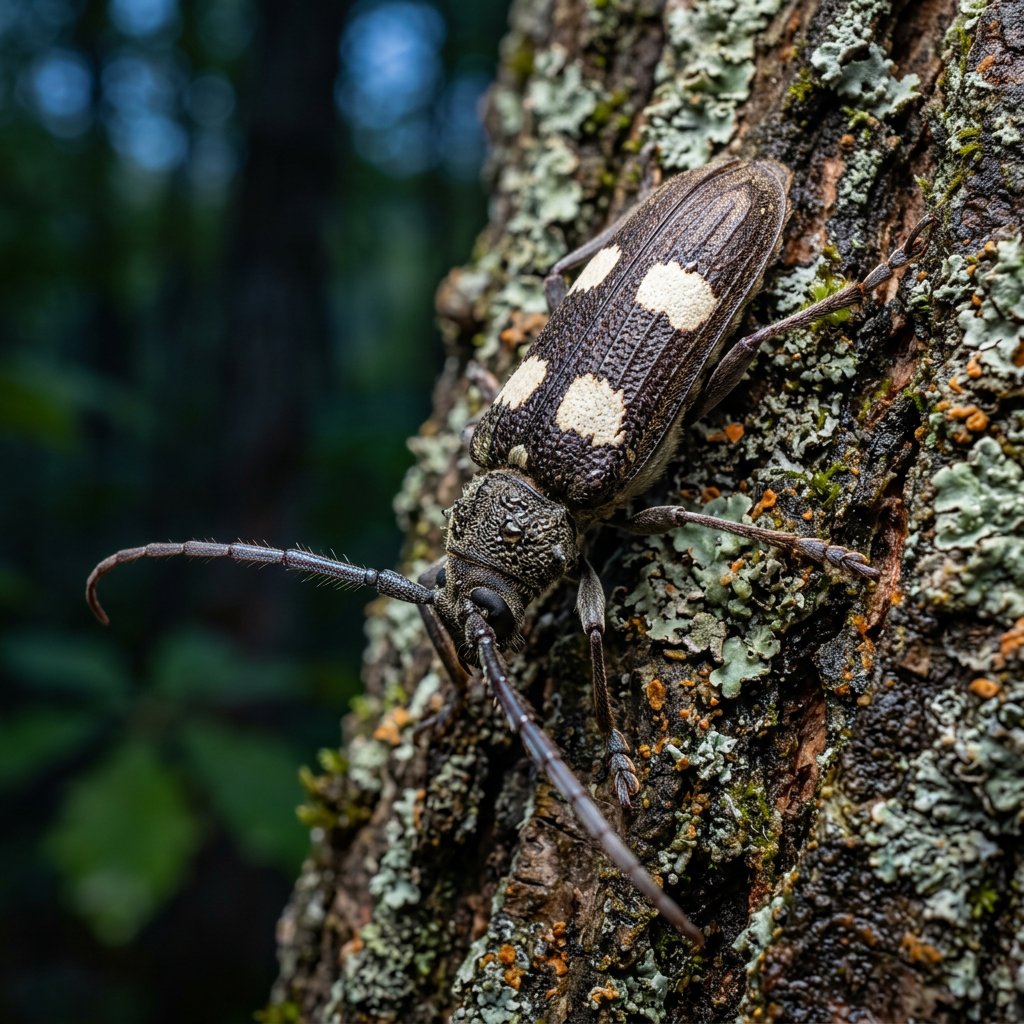
The Ivory-marked Beetle is a striking member of the long-horned beetle family, often looking more like a piece of polished wooden jewelry than an insect. Known for its elegant, slender body and distinctive "ivory" spots, this beetle frequently surprises homeowners by emerging from hardwood furniture or flooring—sometimes years after the wood was first processed!
🔍 How to Identify
- 💎 The Ivory Marks: Its most famous feature is the four pairs of raised, creamy-white or ivory-colored spots on its wing covers (elytra).
- 🦒 Long Antennae: Like all long-horned beetles, its antennae are remarkably long, often exceeding the length of its entire body, used to "smell" its environment.
- 🍂 Golden Hue: The body is typically a warm, tan-to-golden brown color with a slightly fuzzy or velvet-like texture.
- 📏 Slender Shape: They have a narrow, cylindrical body shape, reaching about 15 to 25 millimeters in length.
🌲 Habitat & Ecology
- 🪵 The Wood-Dweller: In nature, these beetles are found in the heartwood of deciduous trees like Oak, Ash, Hickory, and Maple. They play a vital role in the forest by helping to break down old timber.
- 💡 Night Owl: They are primarily nocturnal and are frequently drawn to porch lights or bright windows during the mid-to-late summer months.
- 🏠 Home Guest: Because the larvae live deep inside wood, they are sometimes accidentally harvested with timber. If the wood isn't kiln-dried, the beetle may eventually emerge from finished furniture or wooden beams inside a home.
⚠️ Safety & Toxicity
- 🛡️ Non-Toxic: The Ivory-marked Beetle is not venomous and does not possess a stinger. They are generally considered harmless "accidental" guests.
- 🦷 Strong Mandibles: While not aggressive, they do have strong jaws designed for chewing through solid wood. If handled roughly, they may deliver a small, pinch-like nip, but it is not medically significant.
- 🐶 Pet Safety: They are not toxic to cats or dogs, though the crunchy exoskeleton might cause a minor tummy ache if swallowed.
✨ Fun Fact
The Ivory-marked Beetle is a world champion of "playing the long game." Because they can survive in very dry, seasoned wood, their larval stage can be incredibly slow. There are documented cases of these beetles emerging from antique furniture up to 40 years after the piece was manufactured!
More Details








