Info
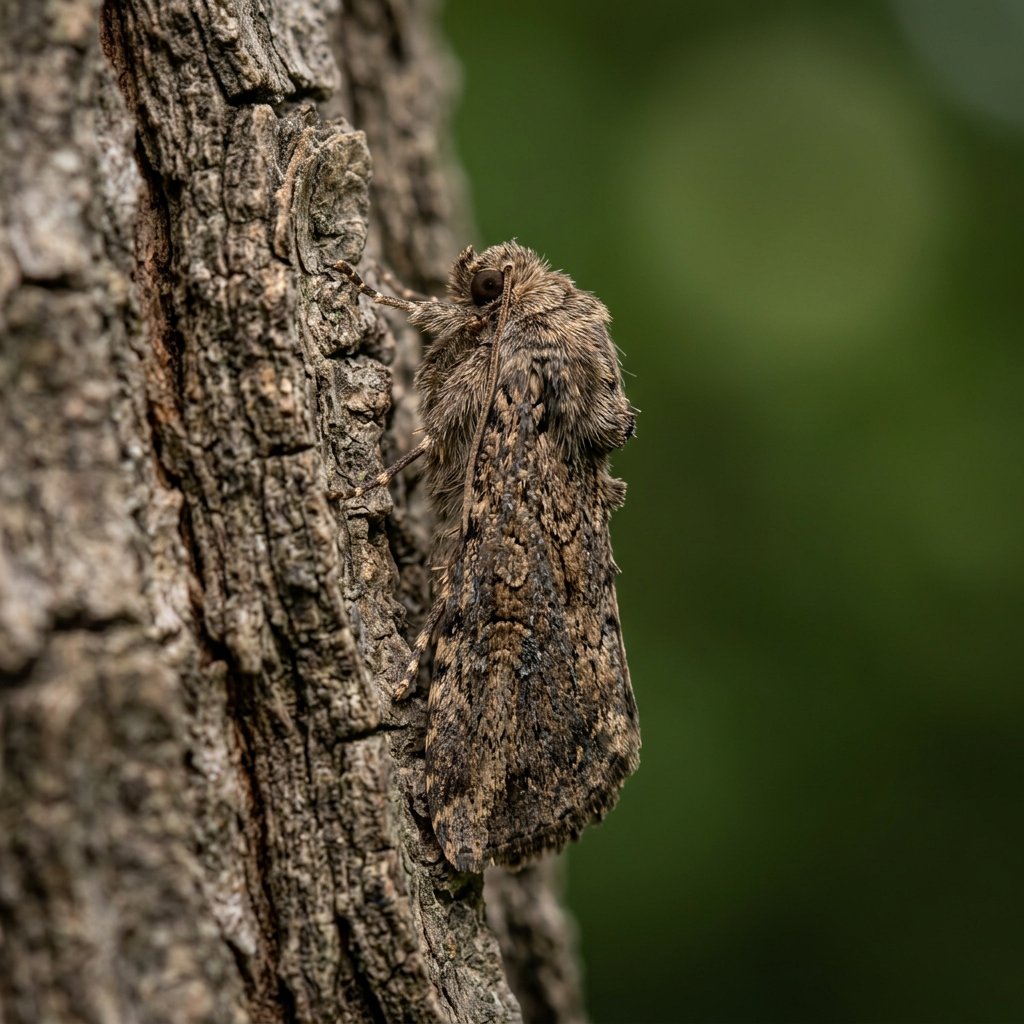
Often overlooked because it looks exactly like a piece of rough bark or a dried twig, the Locust Twig Borer (Ecdytolopha insiticiana) is a master of camouflage. This small moth is a specialist of the forest, spending its life cycle almost entirely in association with the Black Locust tree. While the adult moth is a cryptic beauty, its larvae are tiny "architects" that reshape the branches they call home.
🔍 How to Identify
- 🦋 The Wings: The forewings are a mottled tapestry of chocolate brown, ash gray, and tan, featuring a distinct dark patch near the tip that helps it blend into tree bark.
- 📐 Resting Posture: When at rest, it holds its wings in a steep, roof-like shape over its body, making it look more like a splinter of wood than a living insect.
- 🐛 The Larvae: Though rarely seen outside their tunnels, the larvae are pale, creamy-white caterpillars with a dark brown head, measuring about half an inch long.
🌲 Habitat & Ecology
- 🌳 The Host Tree: This moth is a specialist. You will almost exclusively find it near Black Locust (Robinia pseudoacacia) or occasionally other locust species, where it plays its role in the local woodland ecosystem.
- 🏗️ Gall Maker: The larvae bore into the centers of succulent new twigs. This irritation causes the tree to grow a "gall"—a distinctive, spindle-shaped woody swelling about 1 to 3 inches long.
- 🌙 Nocturnal Life: As a moth, it is most active at night. During the day, it stays perfectly still on trunks or branches, relying on its "bird-dropping" or "bark-bit" mimicry to hide from hungry birds.
⚠️ Safety & Toxicity
- ✅ Harmless: This insect is completely safe for humans and pets. It does not bite, sting, or carry any diseases.
- 🌿 Plant Impact: While it is a "pest" in the sense that it causes galls and can cause some twig dieback or "flagging," it rarely kills healthy, mature trees. It is mostly an aesthetic concern for gardeners who want perfectly straight locust branches.
✨ Fun Fact
The Locust Twig Borer is a champion of "disruptive coloration." Its wing patterns are so complex that they break up the moth's outline, making it nearly invisible to predators even when it is sitting in plain sight on a sunny tree trunk!
More Details








