Info
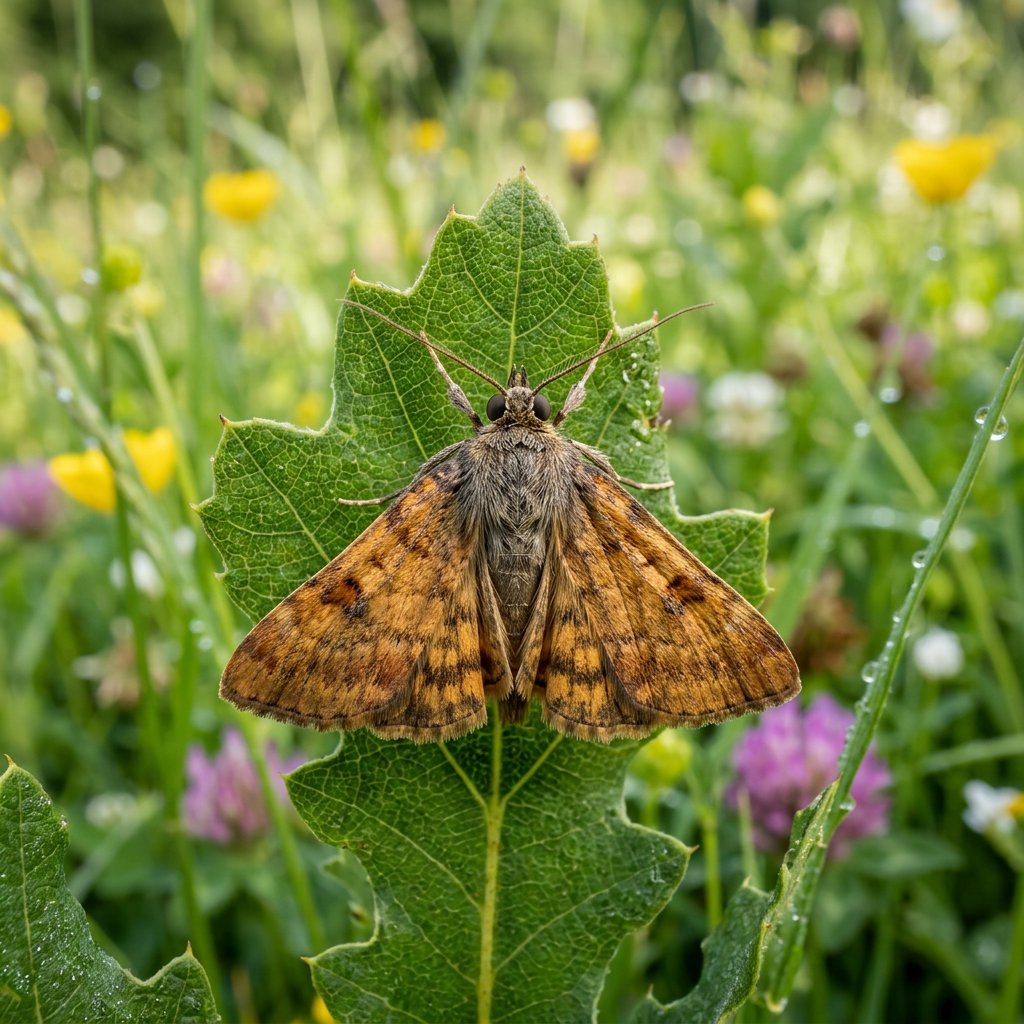
Often referred to as the "Yellow-veined Moth" or a relative of the snout moths, Ecpyrrhorrhoe is a genus of delicate, golden-hued moths that look like tiny, animated leaves. These nocturnal visitors are frequently found fluttering around porch lights or hiding under foliage during the day, where their intricate wing patterns provide the perfect camouflage against dappled sunlight.
🔍 How to Identify
- 🎨 Intricate Patterns: Their wings are typically a warm yellow or ochre, decorated with fine, wavy brown lines (called fasciae) that look like the veins of a dried leaf.
- 📐 Delta Shape: When at rest, they hold their wings in a flat, triangular "stealth bomber" shape, a classic trait of the Crambidae family.
- 👃 The "Snout": If you look closely at the head, you’ll notice elongated mouthparts (labial palps) that extend forward, giving them the appearance of having a tiny, pointed nose.
🌲 Habitat & Ecology
- 🥗 A Varied Diet: As caterpillars, these insects are specialized feeders, often found munching on the leaves of specific meadow plants or shrubs, such as those in the mint or aster families.
- 🌙 Night Owls: They are primary nocturnal pollinators. While bees take the day shift, Ecpyrrhorrhoe helps maintain the biodiversity of your local ecosystem by visiting flowers under the cover of darkness.
- 🏡 Garden Presence: You are most likely to spot them in semi-wild gardens, grassy meadows, or near forest edges where there is plenty of leaf litter for them to hide in during the day.
⚠️ Safety & Toxicity
- ✅ Harmless: These moths are completely "friendly" neighbors. They do not possess a stinger, they do not bite, and they are not known to carry diseases.
- 🐾 Pet Friendly: They are non-toxic to cats and dogs. If your curious pet happens to chase or catch one, there is no cause for alarm beyond the loss of a beautiful insect.
- 🌿 Garden Impact: While the larvae eat leaves, they rarely congregate in large enough numbers to cause significant damage to ornamental plants.
✨ Fun Fact
Members of this moth family have evolved a specialized "ear" located on their abdomen. This allows them to hear the high-frequency echolocation pings of hunting bats, giving them a split-second head start to dive toward the ground and escape becoming a midnight snack!
More Details








