Info
Meet the Sallow Pigmy, a tiny "invisible architect" of the insect world. This micro-moth is rarely seen in its adult form, but its larvae are famous for leaving intricate, winding trails inside the leaves of Willow trees, turning a simple leaf into a private, climate-controlled home.
🔍 How to Identify
- 🦋 The Adult: A miniature marvel with a wingspan of only 5mm. It has dark, bronzy-black forewings marked with a single, distinct pale yellow or white spot in the center.
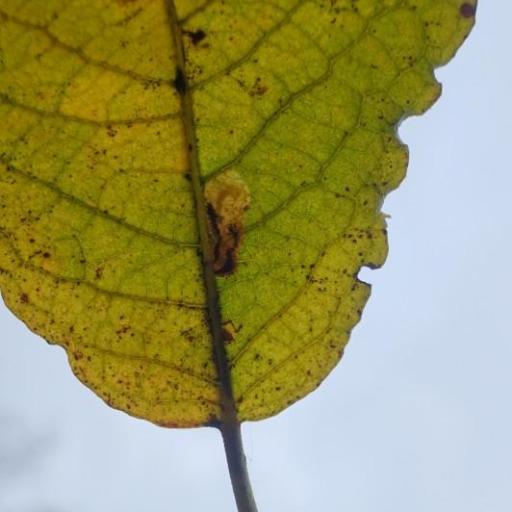
- 🍃 The "Mine": You are most likely to find this insect by looking at Willow leaves. The larva creates a "gallery" (a tunnel) that usually starts along the midrib of the leaf, often causing the central vein to look slightly swollen or distorted.
- 🐛 The Larva: A pale, translucent yellow caterpillar that spends its entire youth sandwiched between the top and bottom layers of a leaf.
🌲 Habitat & Ecology
- 🍂 The Willow Specialist: This moth is strictly tied to Salix species, particularly Goat Willow and Grey Willow. It doesn't wander far from its host plant, as the larvae are entirely dependent on these specific leaves for nutrition.
- 🏠 Inside the Leaf: Unlike many insects that eat the outside of a plant, Ectoedemia intimella is a "leaf miner." It lives in the narrow space between leaf surfaces, which protects it from wind, rain, and many hungry birds.
⚠️ Safety & Toxicity
- ✅ Status: Completely harmless to humans and pets.
- 🌳 Garden Impact: While the "mines" might look like a disease or cause some leaves to drop early, they do not cause significant damage to the health of the tree. They are a natural part of the local ecosystem and a sign of a biodiverse garden.
✨ Fun Fact
The Sallow Pigmy is a master of "Green Islands." Even when a Willow leaf dies and turns yellow in the autumn, the area immediately surrounding the moth's mine often stays bright green. The larva likely uses special chemicals to keep that part of the leaf "alive" and full of nutrients so it can finish its meal!
More Details








