Info
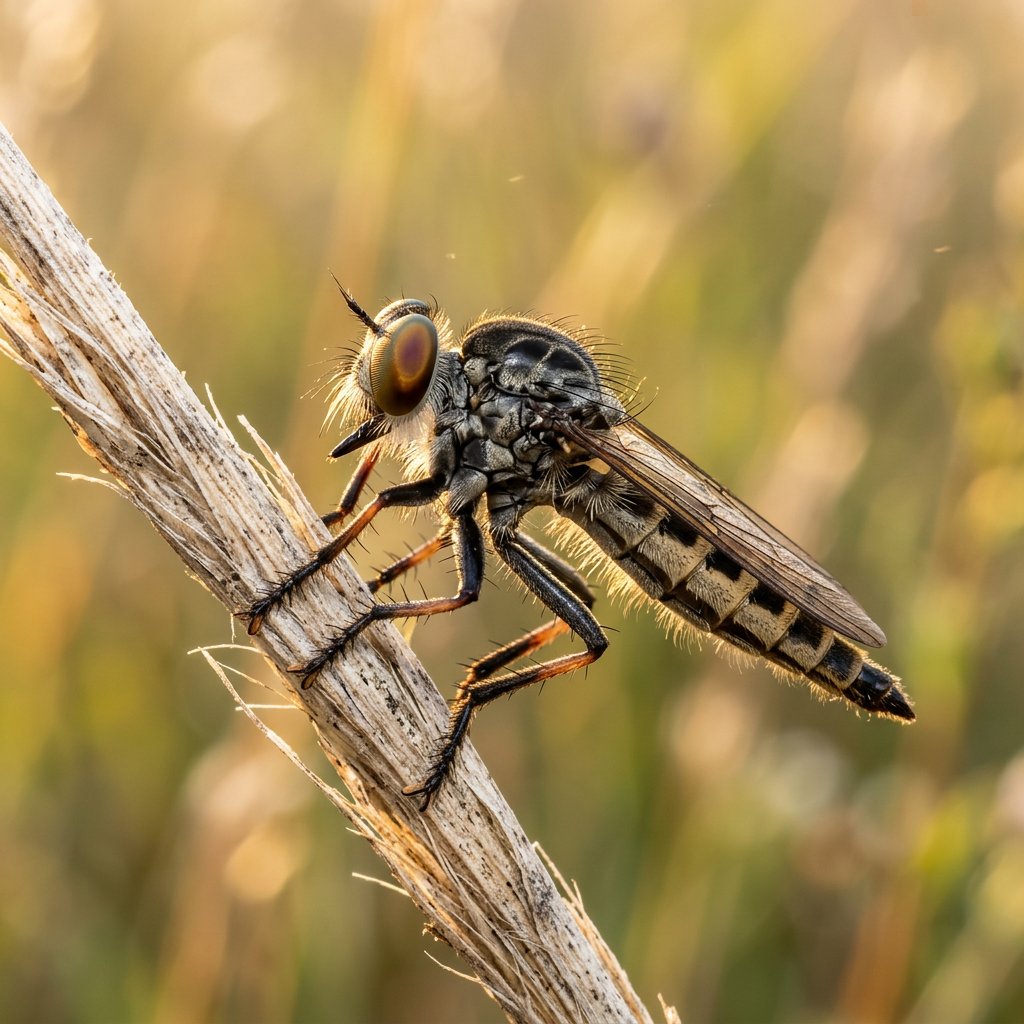
The Red-footed Cannibal Fly is the miniature gladiator of the insect world. Often seen perched on a sunny fence or leaf, this robber fly acts like a tiny hawk, scanning the skies for its next meal. Despite its intimidating appearance and sword-like tail, it is a fascinating neighbor that helps keep garden pest populations in check.
🔍 How to Identify
- 👀 Goggle Eyes: They possess massive, bulging compound eyes with a distinct "valley" between them, giving them exceptional 360-degree vision for hunting.
- 🤺 The "Stinger" Tail: Females have a long, tapered, and shiny black ovipositor that looks like a needle. While it looks scary, it is actually used for laying eggs, not stinging.
- 🦵 Reddish "Socks": Their legs are typically dark but often feature reddish or orange-brown segments (tibiae), which earned them their "red-footed" common name.
- 🧔 The Beard: They have a dense "mystax" (a mustache of stiff bristles) on their face that protects their eyes and head from struggling prey.
🌲 Habitat & Ecology
- ☀️ Sun Worshipers: You will most likely find them in open, sunny areas like meadows, forest edges, or backyard gardens, usually perched on a high point to survey their territory.
- 🦅 Aerial Hunters: They are supreme predators. They intercept prey—including wasps, bees, and beetles—in mid-air, clutching them with their bristly legs before returning to a perch to feed.
- 🌱 Ground Nursery: Their larvae live in the soil or decaying wood, where they act as "underground assassins," eating the larvae of other insects like grasshoppers and beetles.
⚠️ Safety & Toxicity
- 🚫 Status: Non-aggressive to humans and pets. They have no interest in biting you unless they feel physically threatened.
- 🤏 The Defense: If you try to catch one in your hand, they can deliver a sharp, painful bite with their piercing mouthparts. The pain is similar to a bee sting but does not involve venom that causes long-term swelling or allergic reactions in most people.
- 🛡️ Garden Friend: They are generally considered "beneficial insects" because they eat many pests that would otherwise damage your plants.
✨ Fun Fact
The "Cannibal" in their name isn't just for show—if a male Red-footed Cannibal Fly isn't careful during courtship, the larger female might decide he looks more like a snack than a soulmate!
More Details








