Info
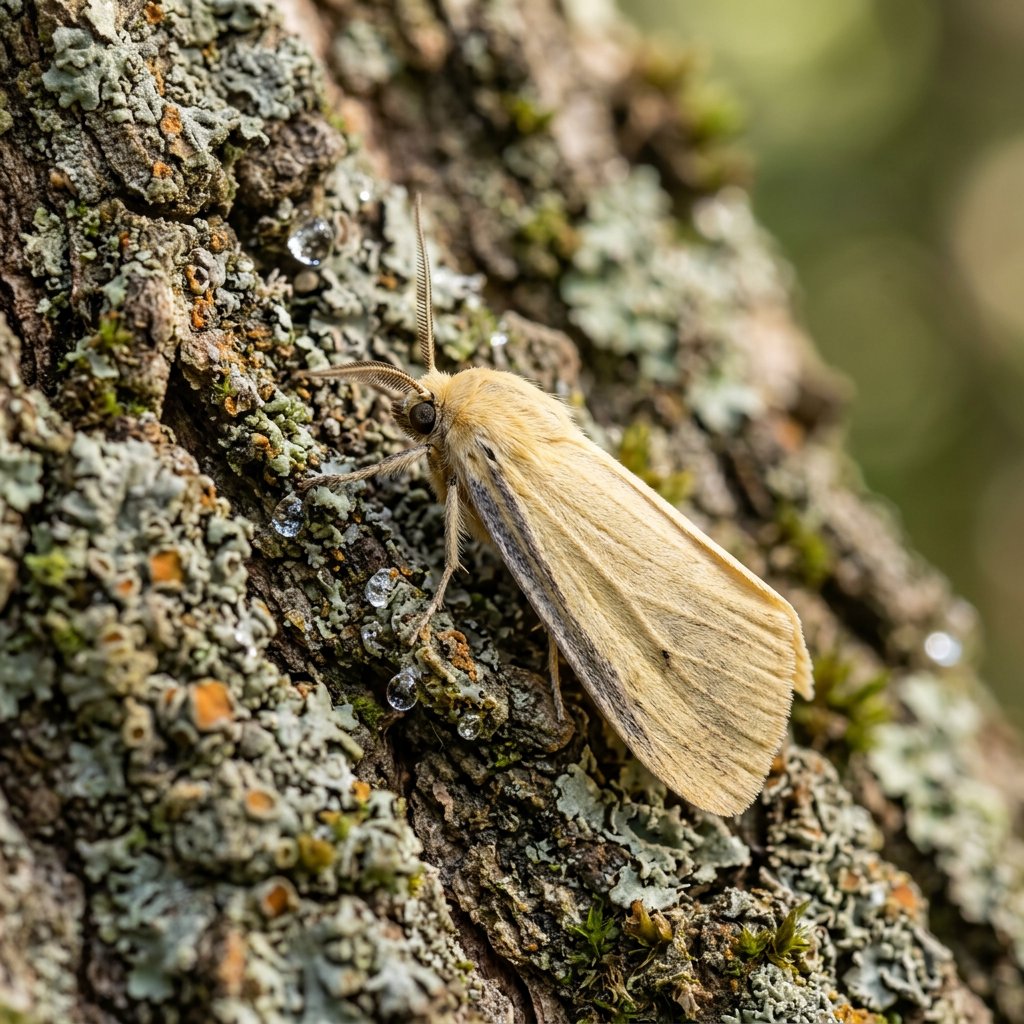
The Buff Footman (Eilema depressa) is a master of understated elegance in the moth world. Named for its resemblance to the stiff, formal posture of 18th-century servants in livery, this moth is a common sight in European and Asian woodlands. While many moths dazzle with bright colors, the Buff Footman relies on its slender, twig-like silhouette to disappear against the bark of the trees it calls home.
🔍 How to Identify
- 🎨 The Wings: Elongated and narrow, usually a pale buff, silvery-grey, or yellowish-beige. When resting, it wraps its wings tightly around its body, looking like a tiny, flattened cylinder.
- 👔 The "Collar": If you look closely at the "shoulders" (the front edge of the wing), you will often see a thin, brighter yellow line that contrasts with the muted body color.
- 🐛 The Larva: The caterpillar is dark and densely covered in stiff, bristly hairs, often with subtle orange or blue spots along its back.
🌲 Habitat & Ecology
- 🍽️ Lichen Lovers: Unlike many garden pests that eat your prize flowers, the Buff Footman larvae are specialists. they feed almost exclusively on lichens and algae growing on tree trunks, wooden fences, and old stone walls.
- 🌙 Night Owls: The adults are strictly nocturnal. During the mid-to-late summer months, you are most likely to find them resting near outdoor lights or hiding under leafy overhangs during the day.
- 🌳 Forest Dwellers: While they visit gardens, they thrive in broadleaf and coniferous forests where the air is clean enough for their favorite lichens to grow abundantly.
⚠️ Safety & Toxicity
- 🟢 Status: Generally harmless to humans and pets.
- ✋ Handle with Care: The adult moths are delicate and pose no threat. However, the "hairy" caterpillars should not be handled with bare hands. Their stiff bristles contain minor irritants that can cause a "nettle-like" itchy rash on sensitive skin or cause discomfort if swallowed by a curious pet.
✨ Fun Fact
The name "Footman" isn't just about their clothes; it’s about their "posture." When these moths are at rest, they hold their wings so stiffly and straight that early naturalists thought they looked like soldiers or footmen standing at attention!
More Details








