Info
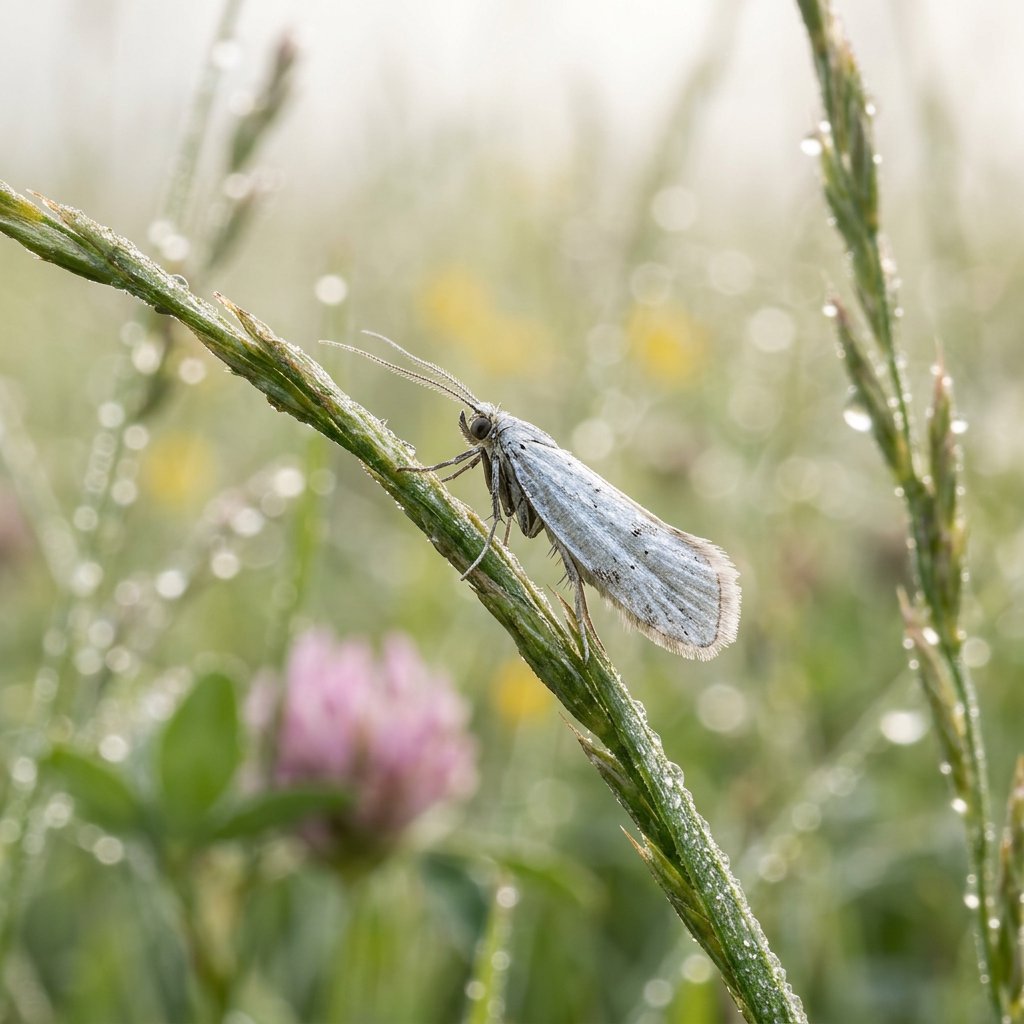
Often called the Swan-feather Dwarf Moth, this tiny insect looks like a lost snowflake dancing over summer meadows. While most moths prefer the shadows of the night, this little sprite is a daylight lover, adding a touch of elegance to tall grass patches. It is a harmless, delicate resident of gardens and wild grasslands across Europe and Northern Asia.
🔍 How to Identify
- 🕊️ Pure White Wings: The most striking feature is its unblemished, satiny white forewings and hindwings that lack any spots or patterns.
- 📏 Diminutive Size: It is a "micro-moth," with a wingspan usually under 12mm, making it look more like a tiny fleck of lint than a traditional moth.
- 🦴 Silky Texture: When viewed closely, the wings have a shimmering, almost metallic sheen that reflects the sun.
🌲 Habitat & Ecology
- 🌾 The Grass Miner: As a caterpillar, this moth lives inside blades of grass. It carves out tiny tunnels (mines) as it feeds, favoring common species like Brome, Fescue, and Cocksfoot.
- ☀️ Sun Seeker: Unlike its nocturnal cousins, you’ll likely spot this moth fluttering low above the grass during sunny afternoons in June and July.
- 🕸️ Ecosystem Role: It is a "friend" of the garden, serving as a vital food source for smaller predatory insects and spiders without being a pest to ornamental flowers.
⚠️ Safety & Toxicity
- 🛡️ Completely Harmless: The Swan-feather Dwarf Moth has no sting, no bite, and does not possess any irritating hairs or chemical defenses.
- 🐾 Pet & Child Safe: It is entirely non-toxic. If a curious pet or child happens to encounter one, there is no risk of irritation or poisoning.
✨ Fun Fact
The name argentella comes from the Latin word for silver (argentum), which describes the way the moth’s wings seem to "glow" with a metallic silver light when they catch the direct rays of the afternoon sun.
More Details








