Info
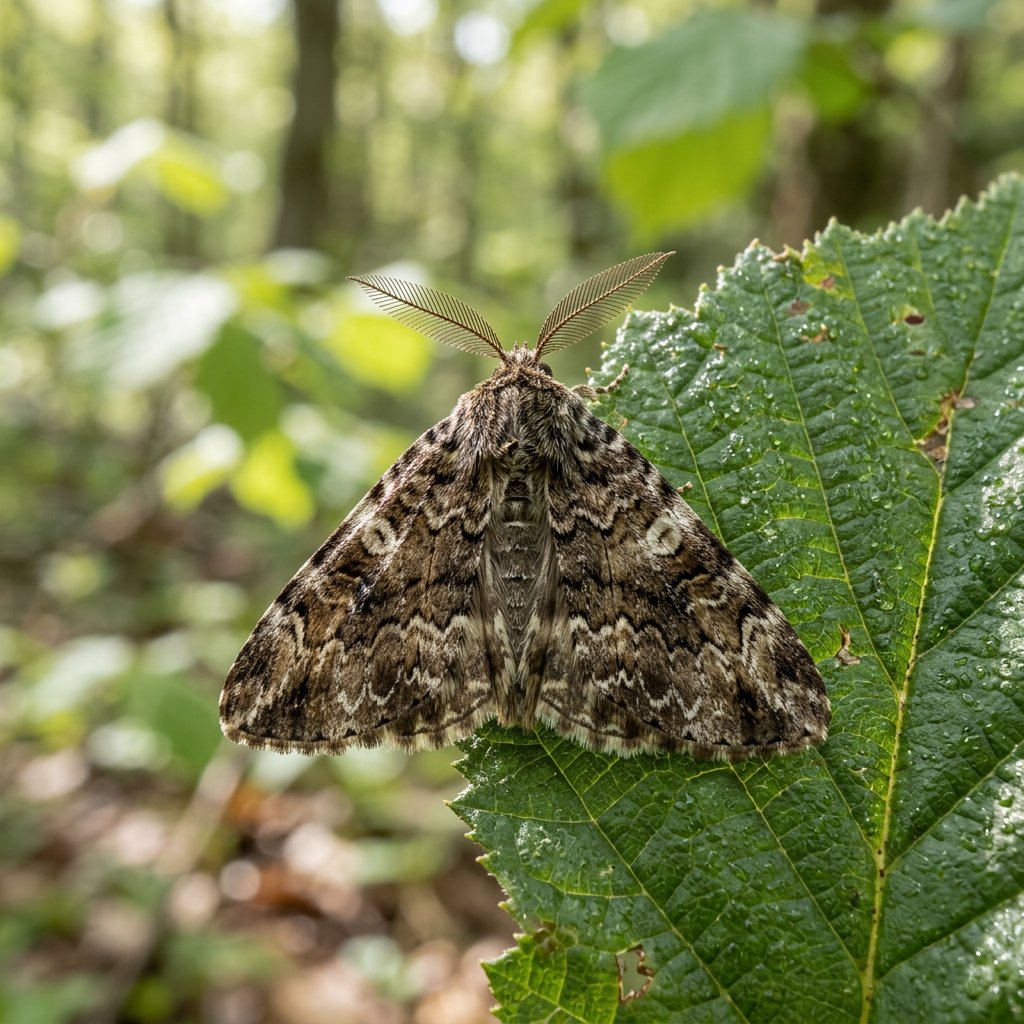
Often called the Broken-barred Carpet, this moth is a delicate artisan of the woodland. Its name hints at its favorite food source and its intricate, textile-like wing patterns that resemble a weathered tapestry. While it primarily flies at night, its sophisticated camouflage makes it a fascinating find for sharp-eyed hikers resting near a tree trunk during the day.
🔍 How to Identify
- 🦋 The "Broken" Band: The most distinct feature is a dark chocolate-brown central band across the forewings that is "broken" or pinched in the middle by a pale, creamy streak.
- 🎨 Earthy Palette: The wings are a mosaic of cream, olive-grey, and deep brown, perfectly evolved to mimic lichen-covered bark or dried leaves.
- 📐 Resting Posture: Like most "carpet" moths, it rests with its wings spread flat against a surface in a triangular shape, pressing itself tight to the substrate to disappear from predators.
🌲 Habitat & Ecology
- 🌳 Woodland Resident: You’ll most likely spot this moth near hazel, birch, or willow trees. It thrives in ancient woodlands, parklands, and overgrown hedgerows where its larvae have plenty of cover.
- 🍽️ The Hazel Connection: Its scientific name, corylata, is derived from Corylus (the Latin name for Hazel), which is the primary food plant for its slender, bright green caterpillars.
- 🌙 Night Owl: While it is easily disturbed from bushes during the day, it is most active from May to July, frequently visiting light sources after dusk.
⚠️ Safety & Toxicity
- ✅ Harmless Friend: The Broken-barred Carpet is completely non-toxic and does not bite, sting, or carry diseases. It is safe to observe closely.
- 🐾 Pet & Child Safe: This moth poses no threat to curious cats, dogs, or children. It is a gentle member of the ecosystem that serves as a vital food source for bats and birds.
✨ Fun Fact
- 📜 The Carpet Myth: The "carpet" moth family (Geometridae) wasn't named because they eat rugs! Early naturalists gave them this name because the intricate, repeating patterns on their wings reminded them of the ornate Persian carpets that were highly fashionable in the 18th century.
More Details








