Info
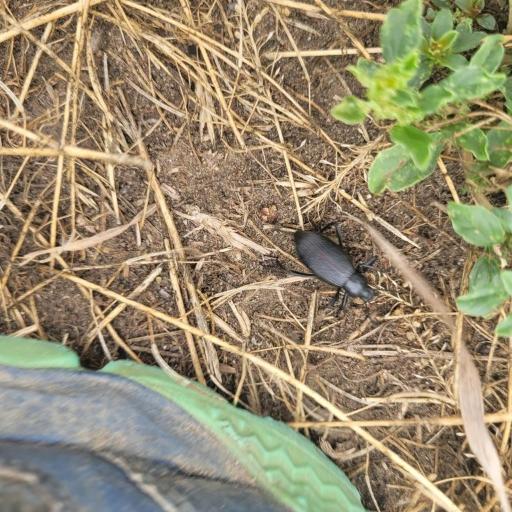
Often called the "Acrobat Beetle" for its dramatic defensive headstands, this desert dweller is more of a clumsy tank than a threat. A staple of the American West, Eleodes hispilabris is a master of chemical warfare, preferring to scare off predators with a "stink" rather than a bite. While its dark, armor-like shell might look intimidating, it is a peaceful recycler of the desert floor.
🔍 How to Identify
- 🪲 Body Shape: A robust, oval-shaped beetle with a matte black finish, typically reaching about an inch in length.
- 🚫 Fused Wings: Unlike many beetles, its wing covers (elytra) are fused together, meaning it is entirely flightless and spends its life trekking across the soil.
- 🦵 High Clearance: It possesses long, spindly legs that keep its body elevated off the hot sand, giving it a distinctive, mechanical-looking gait.
🌵 Habitat & Ecology
- 🏜️ Desert Cleanup Crew: As a detritivore, this beetle plays a vital role in the ecosystem by consuming decaying plant matter, fallen seeds, and organic debris.
- 🌑 Nocturnal Habits: To escape the blistering heat of the sun, it is most active at dusk and during the night, hiding under rocks or in abandoned burrows during the day.
- 🤸 The Warning Stand: When it feels threatened, it performs a "headstand" by pointing its abdomen toward the sky. This is a clear signal to predators that a foul-smelling chemical spray is ready for deployment.
⚠️ Safety & Toxicity
- 🛡️ Harmless but Smelly: These beetles have no stinger and their mandibles are too small to pose a threat to humans; they are physically harmless.
- 🤢 Chemical Defense: If handled or stepped on, they secrete an oily, pungent liquid from their abdomen. The smell is incredibly persistent and can cause mild skin staining or eye irritation, so it’s best to observe them without touching.
✨ Fun Fact
The common name "Pinacate Beetle" comes from the Nahuatl word pinacatl, which translates simply to "black beetle." They are so well-adapted to dry climates that they can obtain almost all their necessary water from the moisture in the food they scavenge!
More Details








