Info
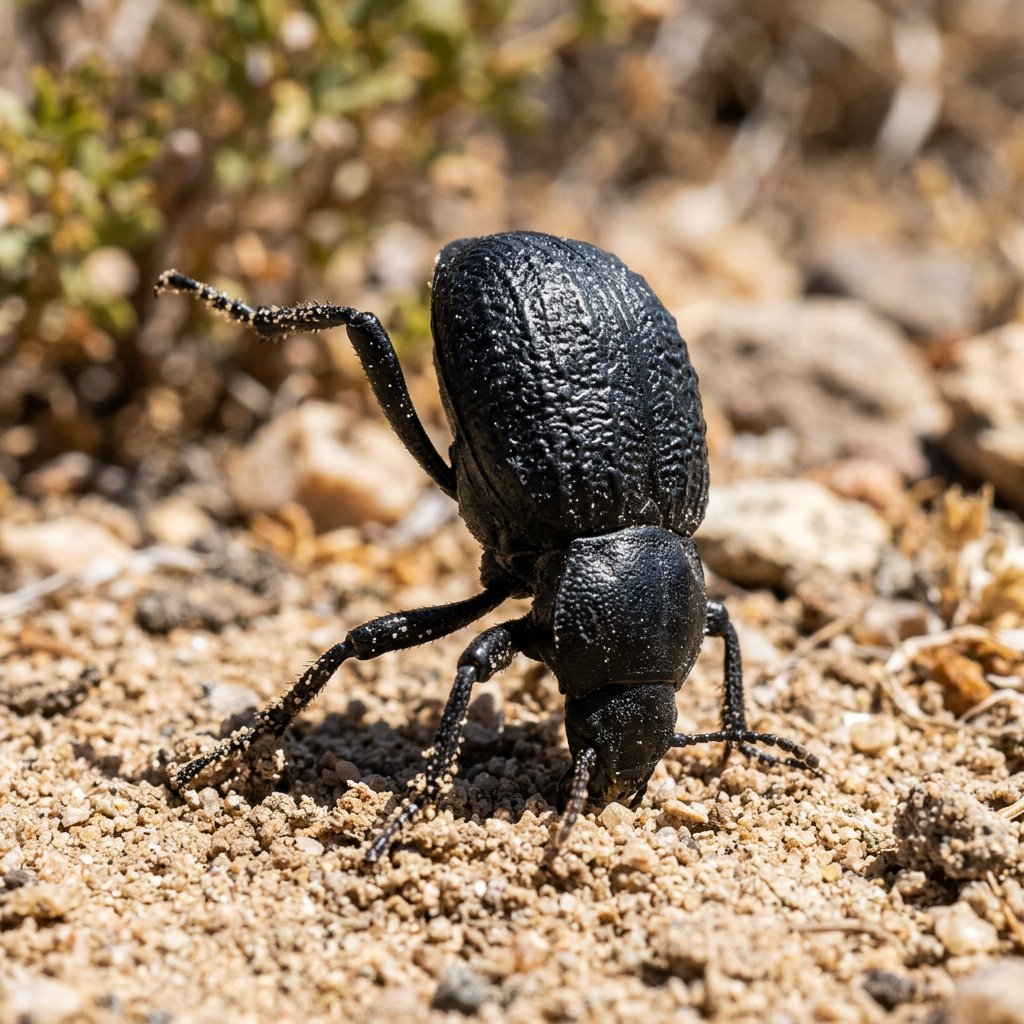
Known affectionately as the "Pinacate Beetle" or the "Clown Beetle," the Eleodes is a desert-dwelling acrobat with a flair for the dramatic. These matte-black beetles are famous for their "headstand" defense, a pose so iconic it has earned them a permanent spot in Southwestern folklore. While they might look like tiny, armored tanks, they are actually gentle scavengers playing a vital role in their arid ecosystems.
🔍 How to Identify
- 🌑 Armored Body: They have a robust, jet-black, and usually smooth oval body. Unlike many other beetles, their wing covers (elytra) are fused together, rendering them flightless.
- 🤸 Defensive Posture: Their most identifiable trait is the "headstand." When startled, they tip their front end down and point their rear end high into the air as a warning.
- 🦵 Sturdy Limbs: They possess long, strong legs designed for walking long distances across hot sand and rocky terrain in search of food.
🌵 Habitat & Ecology
- 🏜️ Desert Scavengers: As detritivores, these beetles are the desert’s clean-up crew. They spend their time munching on decaying leaves, dried seeds, and other organic debris.
- 🌑 Heat Management: To survive the scorching sun, they are primarily nocturnal or crepuscular, hiding under rocks or in burrows during the heat of the day to conserve moisture.
- 🕳️ Subsurface Life: Their larvae, often called "false wireworms," live underground, feeding on roots and organic matter before emerging as the sturdy adults we see on the surface.
⚠️ Safety & Toxicity
- 🛡️ Harmless but Smelly: These beetles do not bite or sting. They are completely safe to observe, though it is best to do so from a distance to avoid stressing them.
- 👃 Chemical Defense: If the "headstand" doesn't scare off a predator, they can secrete a dark, oily, and incredibly foul-smelling chemical from the tip of their abdomen. This "stink" is harmless to human skin but is very difficult to wash off and can irritate the eyes.
✨ Fun Fact
The name "Pinacate" comes from the Aztec (Nahuatl) word pinacatl, which means "black beetle." These resilient insects are also surprisingly long-lived for bugs, with some individuals surviving for several years in the wild!
More Details








