Info
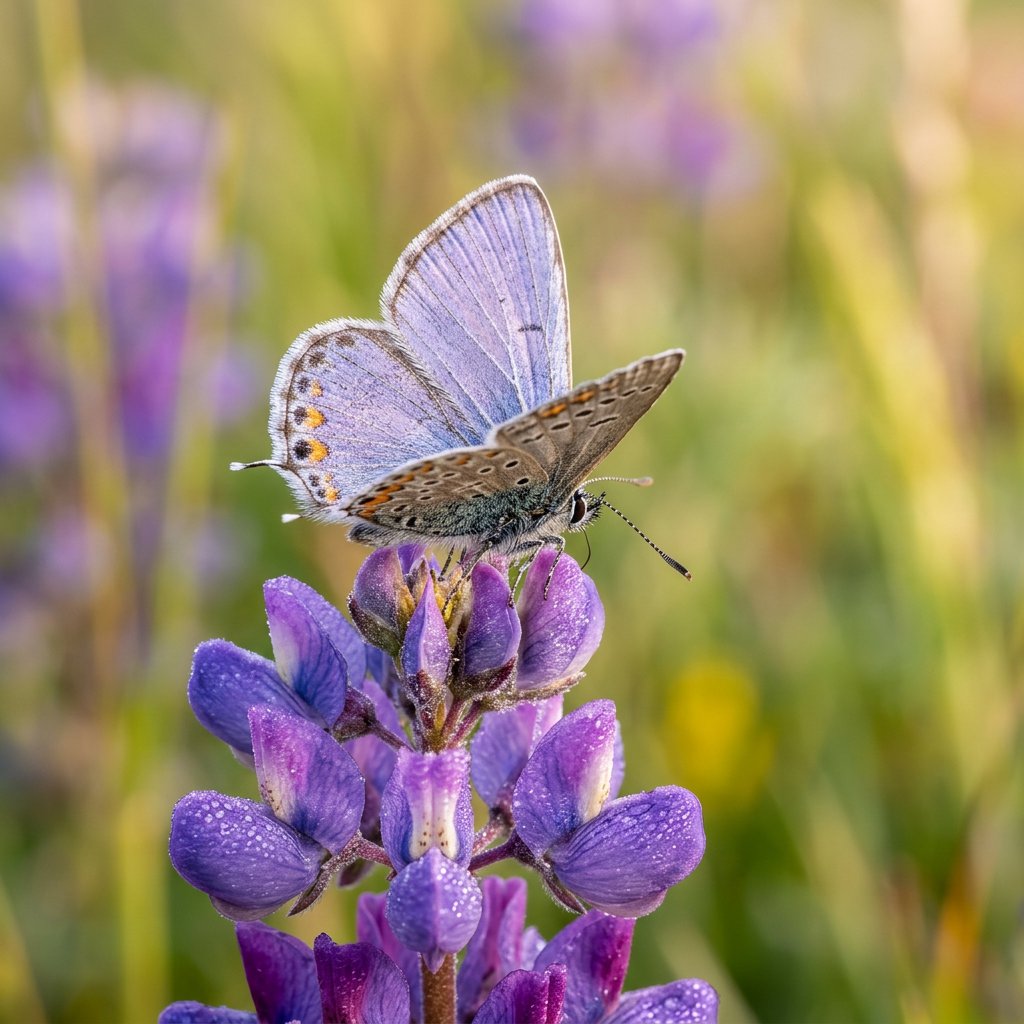
Known as the Western Tailed-Blue, this delicate butterfly looks like a fluttering scrap of the summer sky. Often found dancing low over meadow grasses, it is a master of disguise, using its tiny, thread-like "tails" to mimic antennae and trick predators into attacking the wrong end. It is a peaceful, beneficial resident of open woodlands and backyard gardens across Western North America.
🔍 How to Identify
- 🦋 The Wings: The upper side of the male’s wings is a soft, iridescent silvery-blue, while females are usually a more muted slate gray or brownish hue.
- 📍 The "Tails": Look closely at the bottom of the hindwings; you will see a tiny, hair-like extension (the tail) situated right next to one or two distinct orange spots.
- ⚪ The Underside: When at rest with wings closed, the butterfly appears chalky white or pale gray, peppered with small black dots that look like ink splatters.
🌲 Habitat & Ecology
- 🌱 The Pea Connection: These butterflies are "legume lovers." Their caterpillars feed almost exclusively on the buds and seeds of plants in the pea family, such as Vetches and Wild Peas.
- 💧 Mud-Puddling: You may often see groups of these butterflies gathered around damp soil or mud. They are "puddling"—absorbing essential minerals and salts from the wet earth that they can't get from flower nectar alone.
- 🌼 Low Flyers: Unlike larger butterflies that soar high, the Western Tailed-Blue stays close to the ground, skipping through tall grass in a frantic, zigzagging flight pattern.
⚠️ Safety & Toxicity
- ✅ Harmless: The Western Tailed-Blue is a "friend" in every sense. It does not bite, sting, or carry any toxins that could harm humans or pets.
- 🌸 Garden Ally: As a pollinator, it helps your garden thrive by visiting small, tubular flowers, making it a welcome guest for any nature enthusiast.
✨ Fun Fact
The orange spots and tiny tails on its hindwings are designed to look like a "false head." A hungry bird will often strike at the tail, leaving the butterfly with a tattered wing but its actual head—and its life—perfectly intact!
More Details








