Info
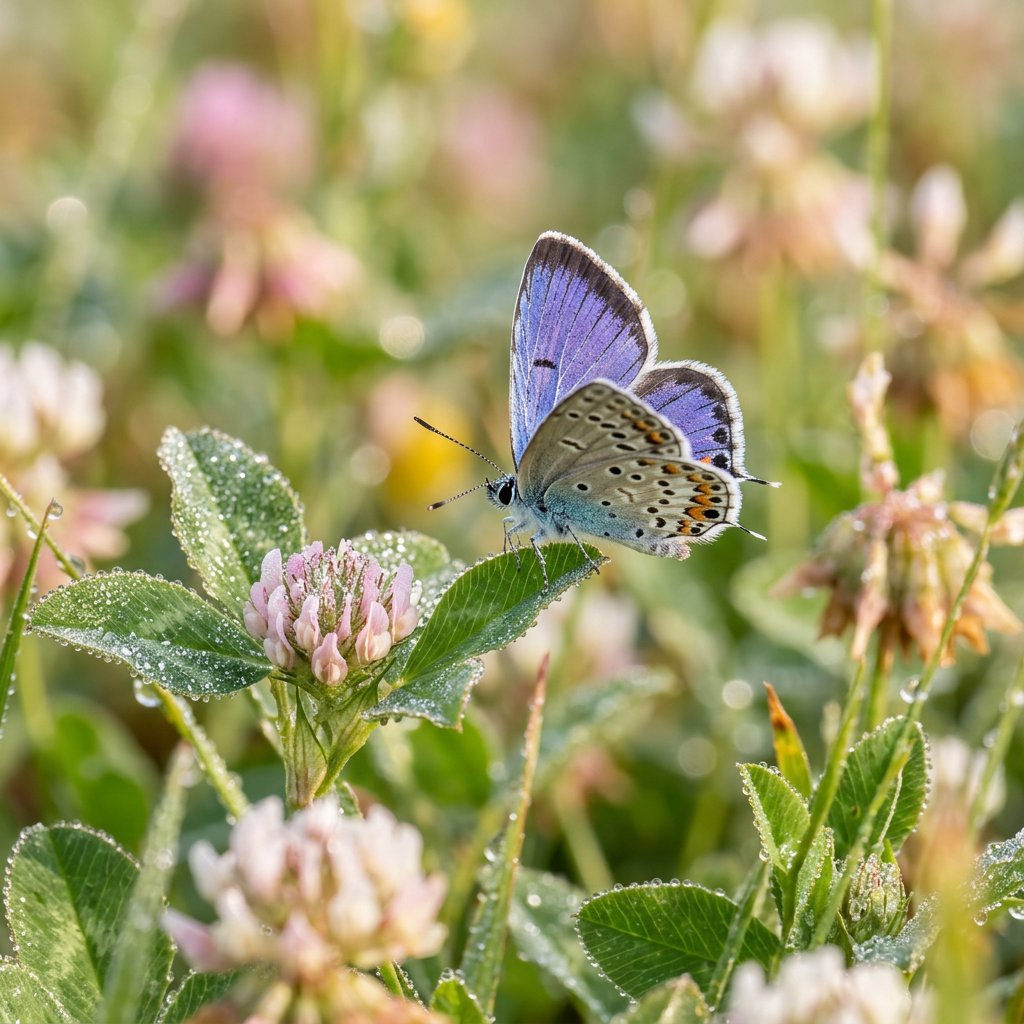
The Short-tailed Blue (Cupido argiades, formerly Everes argiades) is a delicate wanderer of the butterfly world. Often found dancing just above the grass tops in sun-drenched meadows, these tiny gems are beloved by European and Asian naturalists alike. Though small, their intricate wing patterns and spirited flight make them a favorite for macro-photographers and garden enthusiasts.
🔍 How to Identify
- 🦋 The "Tails": Look closely at the bottom of the hindwings; you’ll find tiny, thread-like extensions that look like miniature hairs.
- 🎨 Gendered Colors: Males sport a vibrant, silky violet-blue on the upper side of their wings with a thin black border. Females are more subtle, featuring a dark smoky brown, sometimes dusted with a hint of blue at the base.
- 📍 The "Orange Eye": On the pale grey underside of the hindwings, there are two distinct orange spots located right next to the tails, which serve as a clever decoy for predators.
🌲 Habitat & Ecology
- ☘️ A Legume Lover: These butterflies are most at home in flowery grasslands and meadows where clovers, alfalfa, and bird's-foot trefoil grow. This is where they lay their eggs, as the caterpillars feed almost exclusively on the flowers and seed pods of these plants.
- 🔄 Year-round Resident: Depending on the climate, they can produce two or even three generations in a single year. You might see the first "flight" in late spring and the last one as late as September.
- 📉 Low-Level Flyer: Unlike larger butterflies that soar, the Short-tailed Blue prefers to stay low. It weaves through tall grasses to stay protected from the wind and to remain close to its nectar sources.
⚠️ Safety & Toxicity
- ✅ Harmless Friend: This butterfly is completely safe for humans, pets, and children. It possesses no stinger, no biting mouthparts, and does not secrete any toxins.
- 🌸 Garden Benefit: As a pollinator, it is a "friend" to your garden. Its presence indicates a healthy, chemical-free ecosystem with plenty of native wildflowers.
✨ Fun Fact
The tiny tails and orange spots on the hindwing are part of a "false head" strategy. When the butterfly sits still, it wiggles its hindwings, making the tails move like antennae. A bird or lizard will often strike the "wrong" end, allowing the butterfly to escape with only a small piece of wing missing!
More Details








