Info
Often found fluttering near garden ponds, the Brown China-mark is a small but exquisite moth that defies the standard "dry land" rules of its kind. It earned its name from the intricate, porcelain-like patterns on its wings that resemble the delicate hand-painted motifs of traditional Chinese ceramics. While most moths avoid getting wet, this species spends its entire childhood living beneath the water's surface.
🔍 How to Identify
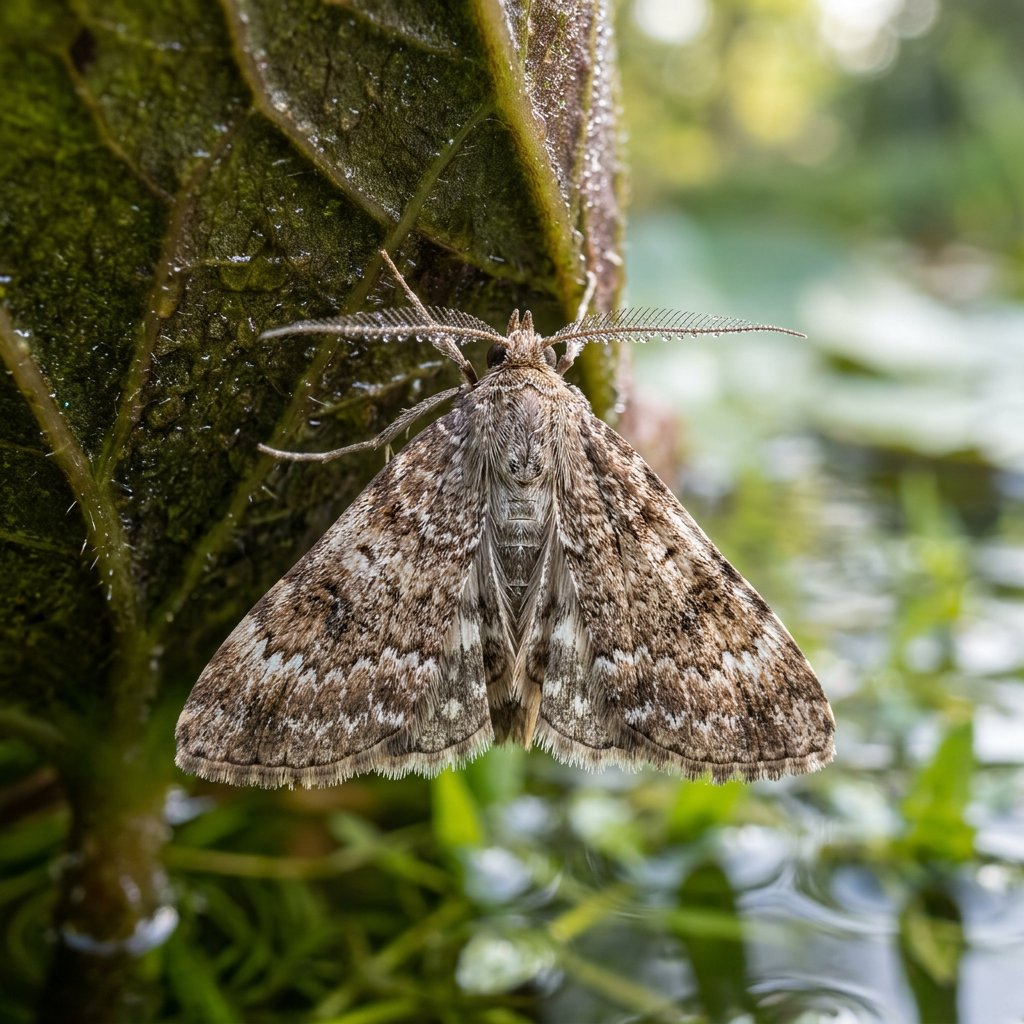
- 🦋 Wing Patterns: Features a beautiful, mottled mosaic of chocolate brown, creamy white, and soft orange-yellow markings.
- 📐 Resting Posture: When at rest, it holds its wings in a flat, wide triangle, often perched directly on the floating leaves of aquatic plants.
- 📏 Size & Shape: A dainty moth with a wingspan of about 20–30mm; its body is slender and its antennae are often tucked back along its wings.
🌲 Habitat & Ecology
- 💧 Water Dependent: You will almost exclusively find them near standing or slow-moving water, such as garden ponds, lakes, and marshes, where Water Lilies (Nymphaea) or Pondweeds grow.
- 🛶 Underwater Engineers: The caterpillars are the "scuba divers" of the moth world. They cut oval pieces out of lily leaves and silk them together to create a portable, air-filled "tent" which they drag around underwater to stay protected while they feed.
- 🦟 Ecosystem Role: They serve as an important food source for dragonflies, frogs, and bats that patrol the edges of the water at dusk.
⚠️ Safety & Toxicity
- ✅ Harmless to Humans: The Brown China-mark is a "friend" to the gardener. It does not bite, sting, or carry diseases, and it is perfectly safe to handle or observe.
- 🍃 Plant Impact: While the larvae eat aquatic plants, they are usually considered "neutral" in a garden context. They might leave small holes in your water lilies, but they rarely cause enough damage to harm the health of the plant.
✨ Fun Fact
The Brown China-mark is one of the very few lepidoptera (butterflies and moths) in the world that has "re-conquered" the water; its caterpillars start life breathing through their skin like fish and eventually build an air-filled bubble to live in!
More Details








