Info
Despite its name often being associated with the palms it lives on, Elymnias hypermnestra is actually a fascinating member of the butterfly world known as the Common Palmfly. This master of disguise is native to South and Southeast Asia and is famous for its "Batesian mimicry"—the clever evolutionary trick of looking like a much more dangerous or foul-tasting species to avoid being eaten.
🔍 How to Identify
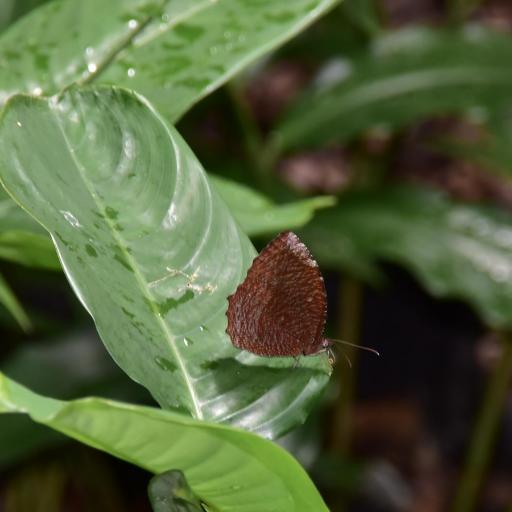
- 🦋 The Mimic Wings: The upper side of the wings is typically a deep, velvety chocolate brown, often featuring a row of bluish or white spots near the edges to mimic the toxic "Glassy Tiger" butterfly.
- 🍂 Dead-Leaf Underside: When its wings are closed, the butterfly completely disappears against tree bark. The underside is mottled brown and tan, perfectly mimicking a dried, shriveled leaf.
- 🦟 Flight Pattern: It has a unique, low-to-the-ground, jerky fluttering style. It prefers staying in the shadows and rarely flies in straight, high lines like other butterflies.
🌲 Habitat & Ecology
- 🌴 Palm Dependency: You will almost always find this butterfly near its namesake. The caterpillars are "specialists," feeding exclusively on the leaves of palms, including Coconut, Areca, and ornamental Fan Palms.
- 🍎 Fermented Diet: Interestingly, the Common Palmfly is rarely seen visiting flowers for nectar. Instead, it prefers "jungle juice"—sipping on the juices of overripe, fermented fallen fruits and oozing tree sap.
- 🌑 Shade Seeker: Unlike most butterflies that bask in the hot sun, the Common Palmfly is "crepuscular" or shade-loving, often becoming most active during the cooler parts of the day or in dense, forested gardens.
⚠️ Safety & Toxicity
- ✅ Completely Harmless: The Common Palmfly is a "friend" to humans and pets. It does not sting, bite, or carry any venom.
- 🌿 Minor Garden Pest: While the caterpillars (which are green with yellow stripes and "horns" on their rear) eat palm fronds, they are usually not present in large enough numbers to cause serious structural damage to your plants.
✨ Fun Fact
The Common Palmfly is a professional actor! Females have evolved to look almost identical to the Common Tiger butterfly. Because the Common Tiger is poisonous and tastes bitter to birds, predators leave the harmless Palmfly alone, assuming it’s a toxic snack.
More Details








