Info
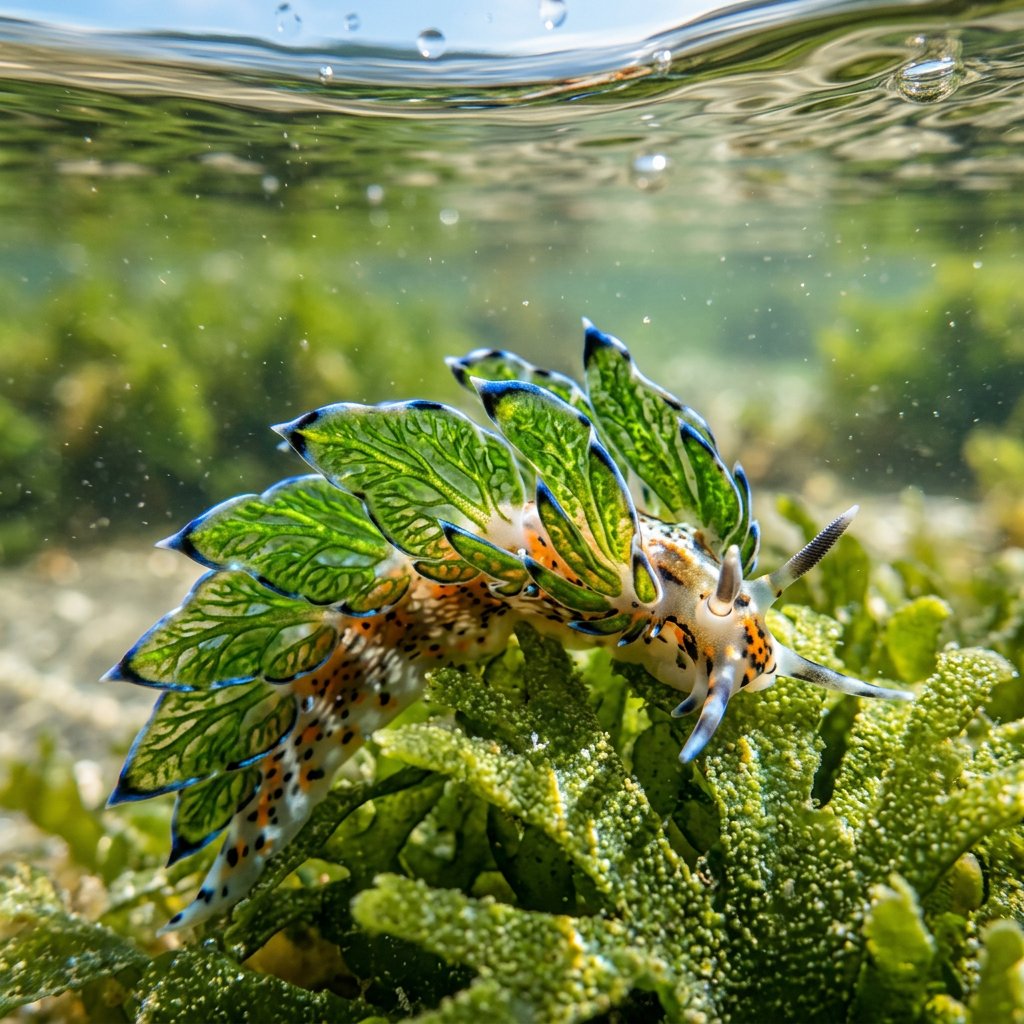
Known as the "Mexican Dancer," Elysia diomedea is a mesmerizing sea slug (a marine mollusk, not an insect!) that looks like a piece of living lace floating through the sea. Found primarily in the warm waters of the Gulf of California, these creatures are famous among divers for their vibrant colors and their incredible ability to "photosynthesize" like a plant.
🔍 How to Identify
- 🦋 The Parapodia: Its most striking feature is its "wings"—large, undulating folds of skin that meet along its back, often edged with neon yellow, blue, or orange.
- 🎨 Intricate Patterns: The body is typically a translucent olive green, covered in a complex map of fine black lines and brilliant iridescent spots.
- 🐰 Rhinophores: On its head, it sports two "ears" (rhinophores) which are actually sensory organs used to detect chemical signals in the water to find food or mates.
🌊 Marine Habitat & Ecology
- 🪸 Sun-Drenched Reefs: You will find them in shallow, rocky reefs and tide pools. They prefer areas with plenty of sunlight because they rely on solar energy to supplement their diet.
- 🧪 The Algae Thief: This slug practices "kleptoplasty." It eats green algae but doesn't fully digest it; instead, it "steals" the algae's solar-processing cells (chloroplasts) and moves them into its own skin to produce sugar from sunlight.
⚠️ Safety & Toxicity
- 🛡️ Harmless: Unlike many brightly colored sea creatures, the Mexican Dancer is not venomous and does not possess a sting.
- 🚫 Handle with Care: While they aren't toxic to humans, they are incredibly delicate. Their "wings" can be easily torn, and they are highly sensitive to the oils and chemicals on human skin. It is always best to observe them without touching.
✨ Fun Fact
Because they can store stolen algae cells in their bodies, Elysia diomedea is essentially a hybrid between an animal and a solar panel. If food becomes scarce, they can survive for weeks simply by sunbathing!
More Details








