Info
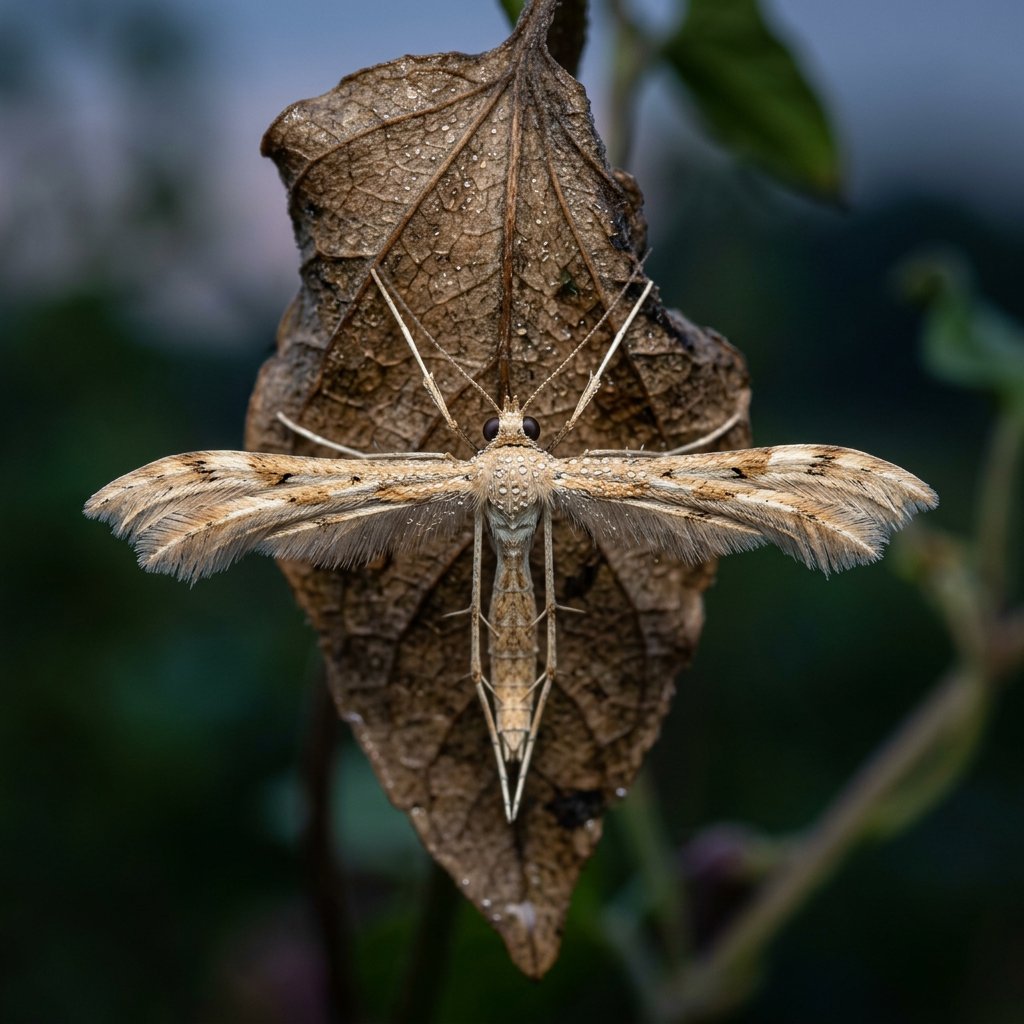
Known colloquially as the "T-moth" or the Common Plume Moth, this delicate creature looks more like a dry piece of grass or a tiny wooden airplane than a typical moth. Often found resting on garden fences or window screens, it is a master of disguise that favors the twilight hours. While most moths disappear in the winter, this hardy traveler can be spotted almost year-round across much of the Northern Hemisphere.
🔍 How to Identify
- ✈️ The "T" Posture: Its most defining feature is how it holds its long, narrow wings perfectly at right angles to its body when resting, forming a distinct "T" or cross shape.
- 🪶 Feathered Wings: Unlike the solid wing membranes of most butterflies, its wings are deeply cleft into "plumes" that look like tiny, frayed feathers when unfurled.
- 🦵 Spiny Legs: It has exceptionally long, spindly legs, often featuring noticeable spurs at the joints, which help it navigate through tangled garden foliage.
🌲 Habitat & Ecology
- 🌿 The Bindweed Specialist: This moth is a secret ally for many gardeners; its larvae primarily feed on Bindweed (Convolvulus) and Morning Glory, helping to naturally prune back these aggressive climbing vines.
- 🌙 Nighttime Navigator: While it is mostly nocturnal and frequently drawn to porch lights, it is easily disturbed during the day, fluttering briefly with an erratic, "dancing" flight before landing and instantly returning to its twig-mimicry pose.
⚠️ Safety & Toxicity
- ✅ Harmless Guest: The Common Plume Moth is completely safe for humans and pets. It does not bite, sting, or carry any known diseases.
- 🏡 Garden Impact: It is generally considered a "neutral-to-beneficial" insect. Because its caterpillars focus on bindweed, they rarely cause significant damage to prized ornamental plants or vegetables.
✨ Fun Fact
The Emmelina monodactyla is a master of deception; its "T" shape is a specific type of camouflage designed to make it look like a dried-up piece of vegetation or a dead twig, allowing it to hide in plain sight from hungry birds.
More Details








