Info
Often called "Sawflies," members of the Empria genus are the gentle, stingless cousins of wasps and bees. While their appearance might mimic their more aggressive relatives, these insects are actually peace-loving herbivores. You are most likely to spot them in the early spring, hovering low over garden foliage as they search for the perfect leaf to host their next generation.
🔍 How to Identify
- 🐝 The "No-Waist" Look: Unlike ants or wasps, Empria sawflies lack a narrow "wasp-waist." Their body is thick and cylindrical, connecting the thorax directly to the abdomen.
- 🏁 Abdominal Markings: Most species feature a sleek black body decorated with distinct white or pale-yellow spots along the sides of the abdomen, resembling a row of tiny windows.
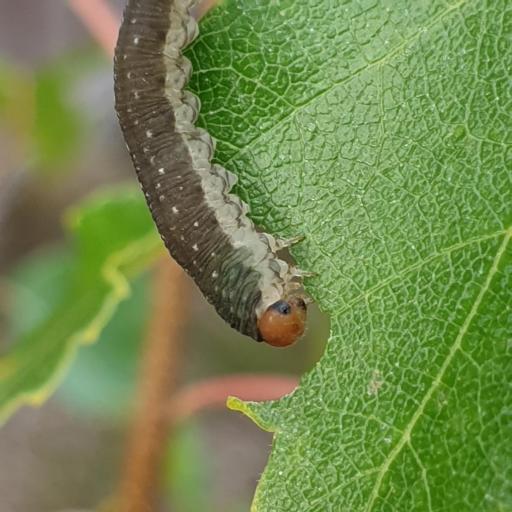
- 🐛 Caterpillar Mimics: Their larvae are often mistaken for moth caterpillars. To tell the difference, look at the legs; Empria larvae have six or more pairs of fleshy "prolegs" along their underside, whereas true caterpillars have five or fewer.
🌲 Habitat & Ecology
- 🌿 Host Plant Specialists: These insects are picky eaters. Different species within the Empria genus specialize in specific plants, most commonly members of the Rose family (like Strawberries and Cinquefoil) or Birch and Alder trees.
- 🍃 The Leaf-Skeletonizers: While the adults drink nectar, the larvae feed on the undersides of leaves. They often eat the soft tissue but leave the veins intact, creating a beautiful but sometimes damaging "lace" or skeletonized effect on the foliage.
⚠️ Safety & Toxicity
- 🛡️ Non-Aggressive: Despite their resemblance to wasps, Empria sawflies possess no stinger. They are completely harmless to humans and pets and will not bite even if handled.
- 🥀 Garden Health: While safe for you, a large family of Empria larvae can stress out young plants by eating too many leaves. If you see them on your strawberries, they aren't "pests" in the stinging sense, but they might be competing for your harvest!
✨ Fun Fact
🪚 The name "Sawfly" comes from the female's specialized egg-laying organ (ovipositor), which is shaped exactly like a tiny, serrated saw. She uses it to literally "zip" open a slit in a leaf's edge to tuck her eggs safely inside the plant tissue!
More Details








