Info
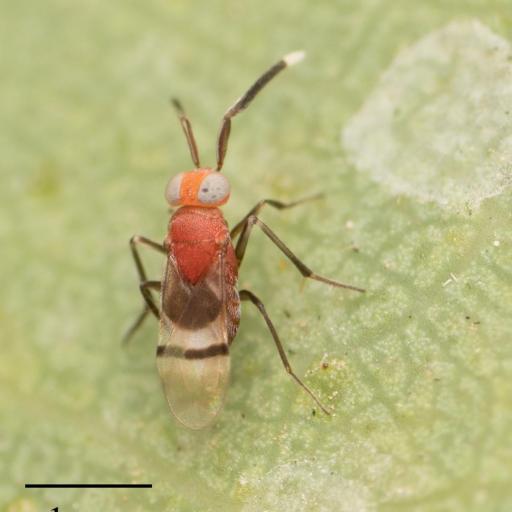
Often referred to as the "Invisible Guardians" of the greenhouse, wasps in the Encyrtidae family are some of the most beneficial insects you can have in your garden. These microscopic warriors are legendary among farmers and gardeners for their role as biological control agents. Instead of eating your plants, they hunt down the pests that do, making them a gardener’s best friend.
🔍 How to Identify
- 💎 Metallic Sheen: Most species possess a brilliant iridescent or metallic body, often shimmering in shades of blue, green, or deep black under a magnifying glass.
- 📐 Microscopic Stature: They are incredibly tiny, often measuring between 0.5mm and 2mm. To the naked eye, they may just look like a fast-moving speck of dust on a leaf.
- 🦘 The "Spring" Leg: One of their most unique features is a thickened, muscular middle leg which they use to "hop" or flick themselves away with lightning speed if disturbed.
🌲 Habitat & Ecology
- ⚔️ Nature's Parasitoids: These wasps don't just eat pests; they lay their eggs inside them. They are the primary nemesis of scale insects, mealybugs, and aphids, effectively keeping pest populations from exploding.
- 🌺 Nectar Fuel: While the larvae are carnivorous, the adults often feed on honeydew secreted by aphids or nectar from tiny flowers like dill, fennel, and yarrow, which helps them stay energized for hunting.
⚠️ Safety & Toxicity
- ✅ Harmless to Humans: Despite being "wasps," they are physically incapable of stinging humans or pets. Their "stinger" is actually an ovipositor, a specialized tool used only for laying eggs inside specific insect hosts.
- 🛡️ Eco-Friendly: Because they are so effective at controlling pests, having them around reduces the need for chemical pesticides, making your garden a safer place for children and pets.
✨ Fun Fact
Some species of Encyrtid wasps practice "polyembryony"—a biological miracle where a single egg laid inside a host insect can split and multiply into hundreds of identical twin larvae, all of which hatch and consume the host from the inside!
More Details








