Info
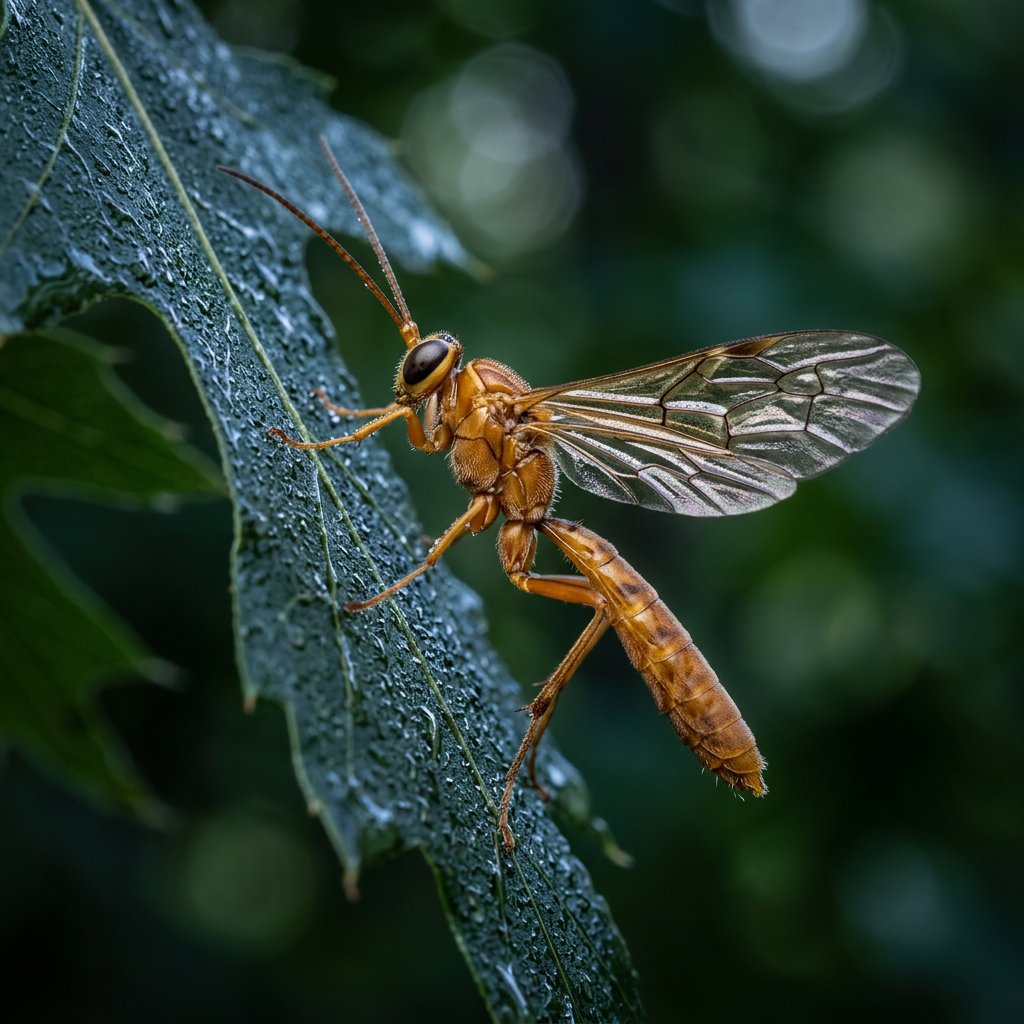
Often mistaken for a giant, orange mosquito or a "skinny hornet," Enicospilus purgatus is actually a solitary ichneumon wasp. These nocturnal hunters are frequently seen fluttering around porch lights during late summer nights. While their spindly legs and curved bodies might look intimidating, they are actually beneficial garden allies that help keep moth populations in check.
🔍 How to Identify
- ☄️ Body Color: A striking, uniform translucent amber or rusty orange-yellow color across the entire body.
- 🌙 Abdomen Shape: The abdomen is laterally compressed (very thin when viewed from above) and curves downward in a distinctive "sickle" or "comma" shape.
- 👀 Night Vision: They possess very large compound eyes and three prominent "simple eyes" (ocelli) on top of their head, which help them navigate in near-total darkness.
🌲 Habitat & Ecology
- 🦋 The Caterpillar Hunter: This insect is a parasitoid. The female searches for specific moth caterpillars—such as Armyworms or Owlet moths—to lay a single egg inside. The wasp larva then grows inside the host, naturally controlling garden pests.
- 💡 Night Owls: Unlike most wasps that sleep at night, Enicospilus purgatus is strictly nocturnal. You will most likely encounter them on your window screens or near outdoor light fixtures.
- 🏠 Solitary Lifestyle: They do not build paper nests or live in colonies. Each wasp lives independently, meaning there is no "hive" to defend and no risk of a swarm.
⚠️ Safety & Toxicity
- 🐝 The "Stinger": While they possess a sharp ovipositor (egg-laying tool) that looks like a stinger, they are not aggressive. They lack the defensive "venom" found in social wasps like yellowjackets.
- 🛡️ Defense Mechanism: If handled roughly or squeezed, they may deliver a sharp, pin-prick jab. It is momentarily painful but typically does not cause swelling or a lasting reaction in humans.
- 🐾 Pet Safety: They are harmless to curious cats and dogs. While a pet might be startled if they try to eat one, these wasps are not toxic and do not pose a threat to your furry friends.
✨ Fun Fact
- Enicospilus wasps are masters of "biological sonar." They use their incredibly sensitive antennae to detect the vibrations and chemical signatures of caterpillars hiding under leaves, allowing them to hunt with surgical precision in the dark!
More Details








