Info
🍂 The Master of Autumnal Disguise
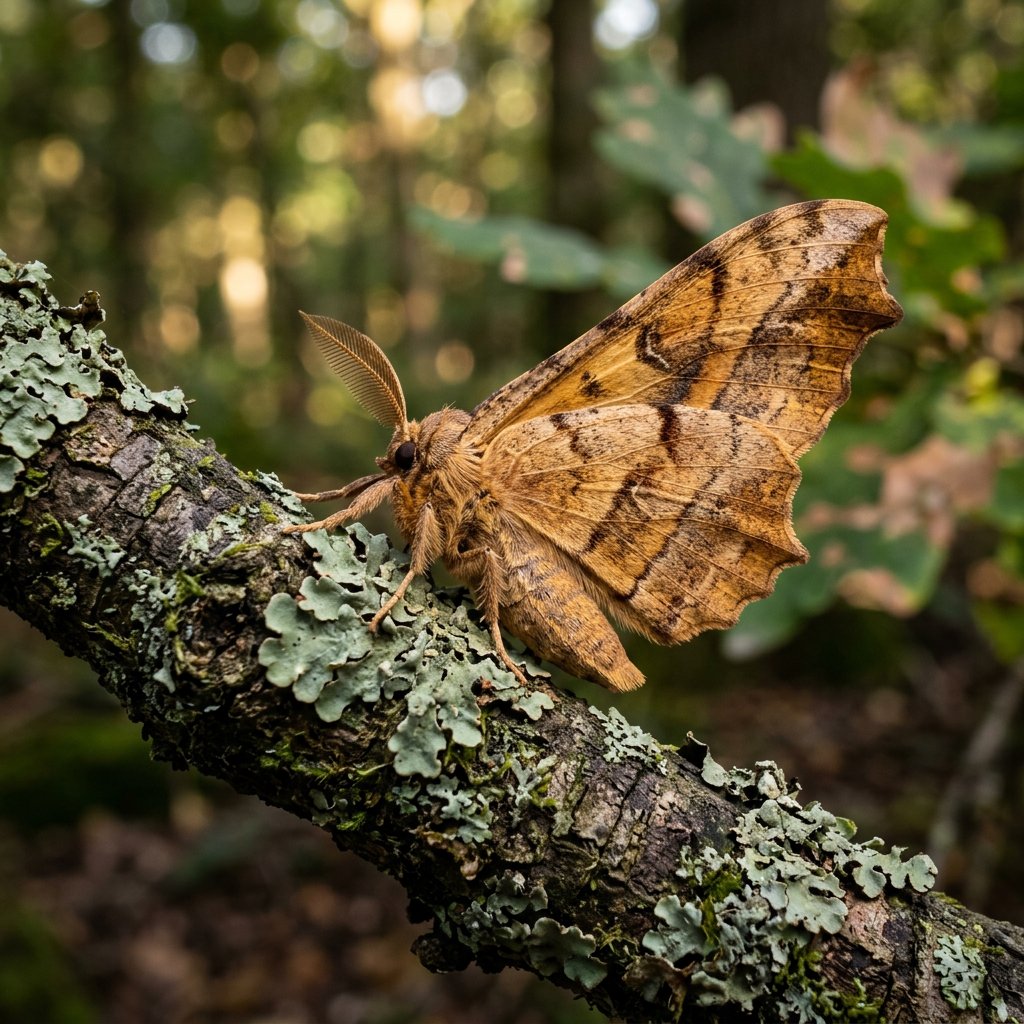
Known commonly as the August Thorn, this moth is a celebrated master of mimicry. It belongs to the "Geometer" family, whose name literally translates to "earth-measurer" because of the way its caterpillars move. While many moths are dull or grey, the August Thorn looks like a crisp, sun-dried leaf that has drifted down from an oak tree, perfectly blending into the late-summer landscape.
🔍 How to Identify
- 🦋 Wing Shape: The most striking feature is the "scalloped" or jagged edges of its wings, which look like the torn margins of a dried leaf.
- 🎨 Coloration: Typically a warm, deep yellow or orangey-brown, decorated with two dark, slightly curved lines that run across the forewings.
- 📐 Resting Posture: Unlike many moths that lay flat, the August Thorn often rests with its wings tilted upwards or slightly angled, enhancing its resemblance to fallen foliage.
🌲 Habitat & Ecology
- 🌳 Oak Lovers: As its Latin name quercinaria suggests, this moth is deeply tied to Oak trees (Quercus), though it also frequents Beech and Birch forests.
- 🌙 Nocturnal Life: It is a nighttime traveler, frequently spotted by enthusiasts near porch lights or garden lanterns between July and September.
- 🐛 The Inchworm Stage: The larvae are classic "inchworms." They are brownish-grey and have small bumps on their bodies that make them look exactly like a small, dead twig to any hungry birds passing by.
⚠️ Safety & Toxicity
- ✅ Harmless Friend: The August Thorn is completely safe for humans and pets. It does not bite, sting, or carry any known diseases.
- 🐶 Pet Safety: While a curious cat or dog might try to chase one, these moths do not possess defensive toxins, making them a harmless addition to your garden’s nighttime ecosystem.
✨ Fun Fact
When the August Thorn caterpillar feels threatened, it stands perfectly still at an angle from a branch, using its hind legs to grip the bark. In this "stiff" pose, it becomes virtually invisible, looking more like a broken twig than a living insect!
More Details








