Info
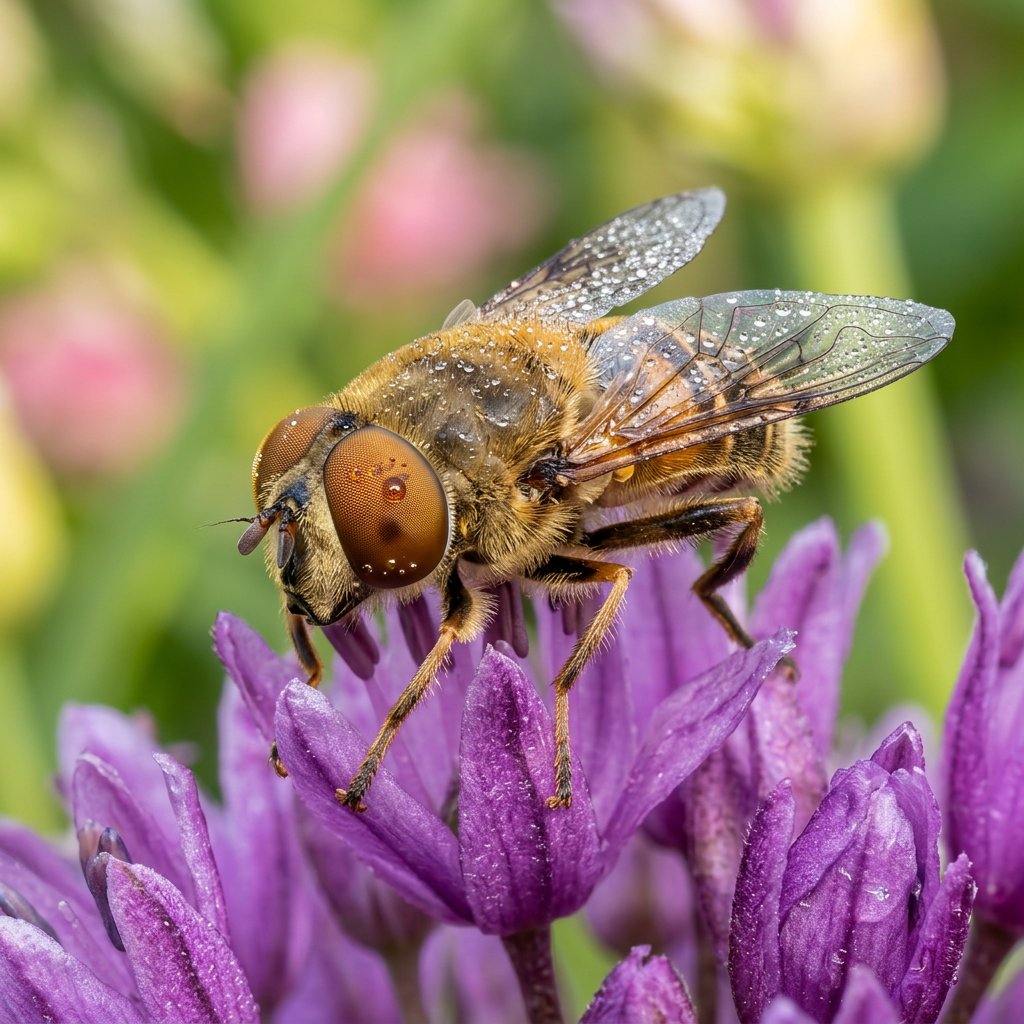
Often mistaken for a honeybee, the Tapered Hoverfly (or Plain-faced Dronefly) is nature's ultimate "pretender." This garden ally spends its life hiding behind a tough-looking yellow-and-black disguise to ward off predators. Despite its bee-like appearance, it is a gentle, tireless pollinator that is a welcome guest in any backyard.
🔍 How to Identify
- 👣 Golden Toes: A key identifying feature is the front legs; the "tarsi" (feet) on the front and middle legs are almost entirely orange or yellow, unlike its darker-legged relatives.
- 🐝 Bee Mimicry: It has a fuzzy, stout body with orange-brown bands across the abdomen, perfectly mimicking a honeybee to scare off hungry birds.
- 👀 The "Hover" Eyes: It possesses massive, wrap-around eyes that take up most of its head. In males, the eyes actually touch at the top, while in females, they are slightly separated.
🌲 Habitat & Ecology
- 🌸 Nectar Enthusiast: You will most likely spot them in gardens, hedgerows, and woodland edges. They are particularly fond of flat-topped flowers like Daisies, Hogweed, and Ivy, where they can easily land and sip nectar.
- 💧 A Muddy Childhood: The larvae are known as "rat-tailed maggots." They live in stagnant water or wet mud, using a long, telescopic breathing tube (the "tail") to reach the surface for air while they feed on decaying organic matter.
- ✈️ Aerodynamic Masters: True to their name, they are famous for their ability to remain perfectly stationary in mid-air before darting away with incredible speed.
⚠️ Safety & Toxicity
- ✅ Friend of the Garden: The Tapered Hoverfly is completely harmless. It does not have a stinger, and it does not bite.
- 🛡️ Passive Defense: Its only defense is its appearance. If it feels threatened, it will simply fly away or rely on its "scary" bee-like colors to prevent an attack. It poses no risk to humans, children, or pets.
✨ Fun Fact
These insects are such precise flyers that they have inspired engineers studying drone technology. They can fly sideways, backward, and even rotate 360 degrees on a single spot while maintaining a perfect hover.
More Details








