Info
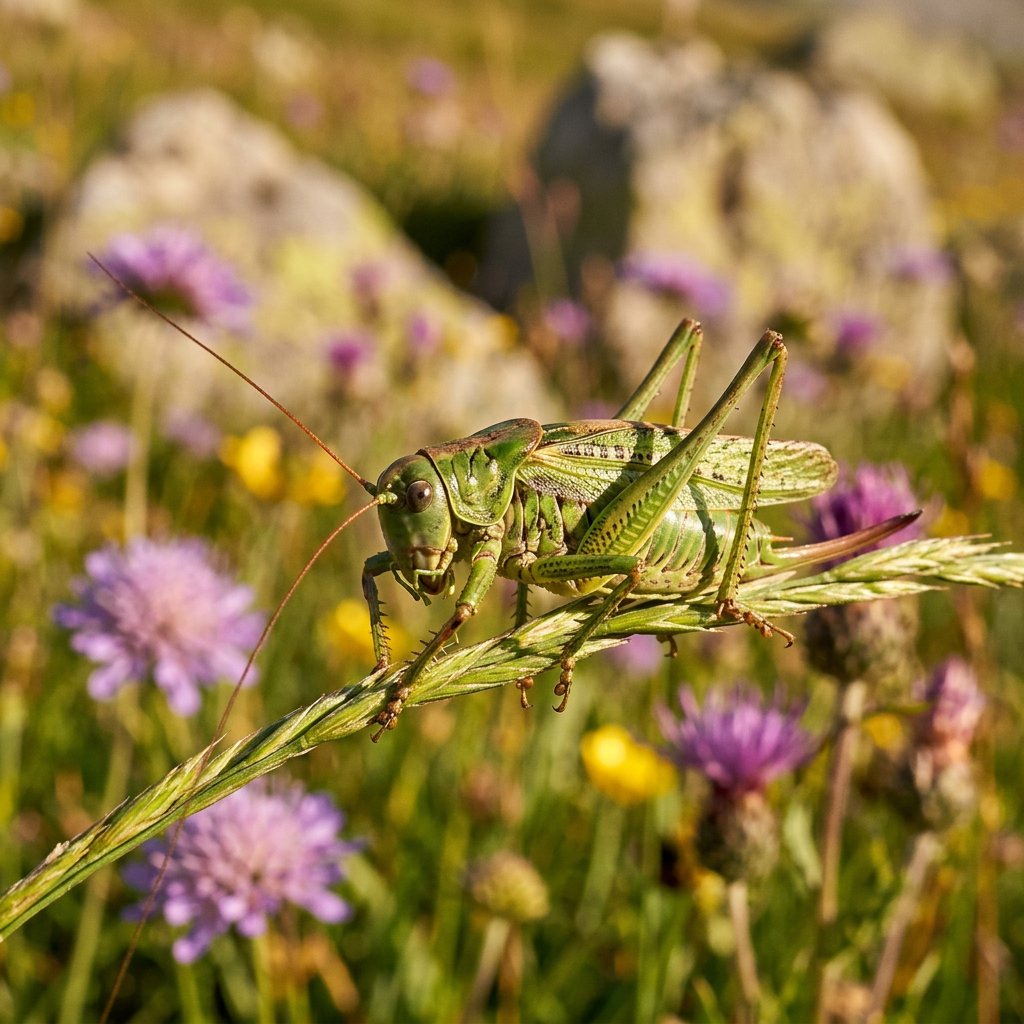
Known as the Western Saddle-backed Bush-cricket, this sturdy insect looks like it’s wearing a miniature knight’s saddle on its back. Found primarily in the sun-drenched mountainous regions of Europe, it is famous for its loud, rhythmic "chirp-chirp" song that echoes through alpine meadows. While its armor-like appearance and long "tail" might look intimidating, it is a slow-moving, flightless singer that plays a vital role in its high-altitude ecosystem.
🔍 How to Identify
- 🏇 The "Saddle": Its most striking feature is a large, upwardly curved pronotum (the plate behind the head) that mimics the shape of a riding saddle.
- 🪽 Miniature Wings: It possesses very short, scale-like wings that are almost entirely hidden under its saddle; these are used for making music rather than flying.
- 🗡️ The Sword-Tail: Females have a long, sturdy, slightly upward-curved ovipositor at the rear, which is often mistaken for a stinger but is actually used for laying eggs.
🌲 Habitat & Ecology
- 🏔️ Mountain Specialist: This species thrives in subalpine meadows, rocky slopes, and low-lying shrubs where it can bask in the sun to regulate its body temperature.
- 🎶 The Ground Performer: Since it cannot fly, it moves by walking or jumping through low vegetation, using its tiny wings to produce a sharp, rasping sound to communicate with others.
- 🍃 Mixed Diet: It is an opportunistic feeder, primarily consuming leaves and flowers, though it will occasionally scavenge or hunt smaller, slow-moving insects.
⚠️ Safety & Toxicity
- 🟢 Status: Harmless and non-venomous.
- 🤏 The "Nip": It is not aggressive toward humans, but if picked up or squeezed, its powerful mandibles (jaws) can deliver a small, pinch-like nip.
- 🐾 Pet Safety: It is non-toxic to cats and dogs, though its crunchy exoskeleton might be a bit of a surprise if a curious pet decides to investigate too closely.
✨ Fun Fact
The Ephippiger genus name comes from the Greek word "ephippios," which literally translates to "on a saddle," perfectly describing its unique, horseback-ready appearance!
More Details








